Burg Weiler Altar Triptych by Master of the Burg Weiler Altarpiece
View the artwork: Burg Weiler Altar Triptych →
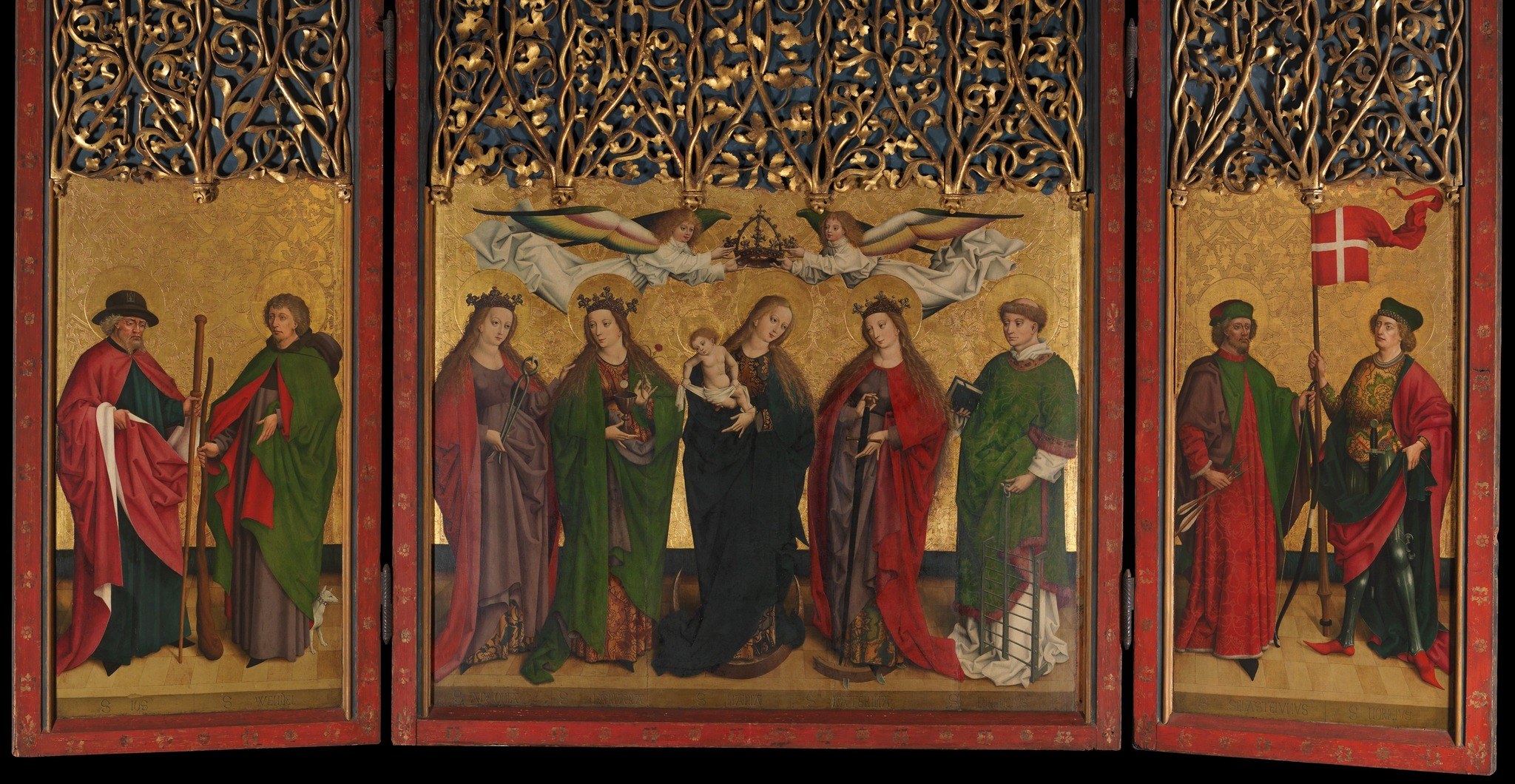
The Burg Weiler Altar Triptych was painted around 1470 for the private chapel of a castle near Heilbronn, Germany. The artist is known only by his notname, the Master of the Burg Weiler Altarpiece, and this is the only work universally accepted as his. Today it lives at The Met Cloisters in New York.
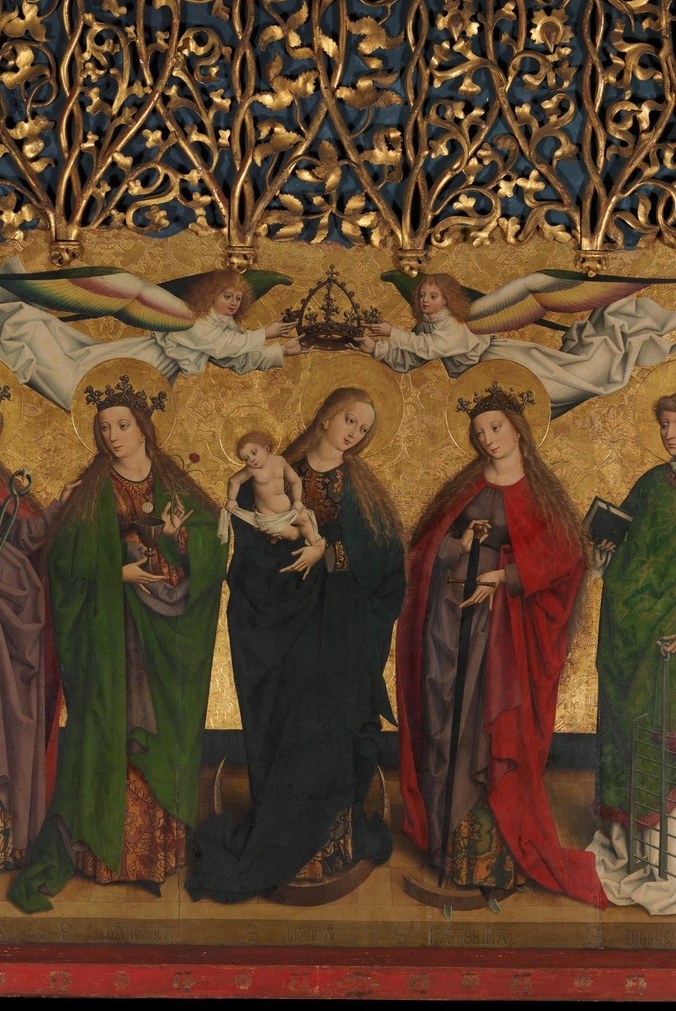
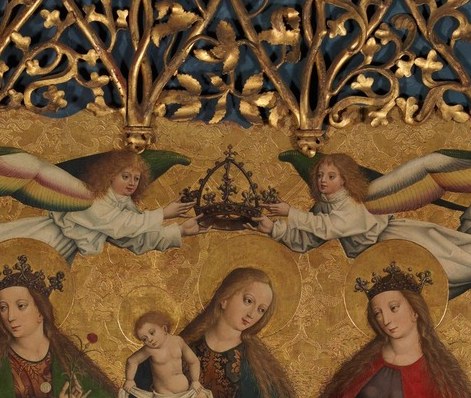
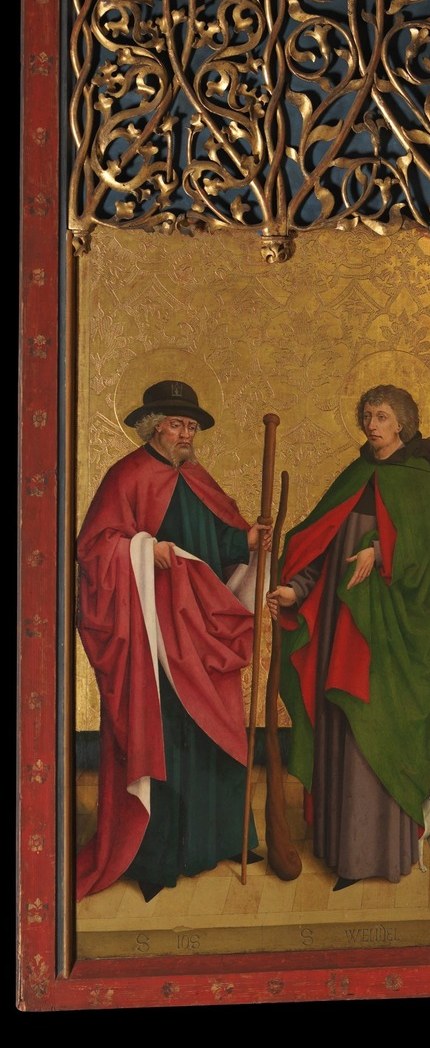
Look first at the gold ground. By 1470, German painters were mastering Netherlandish spatial depth with landscapes and interiors. This artist chose a flat gold field instead, a deliberate archaism that marks the space as outside earthly time: a glimpse of heaven, not a window onto the world. Then look at the two saints on the left. One is Wendelin, a local patron of shepherds. The other is Judoc, a Breton pilgrim saint almost never seen in southern German altarpieces. His presence signals an unusual connection, likely a donor with ties to Brittany.
The most extraordinary figure stands on the far right. Saint Maurice, an armored soldier holding a red-cross banner, was a Roman legionary martyred at Thebes in Egypt. Artists in medieval Germany regularly depicted him as a Black African, and this altarpiece belongs to that tradition. A rural Swabian chapel in 1470 held an image of a black saint presented with full martial dignity alongside the Virgin and Child.
We do not know the painter's name. We do know he gave a castle chapel an image of a black man as a holy exemplar, and we know the family who worshipped there saw that every day.
#arthistory #medievalart #metmuseum
Details

Transcript
Six centuries ago, this altarpiece dominated a private castle chapel in rural Germany. Gold-ground altars were already old-fashioned in 1470. This painter chose heaven over landscape. On the left, a green-robed saint. Wendelin, a local patron of shepherds. Beside him, a rare visitor. Saint Judoc, a Breton pilgrim almost unknown in southern Germany. Now find the armored soldier on the far right. Saint Maurice, a Roman legionary martyr from Thebes in Egypt. A black African saint painted with full dignity for a Swabian noble family around 1470.