Artwork
Burg Weiler Altar Triptych
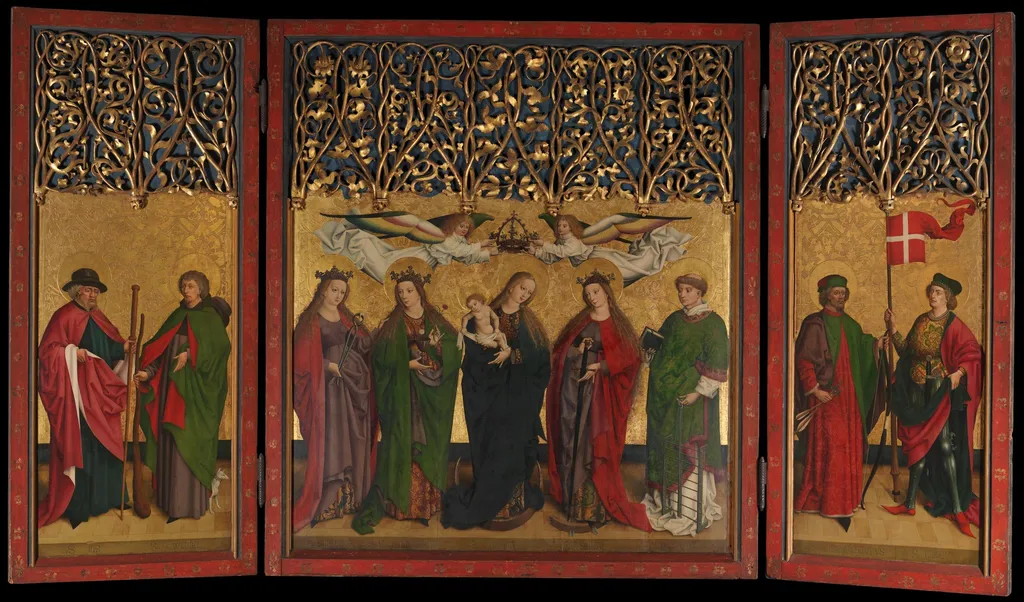
Burg Weiler Altar Triptych is an oil painting by the Northern Renaissance artist Master of the Burg Weiler Altarpiece. It dates from 1470 and is held in the collection of the Metropolitan Museum of Art.
About this work
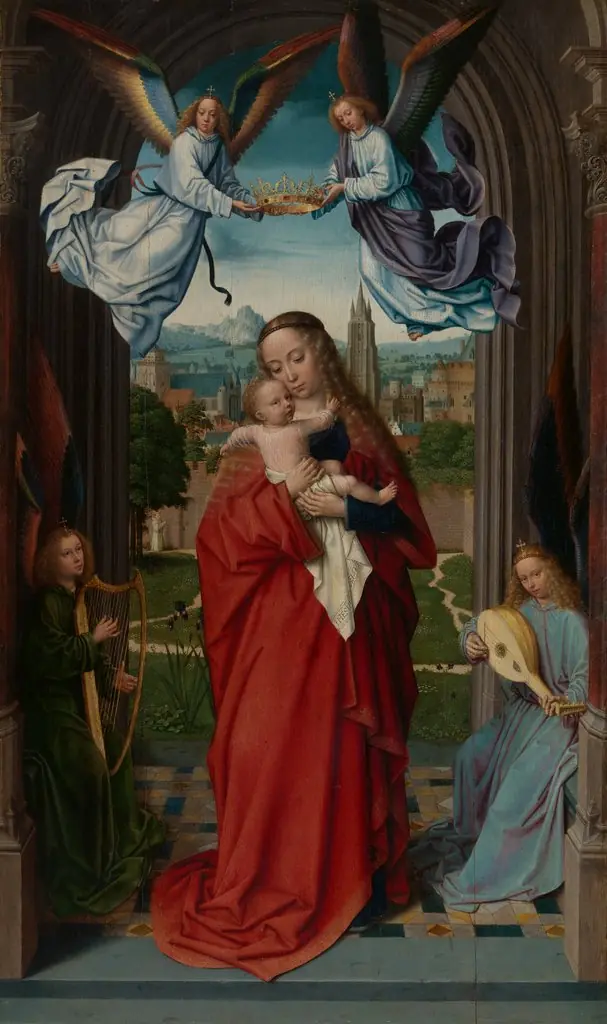
A pair of angels hovers above the Virgin Mary, gently lowering an elaborate crown onto her head as she stands on a crescent moon flanked by eight saints.
A pair of angels hovers above the Virgin Mary, gently lowering an elaborate crown onto her head as she stands on a crescent moon flanked by eight saints. Painted around 1470 in oil on wood with a gold ground, this imposing triptych was commissioned for the castle chapel at Burg Weiler near Heilbronn, seat of the Freiherren von und zu Weiler. Today it resides in The Cloisters collection in New York.
Subject & Meaning
The triptych is a sacra conversazione centered on the Virgin Mary crowned by two angels as she holds the Christ child. Flanking them on the side panels are eight saints, Judoc, Wendelin, Apollonia, Barbara, Catherine of Alexandria, Lawrence, Sebastian, and Maurice, each depicted with their identifying attributes and labeled by inscriptions beneath canopies of foliate tracery. The choice of saints reflects local and widespread devotions: Wendelin and Judoc were popular in the Middle Rhine region, while Catherine, Barbara, and Apollonia were venerated as virgin martyrs.
The closed wings show Saint Theodore and the martyrdom of three members of the Theban Legion, a common theme in Late Gothic German altarpieces. The iconography thus serves both as a celestial court interceding for the faithful and as a visual catechism for the chapel of Burg Weiler.
Technique & Style
The Burg Weiler Altar Triptych is executed in oil and gold leaf on wood panels, typical of late Gothic altarpieces from the Middle Rhine region. The support is a triptych: a central panel (174 × 152.4 cm) and two wings (each 174 × 66 cm). The gold ground creates a luminous backdrop, and the saints stand in a row under delicate canopies of foliage, each identified by inscriptions.
Stylistically, the work dates to circa 1470 and displays precise linear outlines and rich decorative detail, characteristic of the Master of the Burg Weiler Altarpiece. The closed wings depict Saint Theodore and the martyrdom of the Theban Legion, adding narrative depth.
History & Provenance
The Burg Weiler Altar Triptych was created around 1470 in a Württemberg workshop, likely commissioned for the chapel of Burg Weiler (Schloss Weiler) near Heilbronn. It remained in the possession of the Barons von Weiler until approximately the 1930s. The altarpiece subsequently passed through several private collections, including those of Ernst Dauer, Werner Lüps, and Gitta Forell.
In 1937/38 it was handled by the art dealership Julius Böhler, and in 1953 it was sold by Thomas Agnew & Sons of London to the Metropolitan Museum of Art, where it remains.
Context
The Burg Weiler Altar Triptych, attributed to the anonymous Master of the Burg Weiler Altarpiece, was created around 1470 in a Württemberg workshop for the chapel of Burg Weiler near Heilbronn. It belongs to the late Gothic tradition of Middle Rhenish religious painting. Scholarly reception began with Theodore Allen Heinrich's 1954 study in the Metropolitan Museum of Art Bulletin, followed by Alfred Stange's 1958 survey of German Gothic painting and Bruno Bushart's 1959 analysis of old Swabian painting.
The work was later catalogued in the 2013 comprehensive publication on German paintings at the Metropolitan Museum by Maryan W. Ainsworth and Joshua P. Waterman, cementing its place as a key example of the region's altarpiece production.
Overview
The Burg Weiler Altar Triptych, a religious painting from approximately 1470, originated in the Middle Rhenish region of North Württemberg. This large, three-part altarpiece was initially created for the chapel of Burg Weiler castle near Heilbronn. Today, the work is part of The Metropolitan Museum of Art's collection, housed at The Cloisters in New York, offering insight into late medieval German devotional art.
Own this work as a print
Artist & collection
Artist
Master of the Burg Weiler Altarpiece
The Master of the Burg Weiler Altarpiece is a modern scholarly notname for a German painter whose real identity and dates remain unknown.

 Triptych of the Virgin and Child with Saints
 Triptych with Scenes from the Life of the Virgin
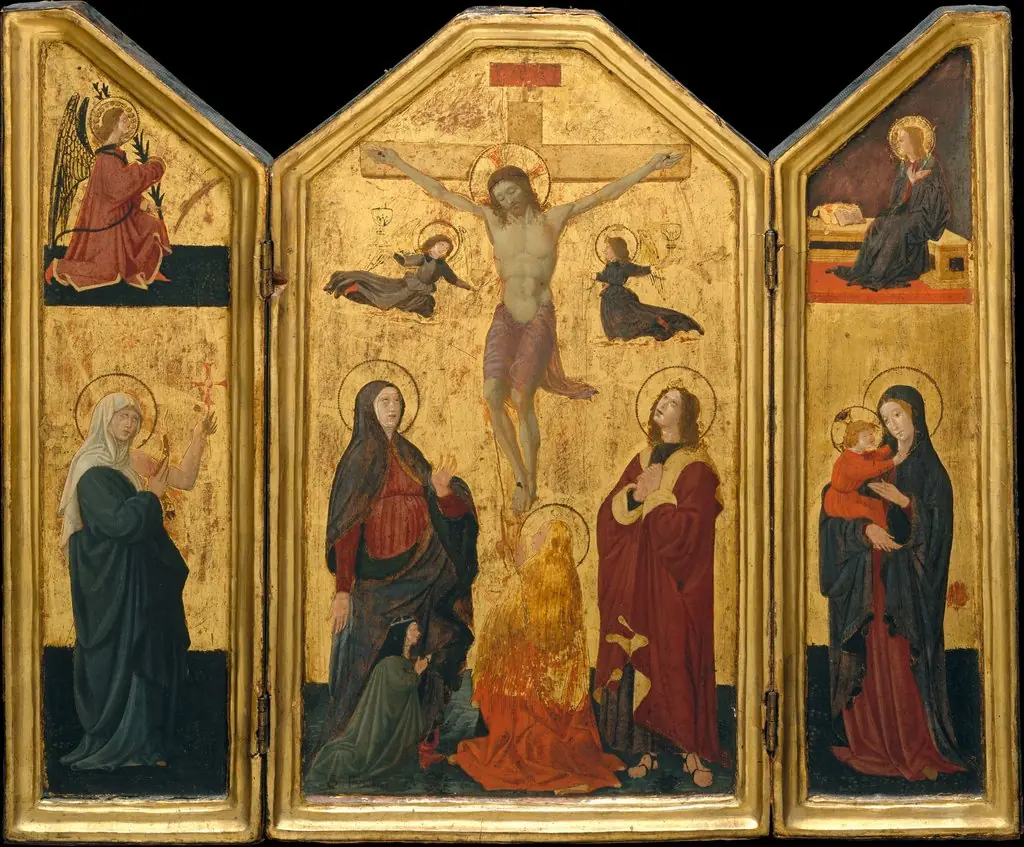 The Crucifixion
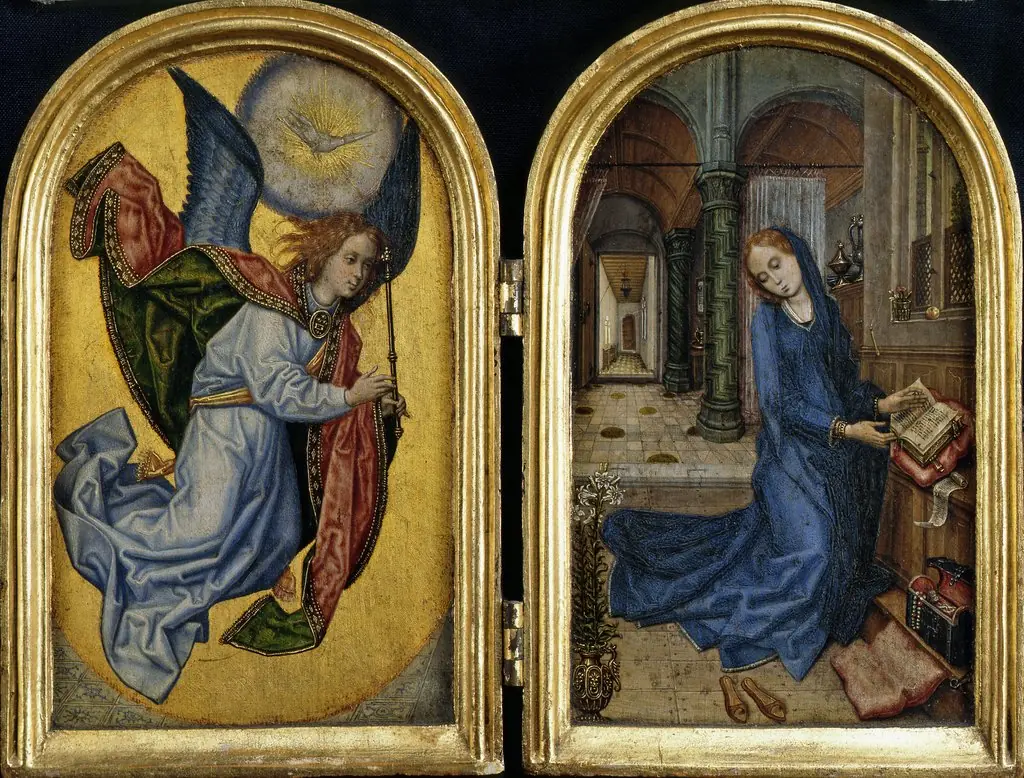 The Annunciation to Mary (Diptych)
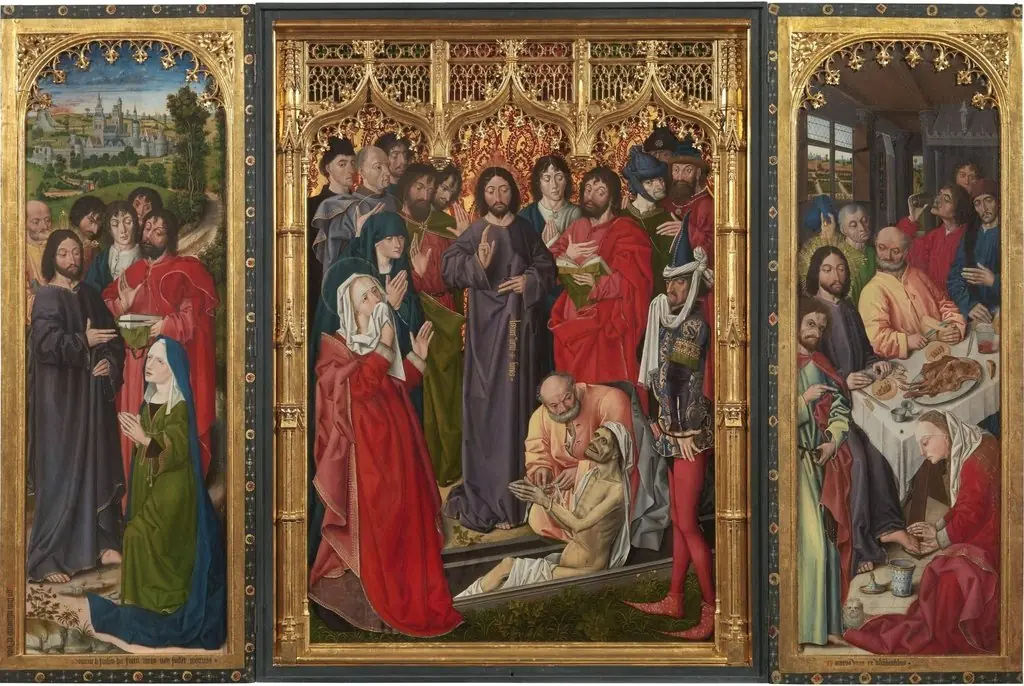 Resurrection of Lazarus
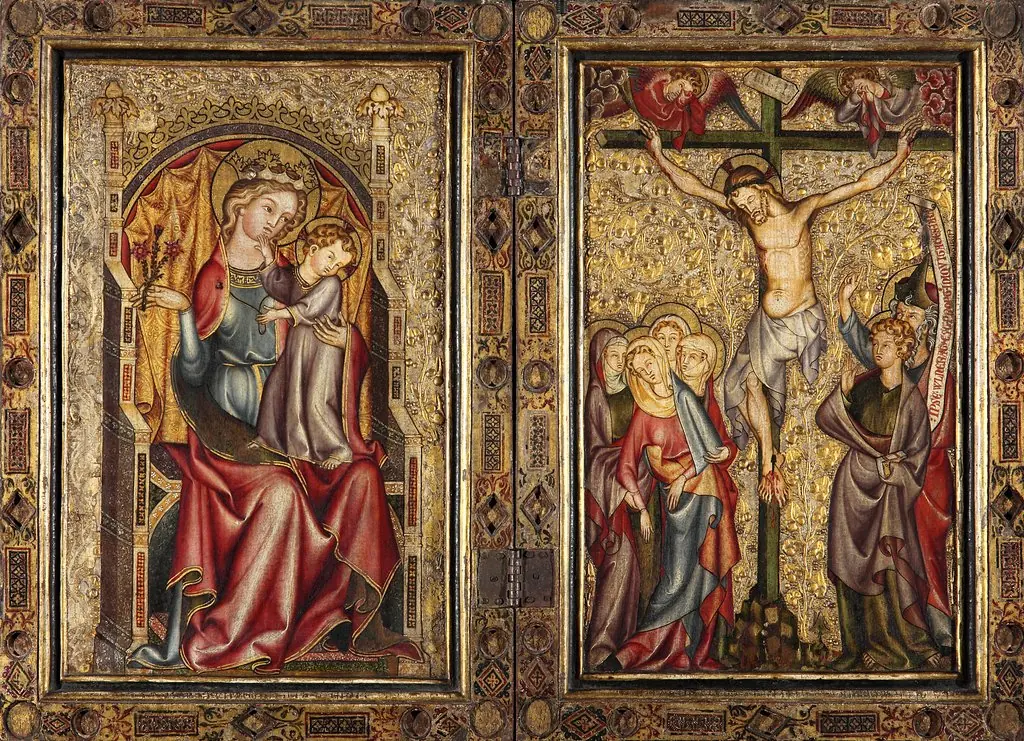 Cologne Diptych
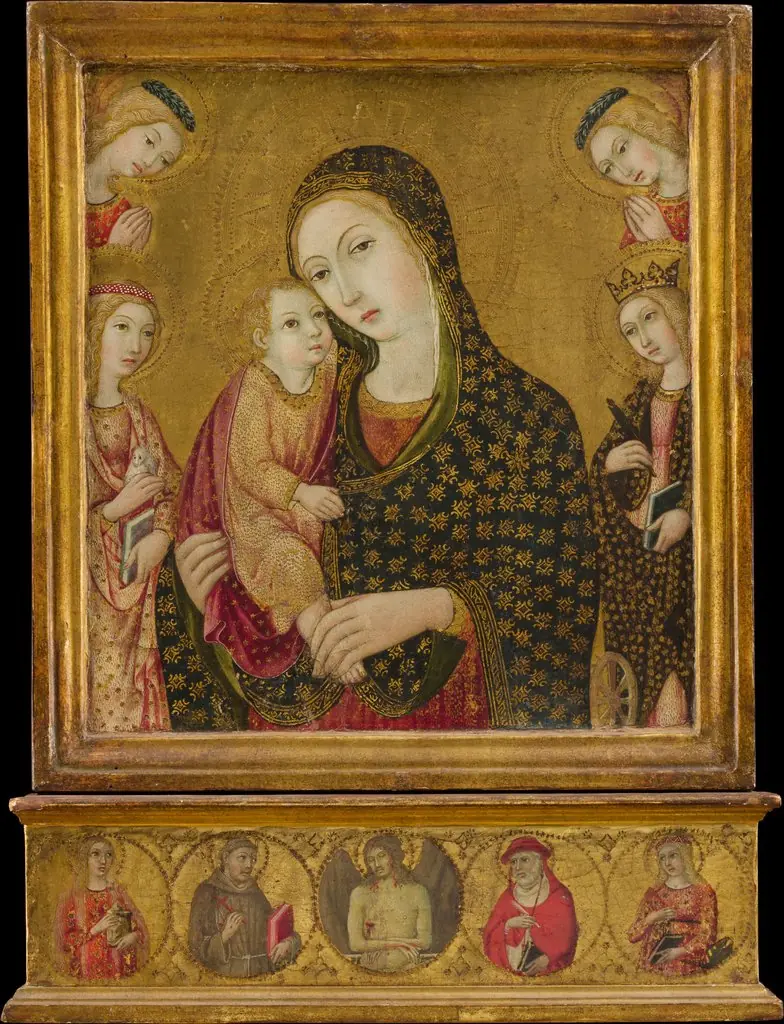 Madonna and Child with the Dead Christ, Saints Agnes and Catherine of Alexandria, and Two Angels
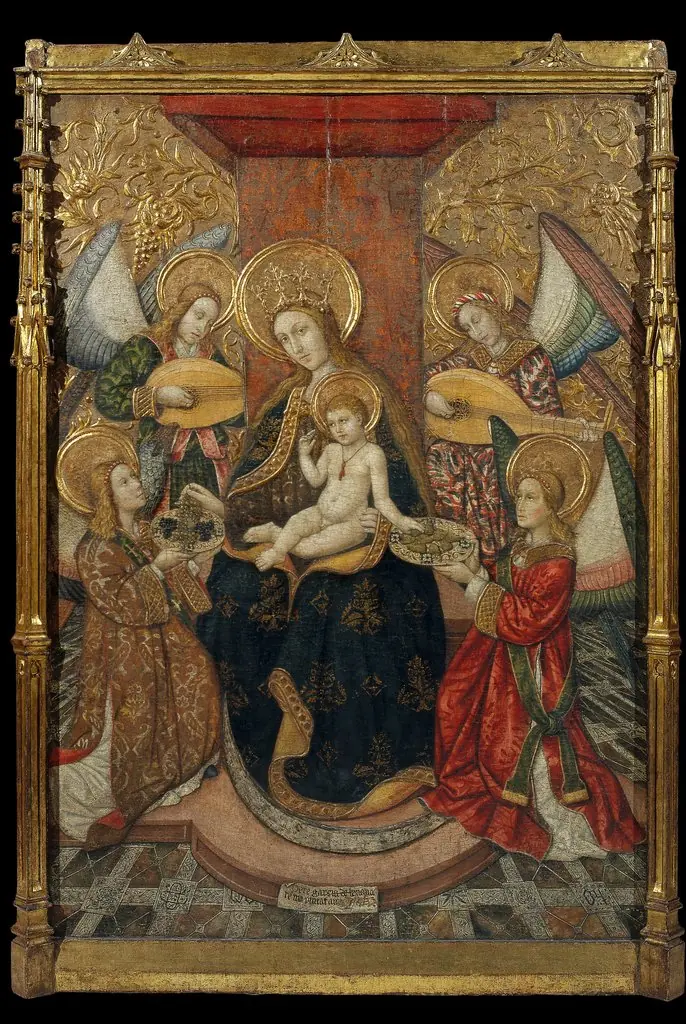 Virgin and Angels
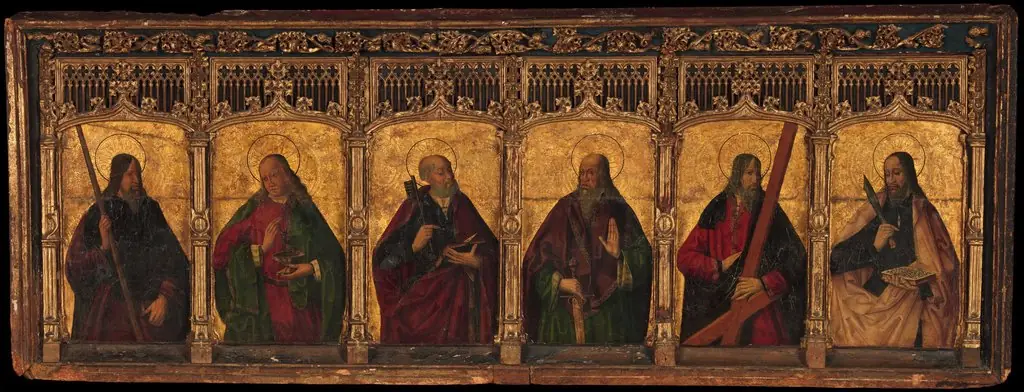 Six Apostles
![Altarpiece showing scenes from the Infancy of Christ: The Adoration of the Magi [center]; The Annunciation; The Presentation of Christ in the Temple; The Flight into Egypt; The Nativity [clockwise from upper left], by Master of Hoogstraeten](https://artifactworldgallery.com/img/master-of-hoogstraeten--altarpiece-showing-scenes-from-the-infancy-of-christ-the-ado--6a236bfea3373486-w320.webp) Altarpiece showing scenes from the Infancy of Christ: The Adoration of the Magi [center]; The Annunciation; The Presentation of Christ in the Temple; The Flight into Egypt; The Nativity [clockwise from upper left]
Altarpiece showing scenes from the Infancy of Christ: The Adoration of the Magi [center]; The Annunciation; The Presentation of Christ in the Temple; The Flight into Egypt; The Nativity [clockwise from upper left]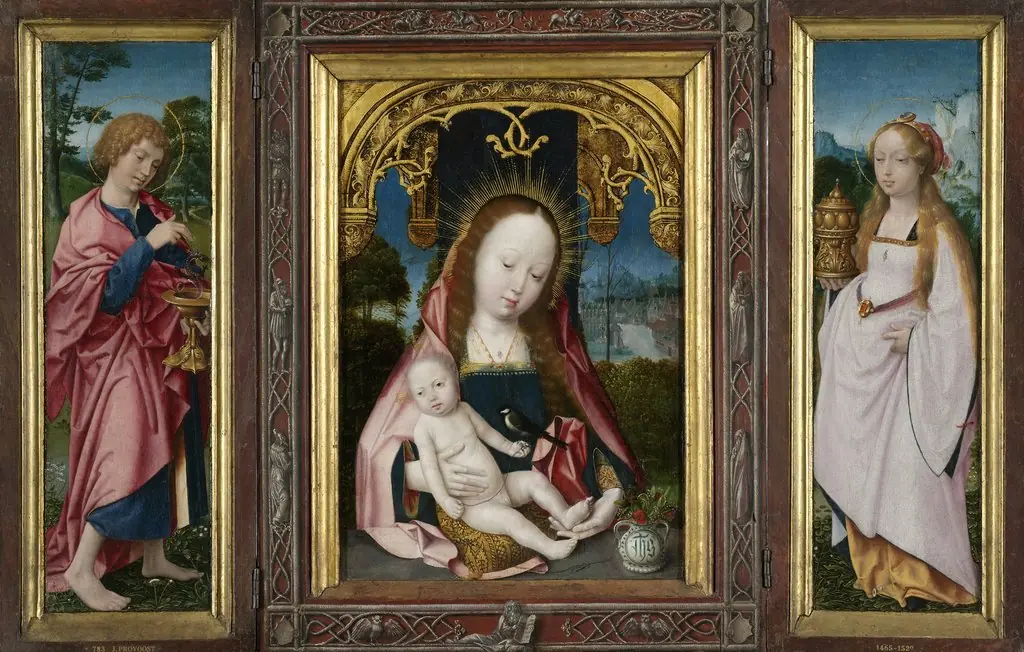 Triptych with the Virgin and Child (centre panel), St John the Evangelist (inner left wing) and Mary Magdalen (inner right wing)
- Winged Altar