Landscape by Gaspard Dughet
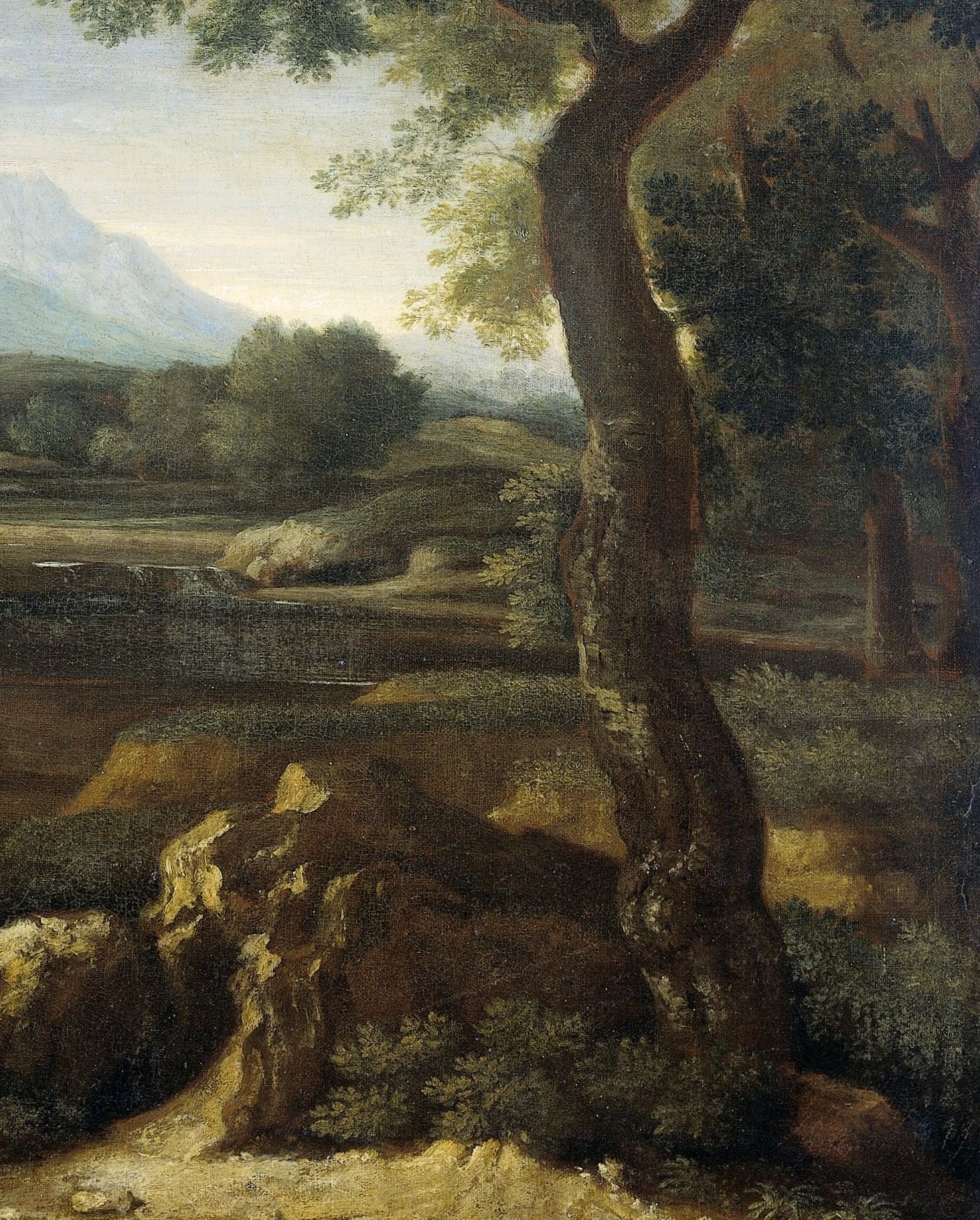
Gaspard Dughet’s 1640 painting, "Landscape," at the Rijksmuseum, is a masterclass in atmospheric perspective. He creates a deep, expansive world simply by varying the clarity of distant and near objects.
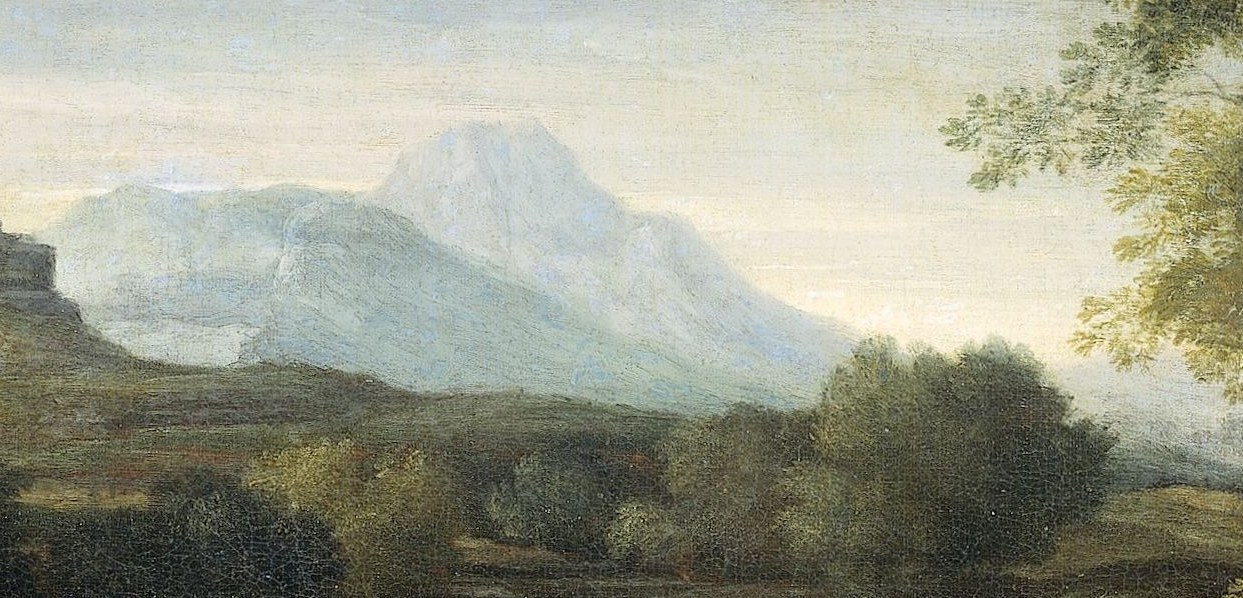
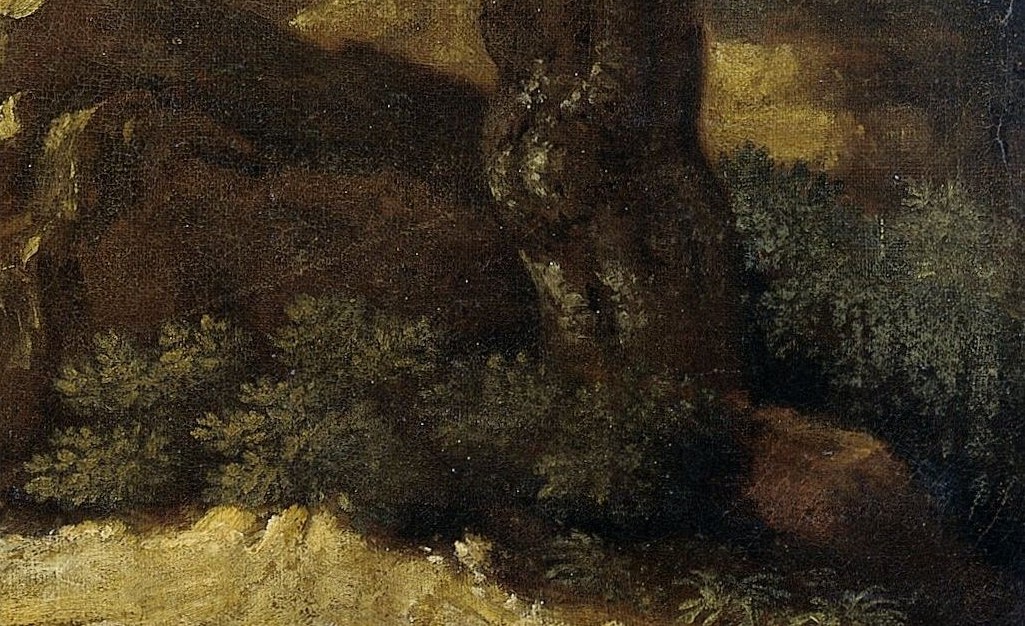
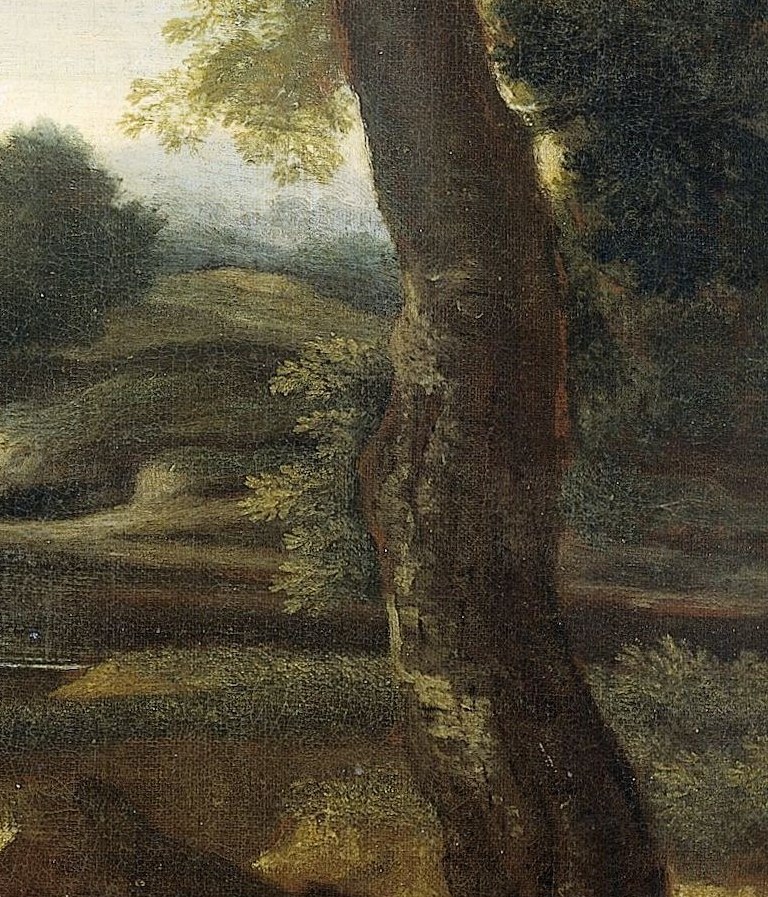
Observe the hazy blue mountains in the background, almost fading into the overcast sky. This softness makes them appear far away, while the sharply defined foreground rocks, with their intricate textures and strong chiaroscuro (light and shadow), feel immediately present and tangible.
Dughet, a French artist who worked in Rome, was renowned for his landscapes that often evoked classical ideals. His technique of subtly manipulating light and detail was crucial in establishing the depth and mood of his scenes, inviting viewers to wander visually through his painted worlds.
This careful balancing act of sharp and soft, light and shadow, demonstrates the painter's profound understanding of how the human eye perceives distance and form.
Details
Transcript
This painter uses light to make the world feel vast. See how the distant mountains blur into the sky? This 'atmospheric perspective' makes them recede. But look at the rough, sunlit rocks nearby. Every crack and shadow brings them forward. This contrast of soft and sharp pulls your eye through the scene.