Laden Donkeys and Ploughing, Tomb of Djar by Nina M. Davies
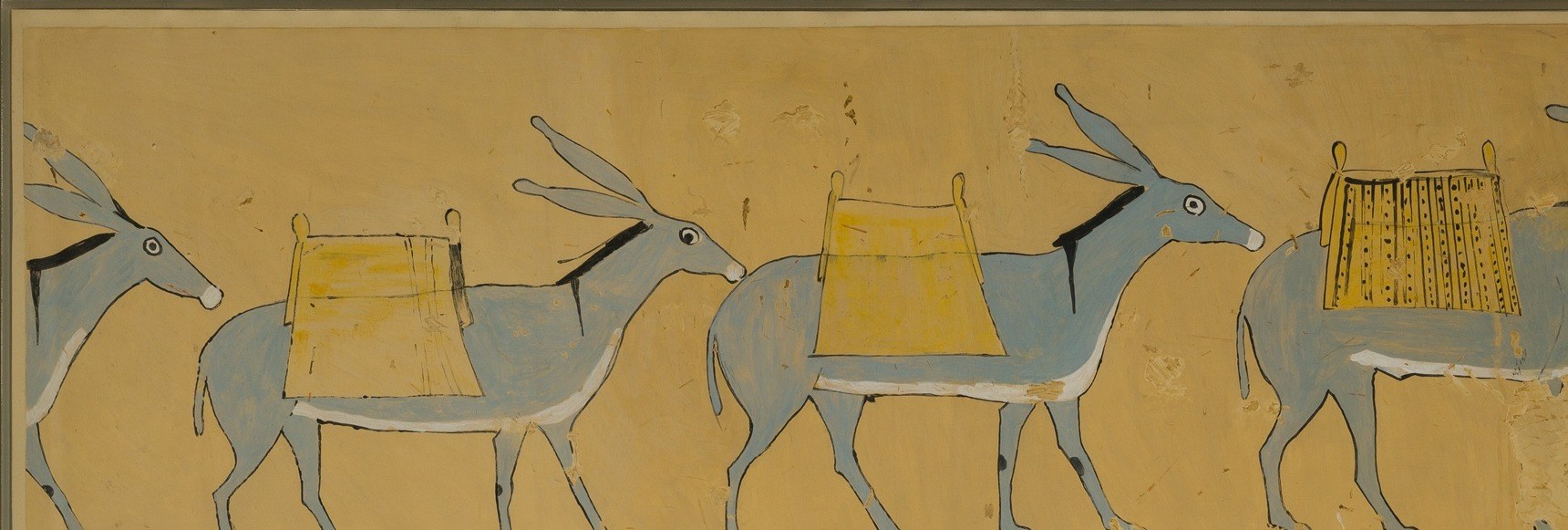
This is not a 4,000-year-old Egyptian wall painting. It is a watercolor from the 1920s, painted by Nina M. Davies as she sat inside a decaying tomb near Luxor. The original plaster was already flaking. She worked quickly, tracing what she could before it was gone forever. The tomb belonged to a man named Djar, an official who lived around 2059 BCE, during Egypt's Middle Kingdom.
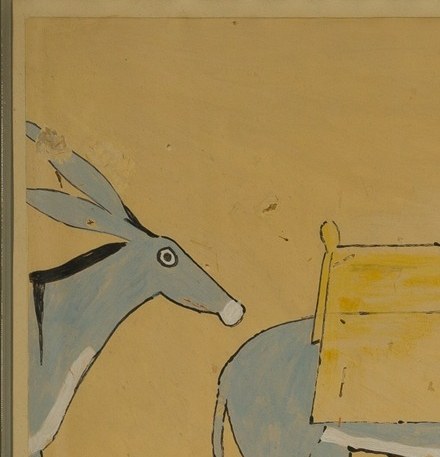
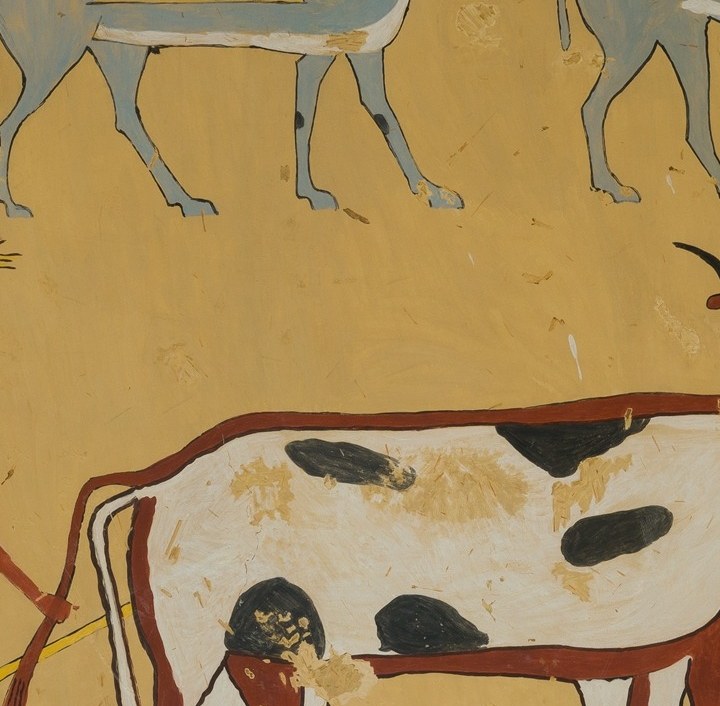
Look at the lead donkey. Its mouth is open, a tiny, expressive detail Davies captured just before that section of the wall likely deteriorated. The ploughman's face shows a shout frozen in profile. His forward lean and the second man's backward pull against the plough handle are anatomically true, one of the rare moments Egyptian art records actual body mechanics rather than eternal, idealized stillness.
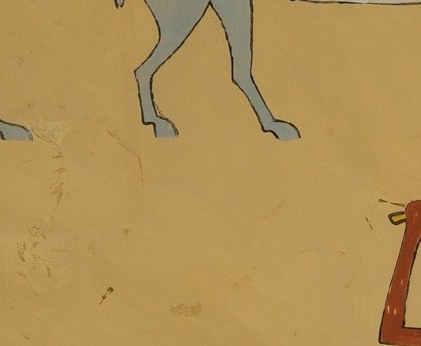
Nina Davies and her husband Norman de Garis Davies spent decades in Egypt for the Metropolitan Museum of Art, documenting tomb paintings that were disappearing to damp, salt, and theft. Their joint publications were signed "N. de Garis Davies," so it is often impossible to tell whose hand held the brush. But this one is hers. The warm yellow ground you see is the tomb wall itself, she left it exposed, a quiet reminder that this painting is a meditation on a thing already half-lost.
What you are looking at is the copy that outlasted the original. Djar's tomb scene has since crumbled to dust. A watercolorist in a cotton dress, sitting on a scaffolding in the dark, is the reason we can still watch these donkeys walk forever.
Details

Transcript
This isn't a 4,000-year-old Egyptian painting. It was painted in the 1920s, inside a crumbling tomb. Look at the donkey's open mouth. The artist traced it before the wall flaked away. It's a rescue. The ploughman shouts a command you can still see in his profile. This scene has vanished. Only her copy remains.