Rouen Cathedral, West Façade by Monet, Claude
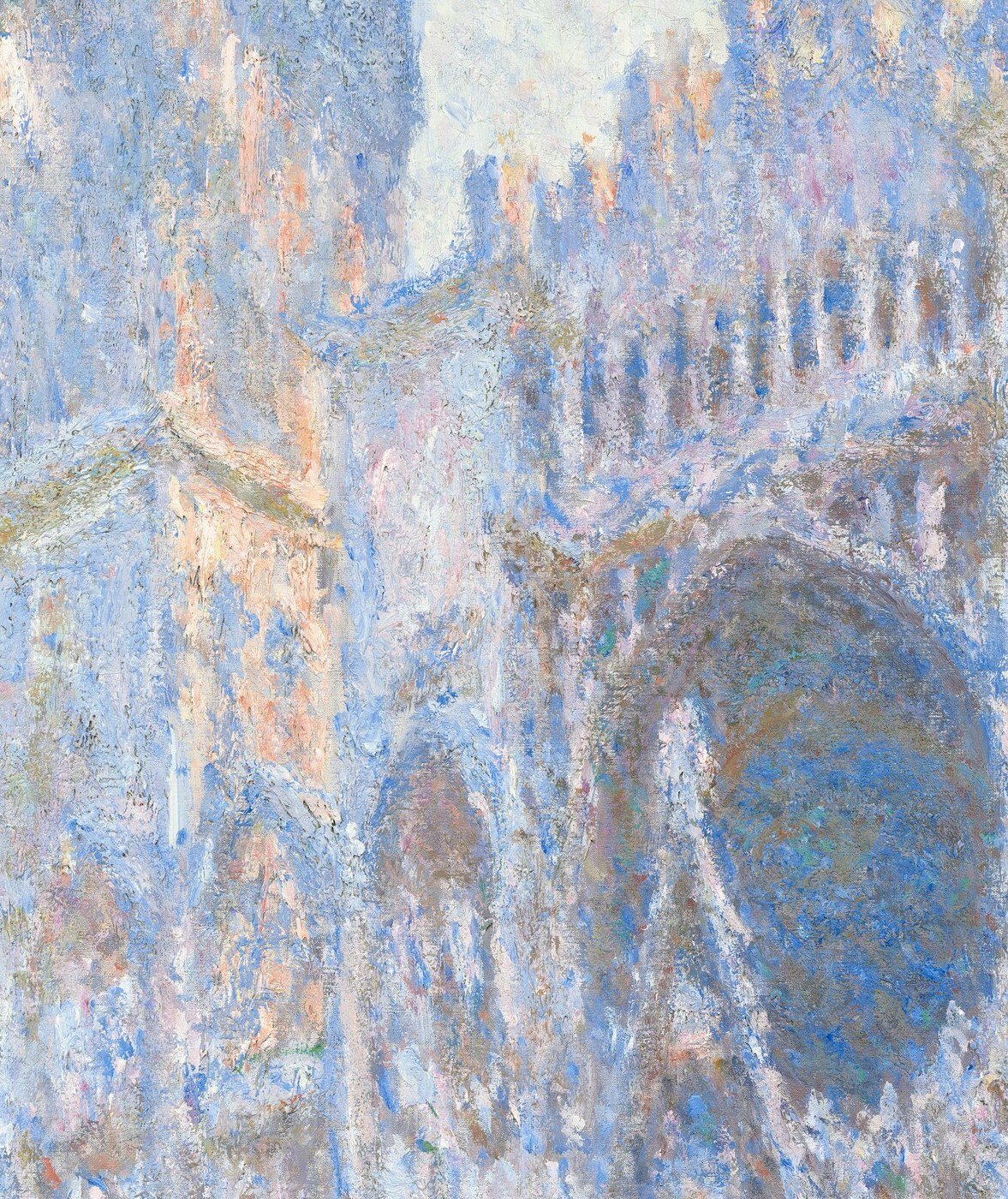
Claude Monet's Rouen Cathedral, West Façade, painted in 1894, is a vibrant oil on canvas housed in various museums, part of a famous series. Monet painted this very facade repeatedly to capture the subtle shifts of light and atmosphere, demonstrating the core principles of Impressionism.
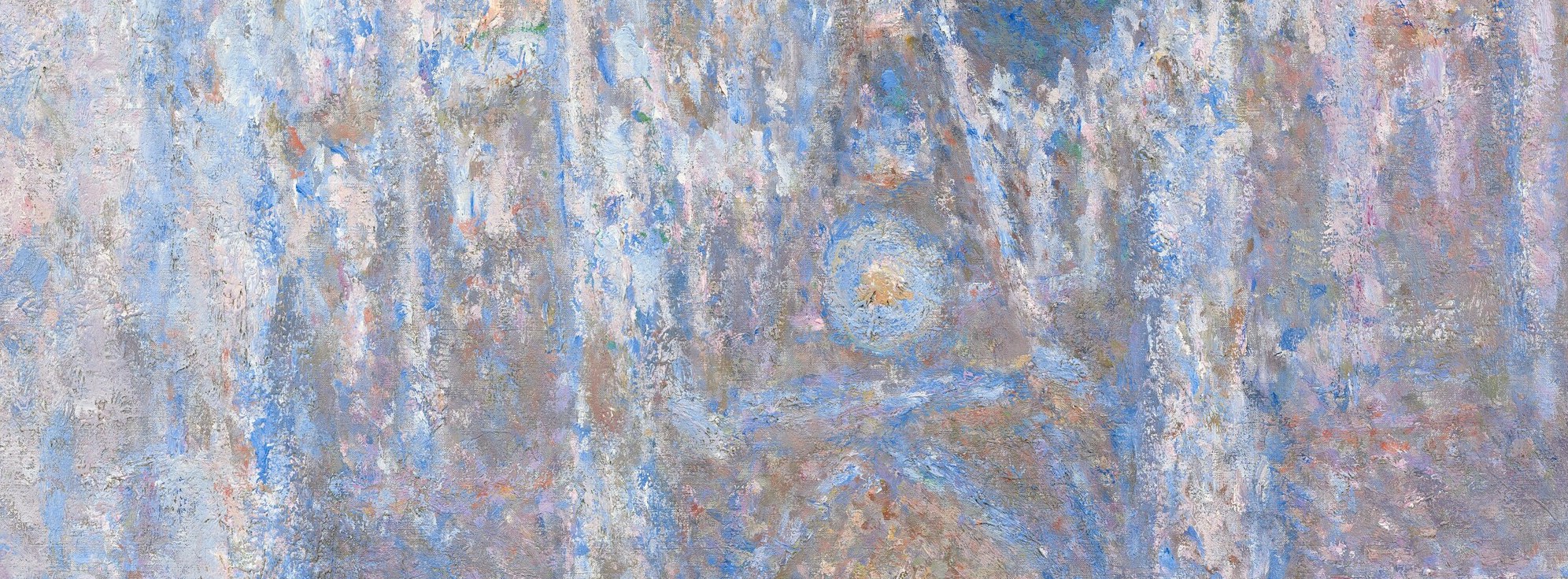
While the painting appears to dissolve stone into pure light and color, closer inspection reveals the architectural integrity of the Gothic structure. Look for the Gallery of Kings, a horizontal band of niches often overlooked, or the deliberate cropping of the building on the right, suggesting a structure too immense for the frame.
Monet's intensive study of Rouen Cathedral, begun in 1892, marked a pivotal moment in his career. By focusing on a single subject under different conditions, he explored perception and color theory, influencing subsequent art movements. He worked from a storefront directly opposite the cathedral, obsessively documenting its transformations.
This painting invites us to look beyond the immediate impression and discover the enduring architectural logic beneath the shimmering surface. What details do you notice in the haze?
Details

Transcript
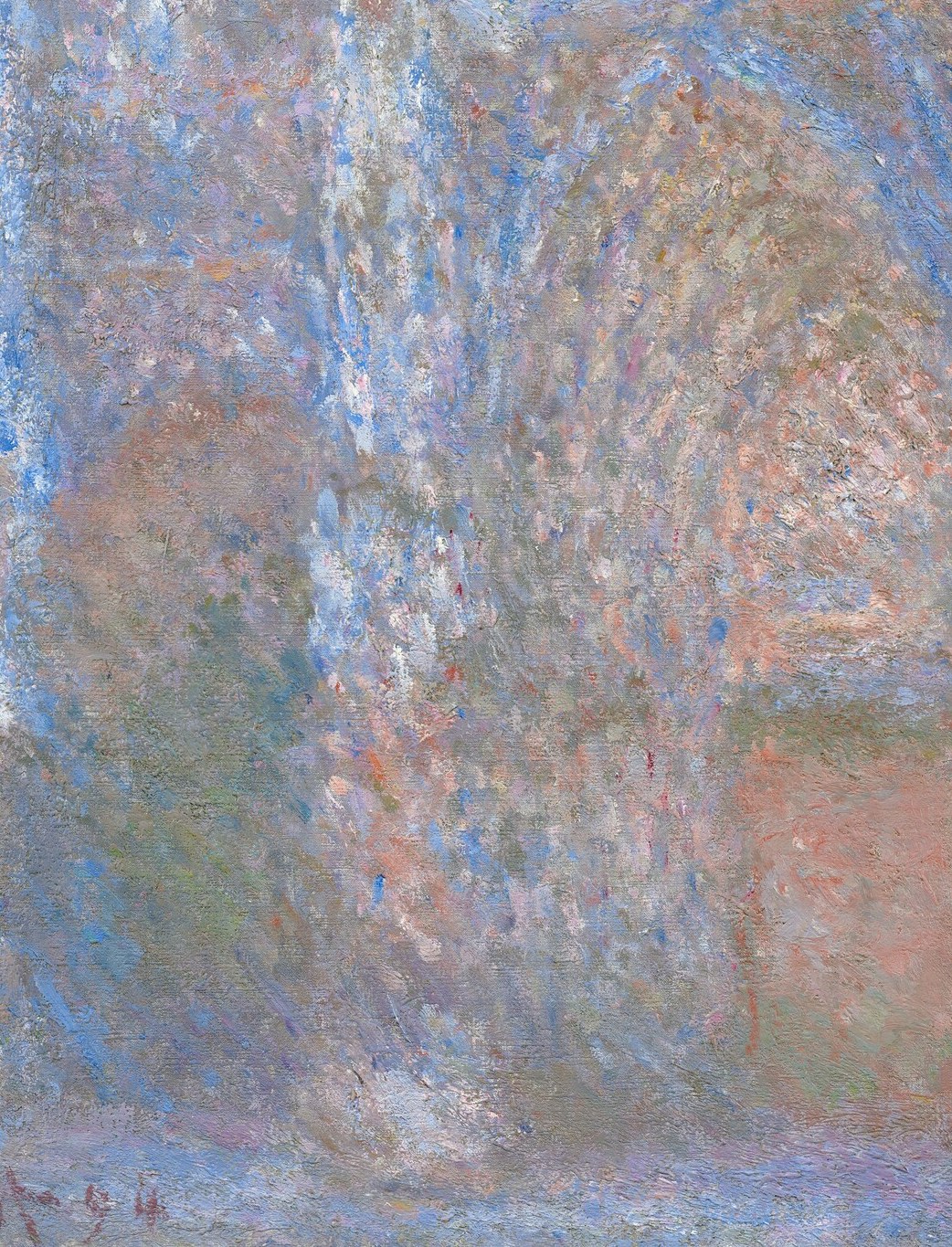
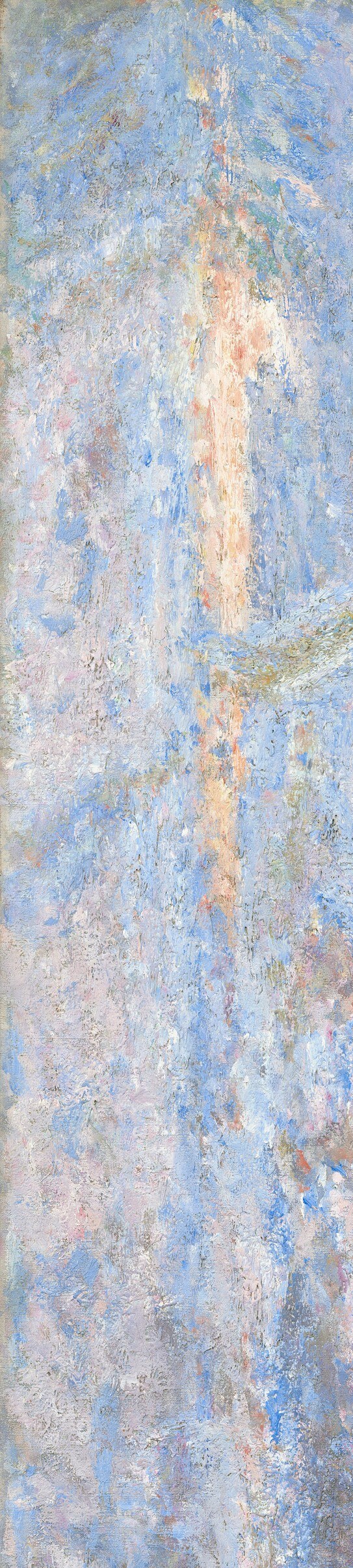
Monet painted this cathedral facade dozens of times. He sought to capture the ever-changing light, not the stone itself. But beneath the haze, real architectural details persist. This horizontal band is the Gallery of Kings, a common Gothic feature. And look at the right edge, the building is cropped. It implies the cathedral is too vast to fit the canvas.