The Nativity with the Prophets Isaiah and Ezekiel by Duccio di Buoninsegna
Duccio di Buoninsegna painted The Nativity with the Prophets Isaiah and Ezekiel between 1308 and 1311, and it now lives at the National Gallery of Art in Washington. It is a single poplar panel, tempera on wood, built for Siena's cathedral in a moment when Italian painting was still deciding what it wanted to be.
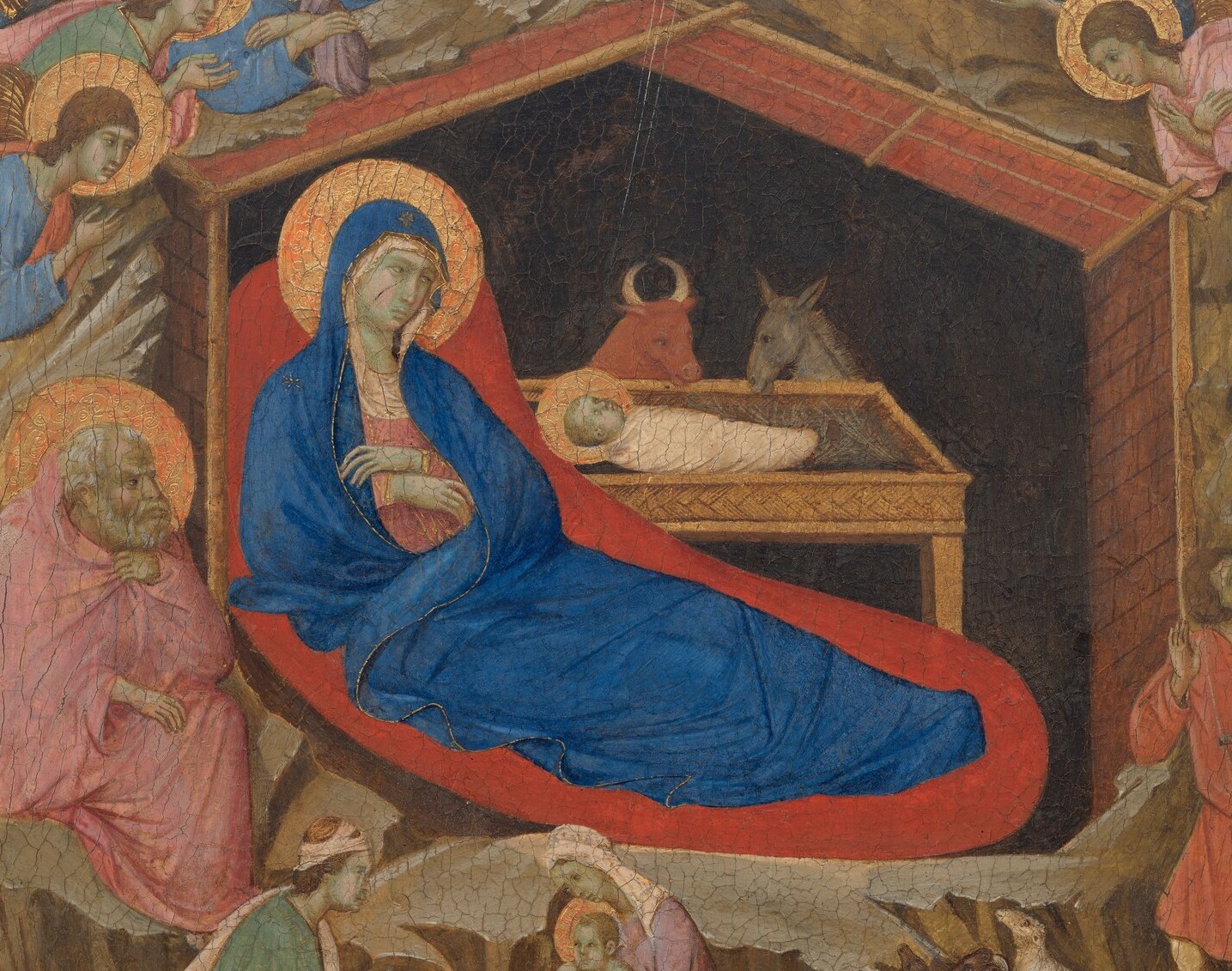
The gold ground is not sky. It is eternal light, borrowed straight from Byzantine icons. You see it most clearly in the angel choir above the stable roof, where haloed heads crowd together in a compressed celestial gallery. Mary's blue mantle dominates the center, and the tiny white-swaddled Christ pulls every sight line in the composition toward the manger.
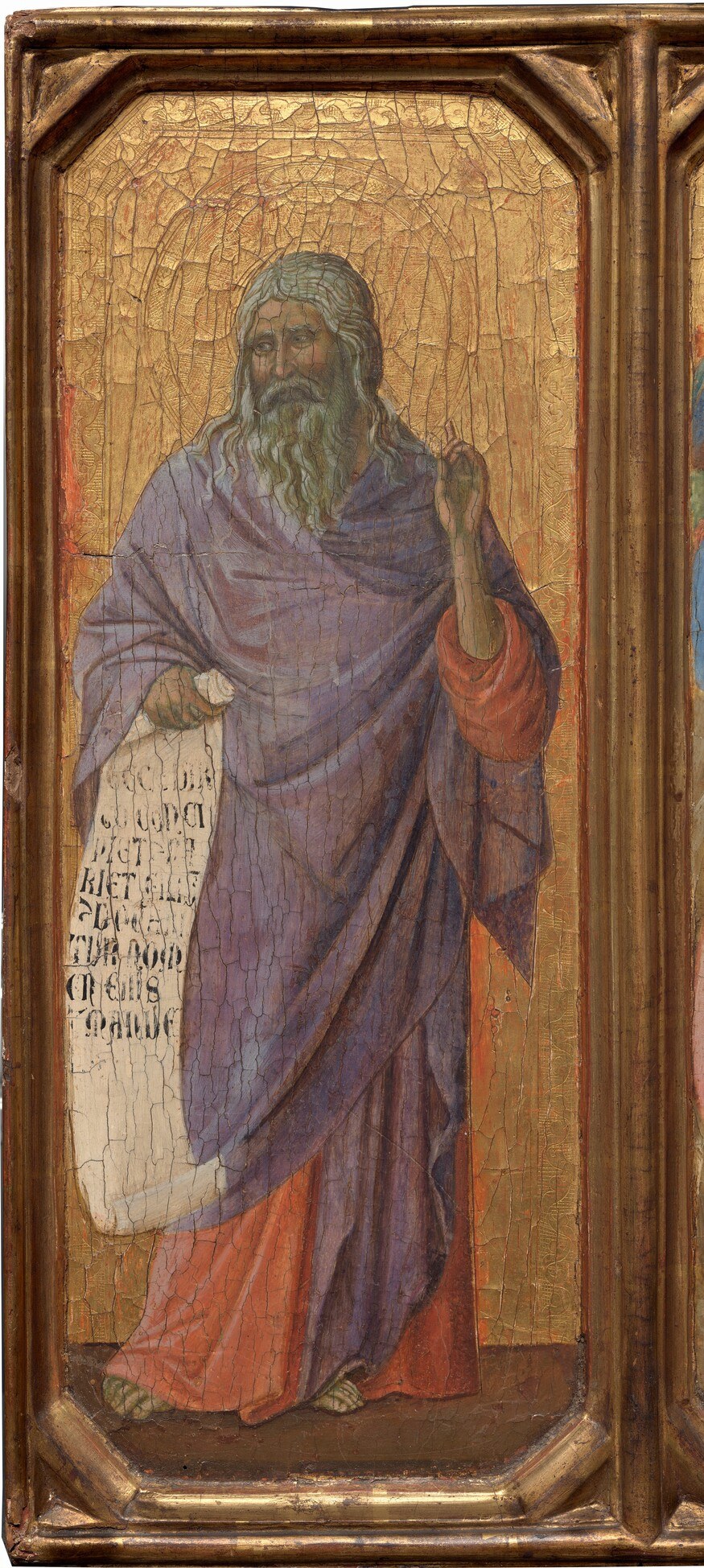
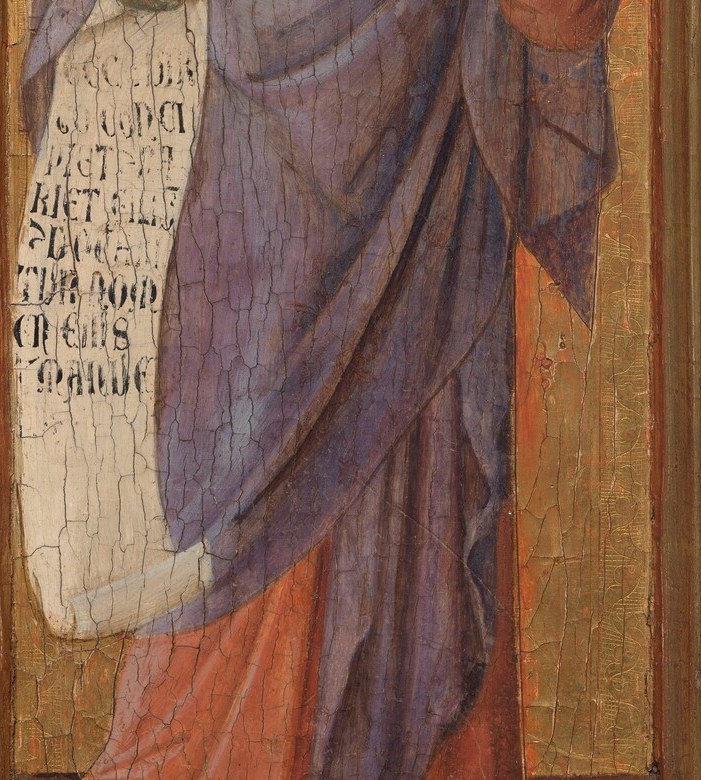
Isaiah stands on the left, Ezekiel on the right. Their scrolls carry the Old Testament verses that made them legitimate witnesses to a New Testament birth. Isaiah 7:14 names the virgin who shall conceive. Ezekiel's text alludes to a shut gate, a standard Marian symbol of perpetual virginity. A viewer in 1310 would have read those connections immediately.
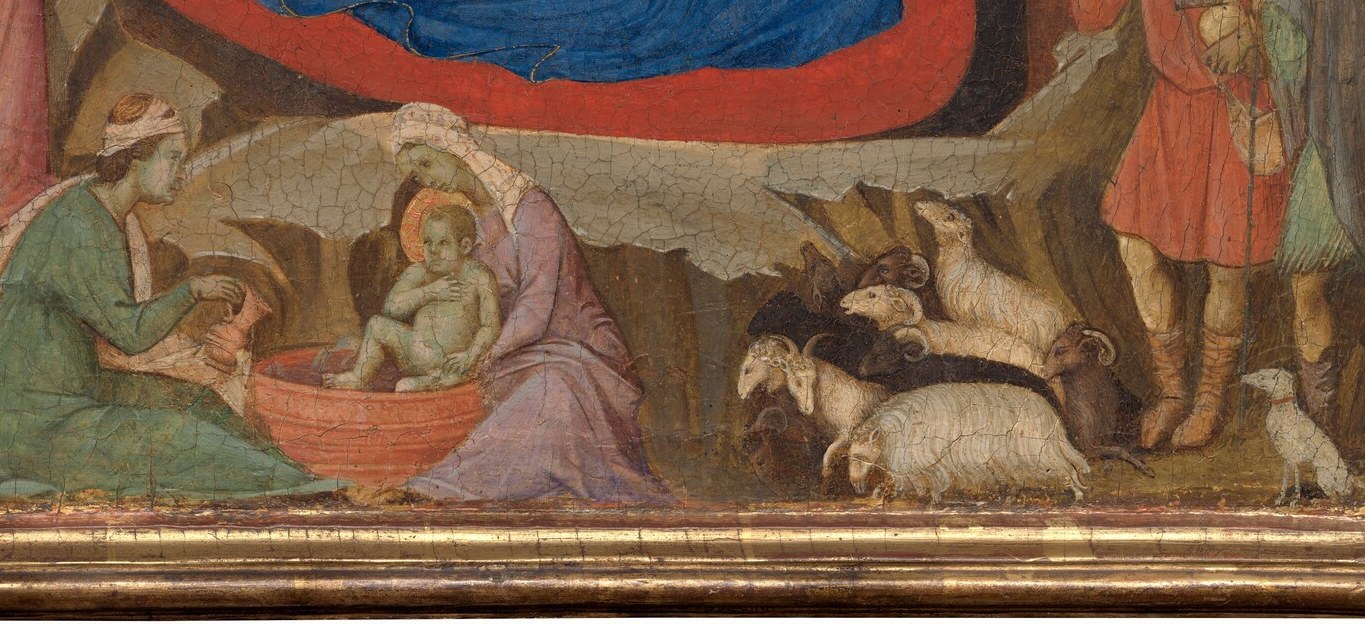
But the real time traveler is in the lower foreground. Two midwives bathe the newborn Christ. This is a Byzantine convention, the ritual first bath, and it survived here as a direct inheritance from Eastern iconography. Within a generation, it was gone from Western nativities. Look at it now before you scroll past.
Details

Transcript
At first, this looks like a familiar nativity. Mary in blue. A gold sky. The Christ child in a manger. But two Old Testament prophets stand as witnesses. Isaiah's scroll names the virgin who shall conceive. Now look at the very bottom of the painting. Two midwives bathe the newborn Christ. This is a Byzantine ritual bath. It vanishes from Western art within a generation. Duccio painted this for Siena's cathedral in 1310.