Virgin and Child with Saint Catherine of Alexandria by Anthony van Dyck
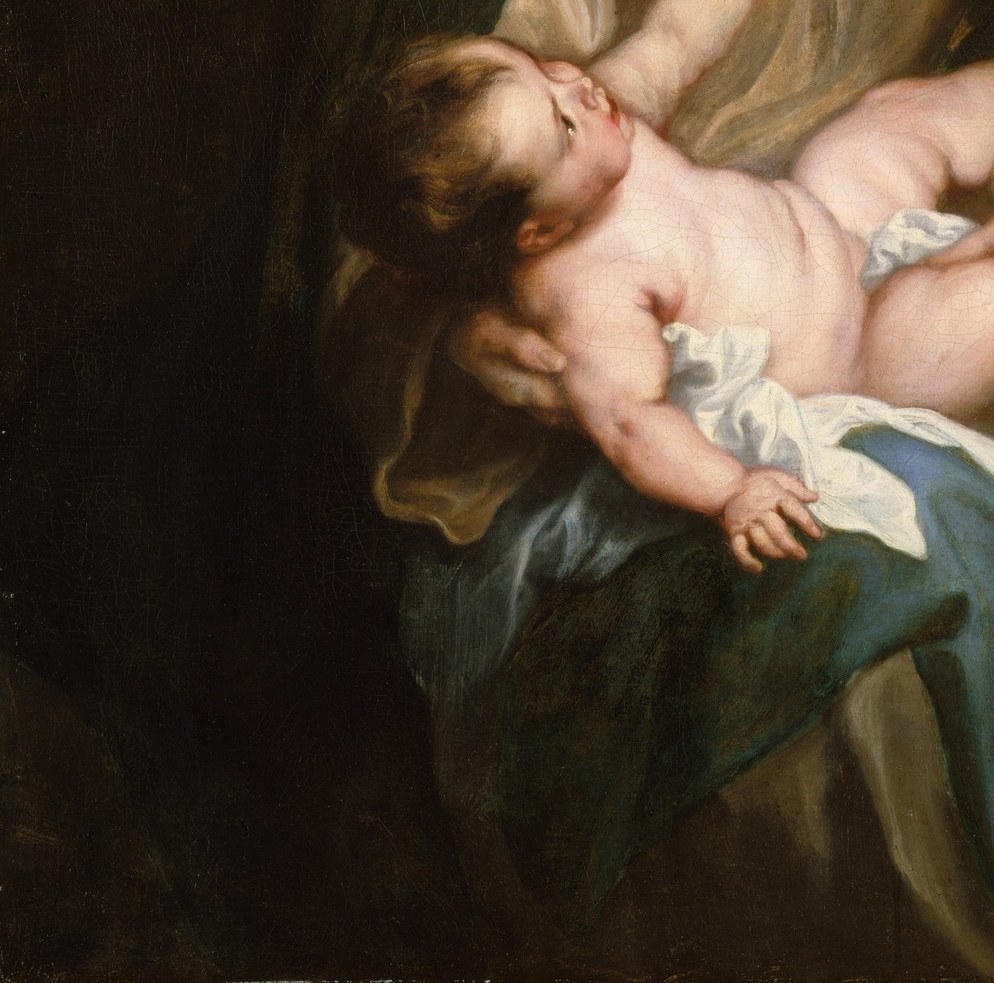
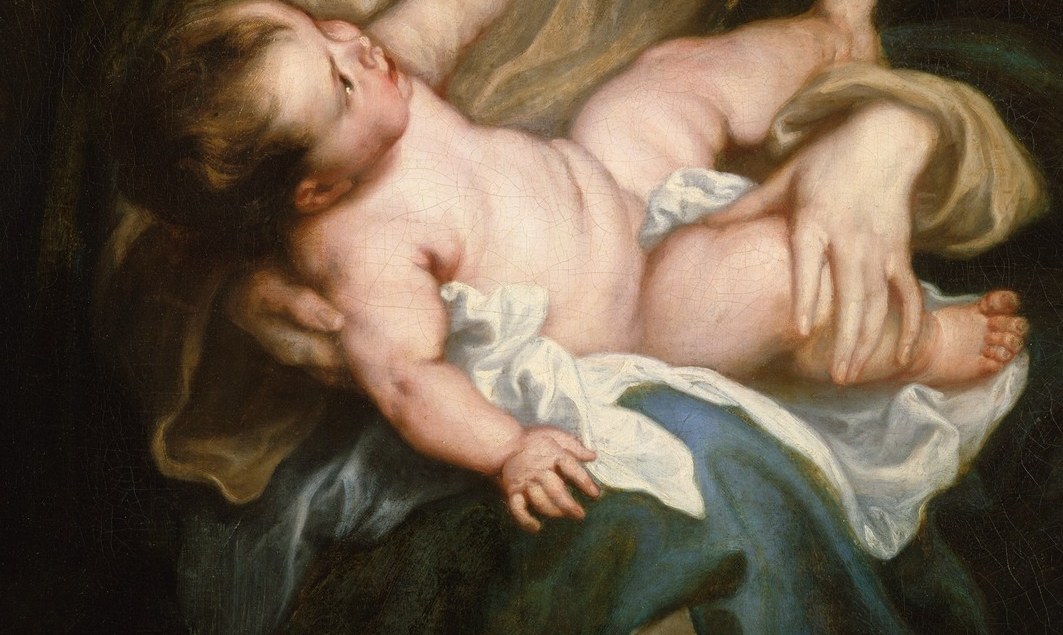
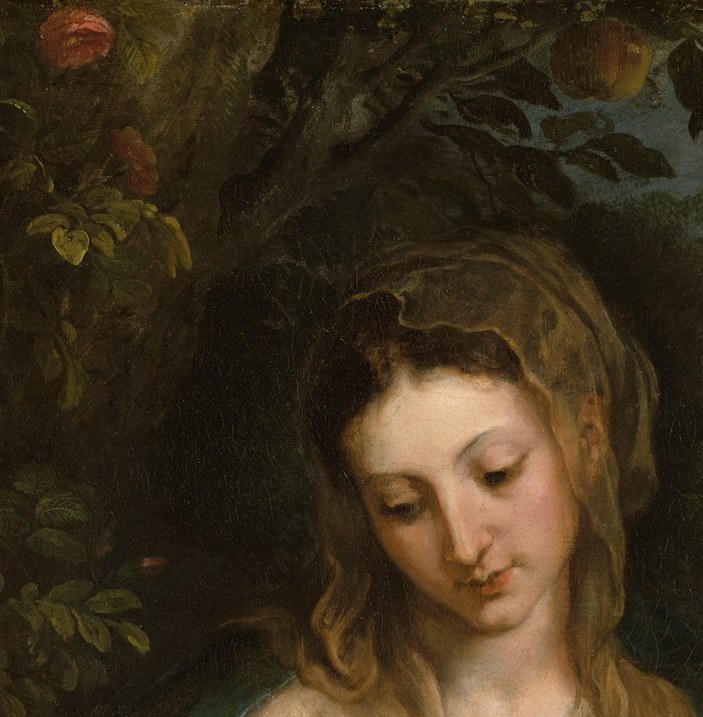
Anthony van Dyck's 'Virgin and Child with Saint Catherine of Alexandria' (1630) sits in the Metropolitan Museum of Art, and up close it teaches a masterclass in restraint. The blue mantle is real crushed lapis lazuli, ultramarine, a pigment more precious than gold in 17th-century Antwerp. Van Dyck worked it wet into wet, letting the oil carry the color in fluid, unbroken sweeps so the folds read as continuous silk rather than layered brushstrokes.
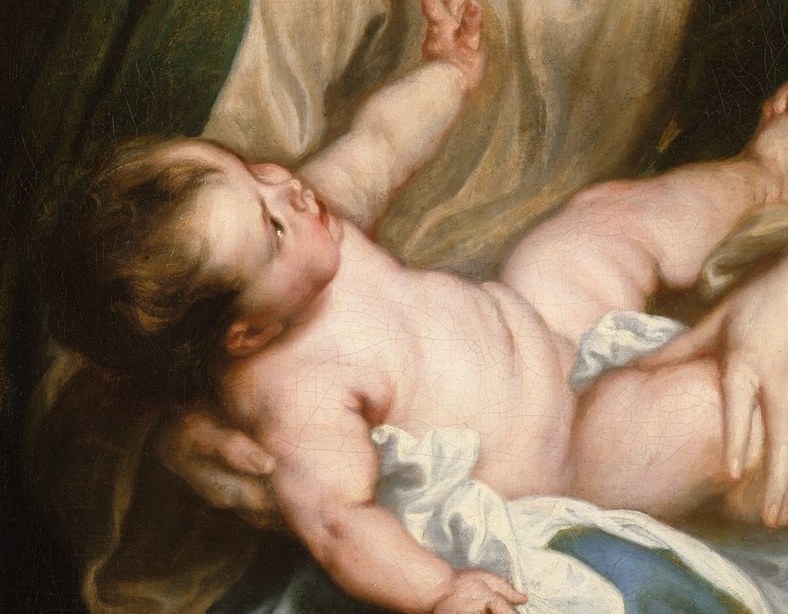
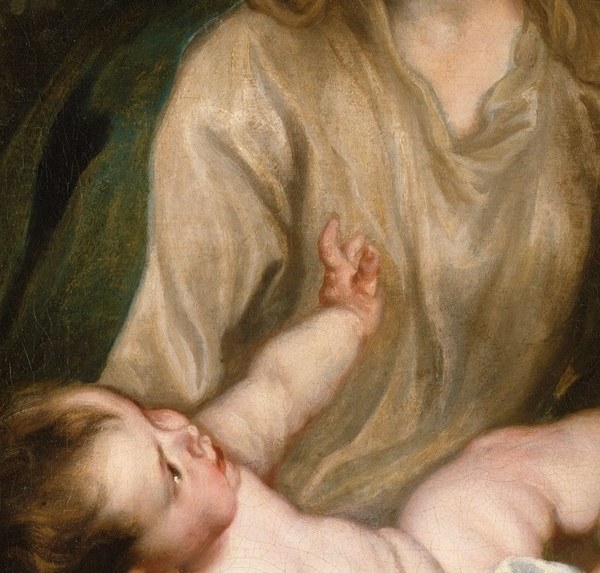
Watch the Virgin's cupped fingers where they meet the Christ Child's skin. The loaded brush kisses the canvas and lifts; there is no scrubbing, no overworking. That hovering softness is visual theology, divine protection rendered as the lightest possible physical contact. The infant's open mouth is one confident stroke of wet red paint, laid down and left alone.
Van Dyck was barely thirty when he painted this. He had already absorbed Rubens' dynamic volume in Antwerp and the Venetian palette from his years in Italy, but here he chooses quiet. As court painter to the Archduchess Isabella and soon to Charles I of England, his signature was becoming this exact thing: grandeur without heaviness. The white linen beneath the Child is the same cool white, lead and chalk, that prefigures the burial shroud in every Nativity of the Baroque. Van Dyck makes you feel the weight of that connection through the lightest possible hand.
You are watching a painter who has learned that a single uninterrupted brush drag, placed precisely and never corrected, can do more than a week of refinement.
Details
Transcript
Blue so deep it was once worth its weight in gold. The pigment is crushed lapis lazuli, handled wet into wet. Look at her fingers. They barely graze the skin. Van Dyck loads the brush once and barely presses, the paint floats. Now the infant's upturned face: a single wet stroke for the mouth. He learned this touch from Rubens, then made it quieter. The linen beneath him is white paint with almost nothing in it. Every fold of this shroud already foreshadows the Pietà.