Aeneas and the Sibyl in the Underworld by Jan Brueghel the Younger
The entire story of Virgil's Aeneid, Book 6, fits onto a copper panel smaller than a laptop screen. Jan Brueghel the Younger painted Aeneas and the Sibyl in the Underworld in the 1630s, and it has been at the Metropolitan Museum of Art in New York since 1991.
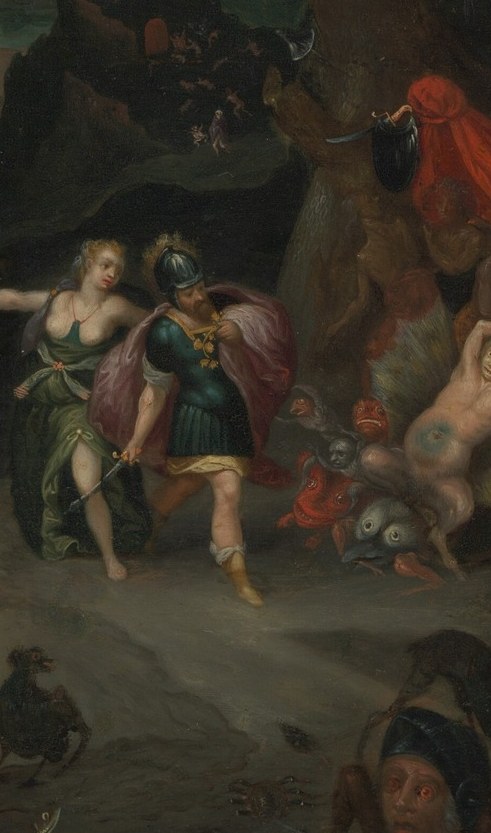
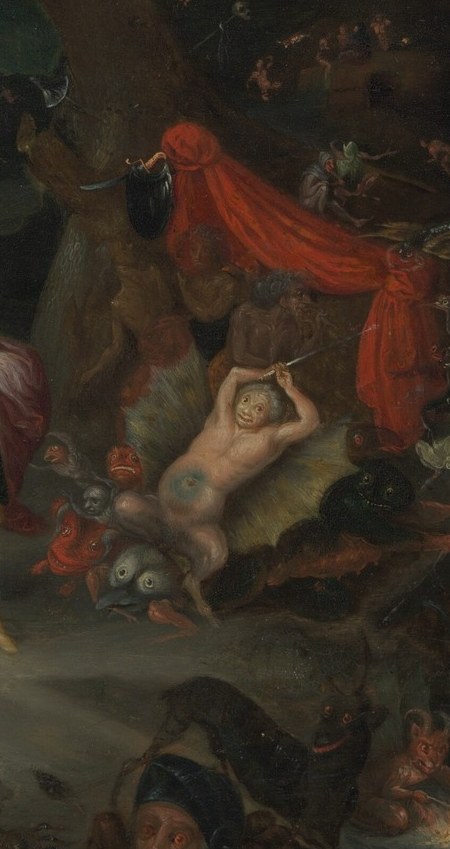
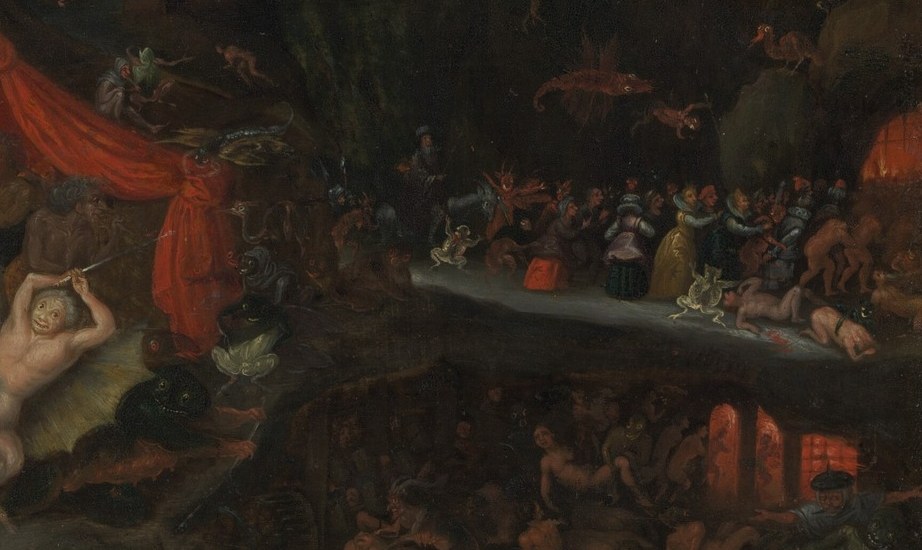
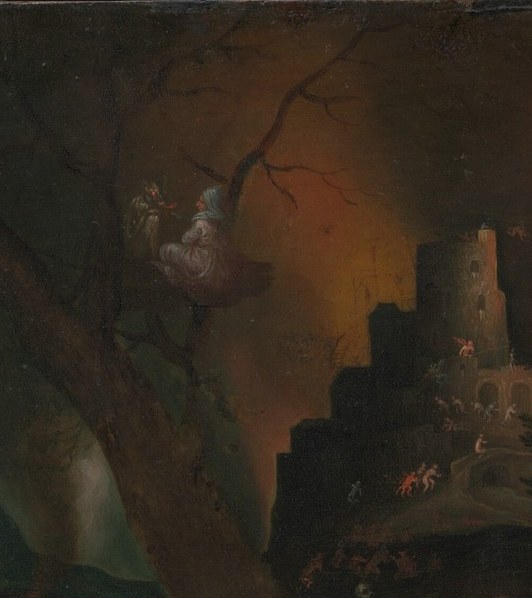
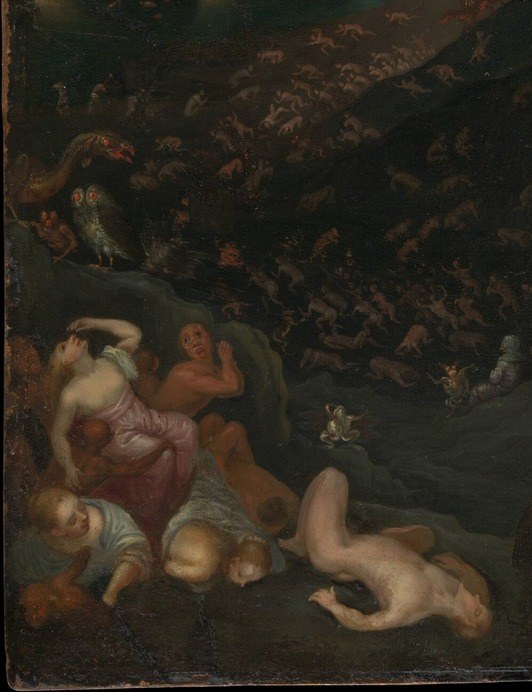
Look first at the armor. Aeneas stands in the cold blue light at left, but he gleams in polished metal, a deliberate signal that he is not one of the dead. The Sibyl's outstretched hand pulls your eye toward Charon's packed barge on the Styx. Follow the riverbank and you will find Bosch-like monsters in the margins and, high in the distance, the infernal city of Dis.
The composition is nearly a direct copy of his father's painting of the same subject, made around 1600. Jan Brueghel the Elder had absorbed the hellscapes of Hieronymus Bosch, and his son inherited that vocabulary wholesale. Copper, the chosen surface, allowed the extraordinary miniaturist detail you see in the crowds of souls and the glowing enamel sky, every damned figure rendered with a single hair's precision.
Aeneid 6 is the moment a living hero crosses into the realm of the dead, and this painting knows its source text cold. Every object carries a line of Virgil: the priestess guide, the ferryman, the fortress of Dis, the tormented souls on the bank. It is literary illustration elevated to dynastic craft.
Details
Transcript
Two figures stand at the edge of the underworld. Aeneas wears armor no ghost would wear. The Sibyl stretches her hand toward the river Styx. Charon's barge is already crowded with the dead. That distant fortress is Dis, the city of the damned. Marginal monsters are Bosch's signature, borrowed across two generations. The code adds up to a single moment: the living hero enters death.