John Wood Dodge by Edward S. Dodge
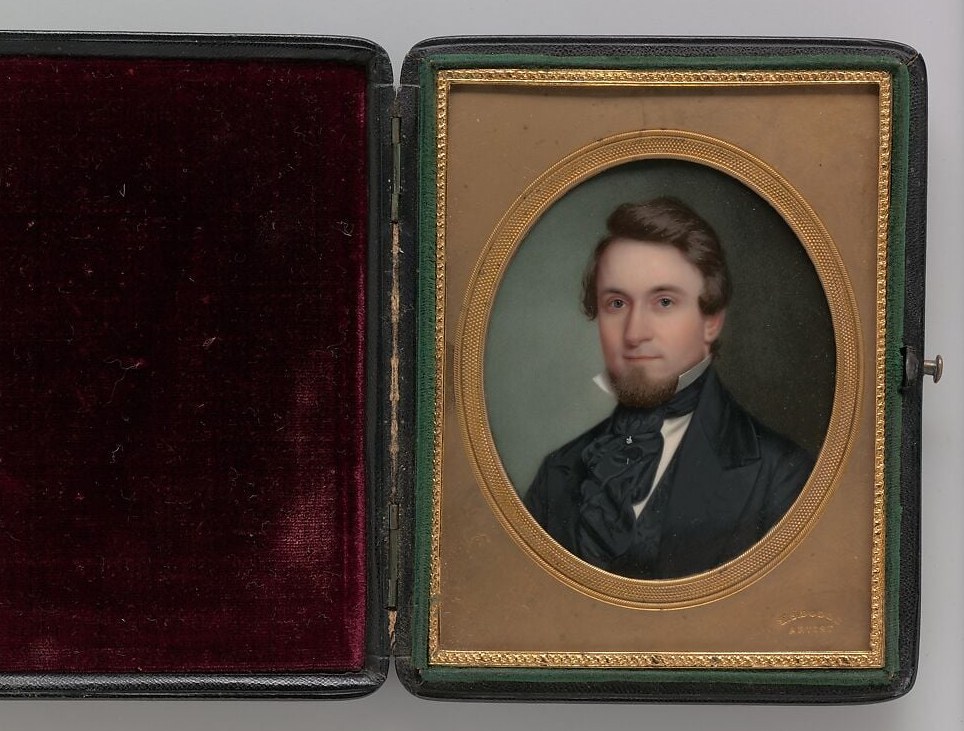
This watercolor on ivory, "John Wood Dodge" by Edward S. Dodge, created around 1836, is a miniature portrait from the collection of the Smithsonian American Art Museum. These tiny artworks served a purpose similar to photographs today, offering a portable and intimate connection to a loved one.
Observe the delicate brushwork on his face and the subtle highlights in his eyes. The crisp white collar against his dark coat draws attention to his composed demeanor.
Creating such a detailed image on ivory was a technical challenge. The artist, Edward S. Dodge, meticulously applied numerous thin, translucent layers of pigment, a technique called glazing. This allowed for the subtle gradations of skin tone and the lifelike appearance that made these portraits so cherished.
Miniatures were often exchanged between loved ones or kept as personal mementos, reflecting the deep affection and social customs of the 19th century. What personal keepsakes do you hold dear today?
Details
Transcript
Miniature portraits were the photos of the 19th century. They were small enough to be carried, a constant memento. The artist applied many thin layers of paint on ivory. This meticulous glazing created a lifelike, intimate gaze. It was meant to be a private, personal connection.