Untitled by Li Xiying
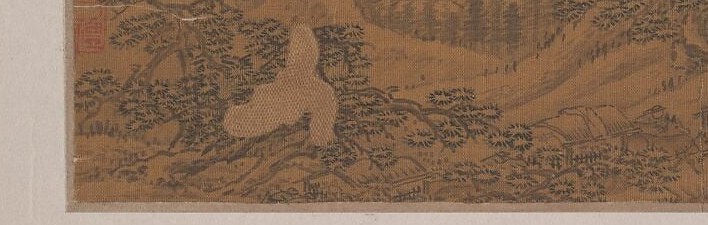
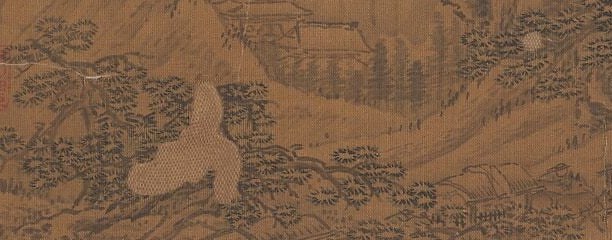
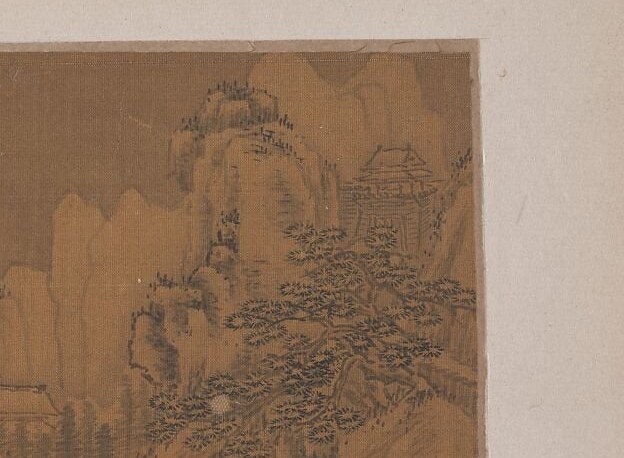
This is an untitled miniature from an album of eleven paintings, made by the Chinese artist Li Xiying in 1506. It is ink and color on silk, and it records something that feels almost too ordinary to have survived five centuries: two men hauling an ox-cart up a mountain road.
Look at the two human figures and the space between them. One leans forward at the front, pulling or guiding the ox. The other braces at the rear, steadying the load. Their postures read as effort even at this tiny scale. Above them, the cliff dominates the entire right half of the frame. That is the point. The landscape does not frame the people. The people are passing through the landscape.
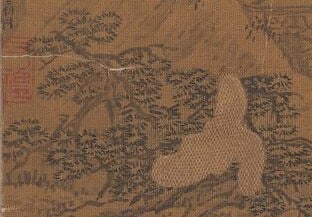
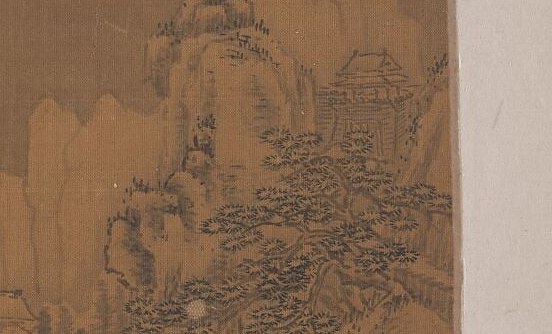
The painting belongs to a long East Asian tradition of travelers in the mountains, but Li Xiying's touch is specific. The texture on the main cliff uses fupi cun, or axe-cut strokes: abbreviated, angular brush marks that build a three-dimensional rock face from flat silk. Pines cling to the left rock wall, a literati shorthand for resilience. The pale mist between the rock masses is not empty silk. It is depth, deliberately left blank so the composition can breathe.
Li Xiying remains largely unknown. The album exists. The road exists. And for a moment in 1506, someone thought two laborers and an ox were worth stopping for.
Details
Transcript
The mountain is not a symbol. It is the road. In 1506, everything traveled on paths like this. One man leads. Another pushes from behind. The painter carved the cliff face with calligraphic axe-cut strokes. Li Xiying saw labor and made it permanent.