Landscape with the Burial of Saint Serapia by Claude Lorrain
Claude Lorrain's 'Landscape with the Burial of Saint Serapia', painted around 1639, was commissioned by King Philip IV of Spain and now resides in the Prado Museum in Madrid.
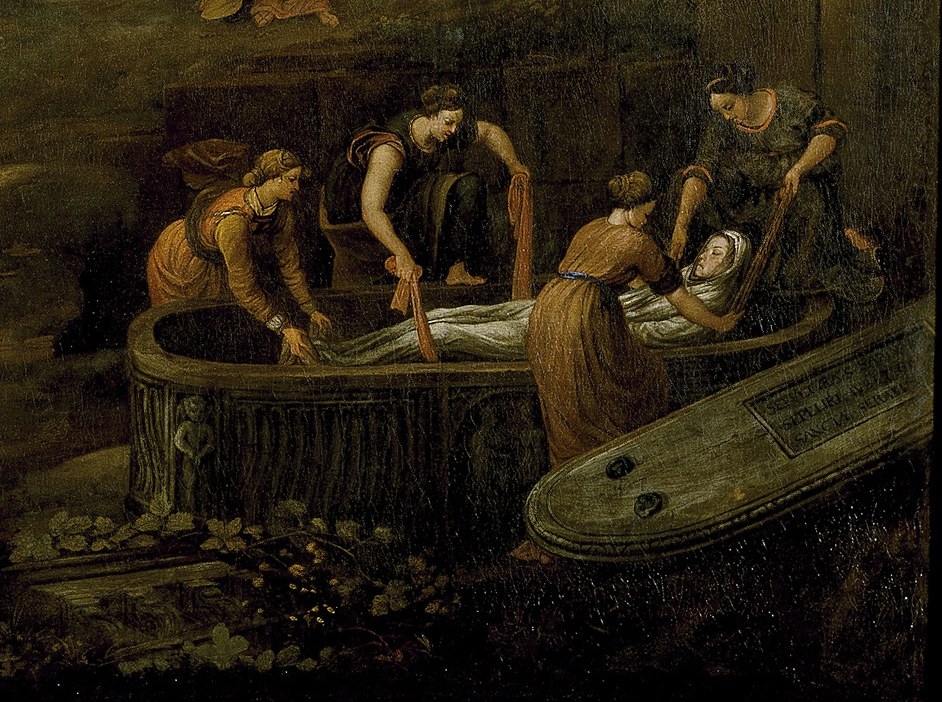
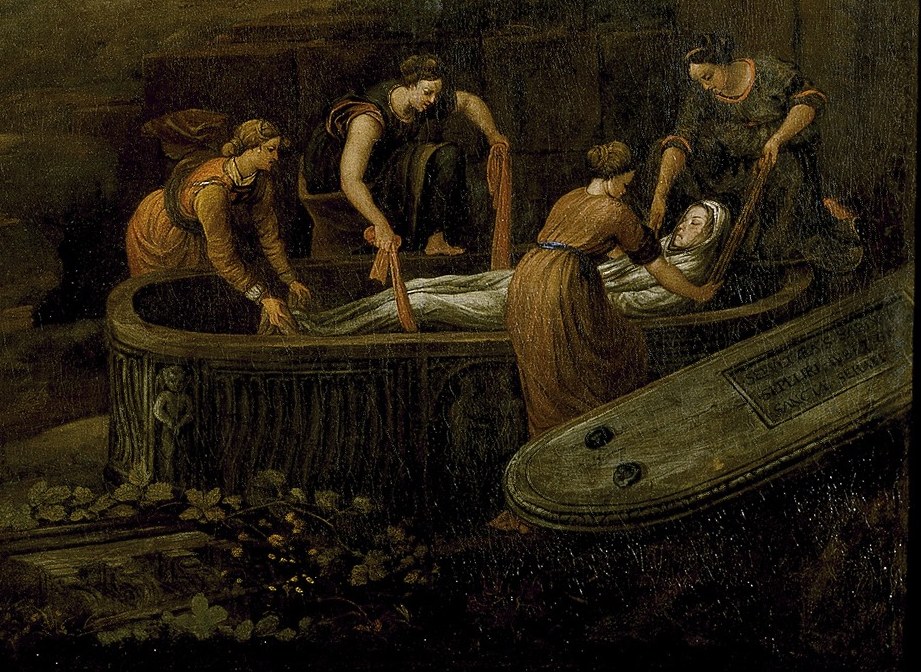
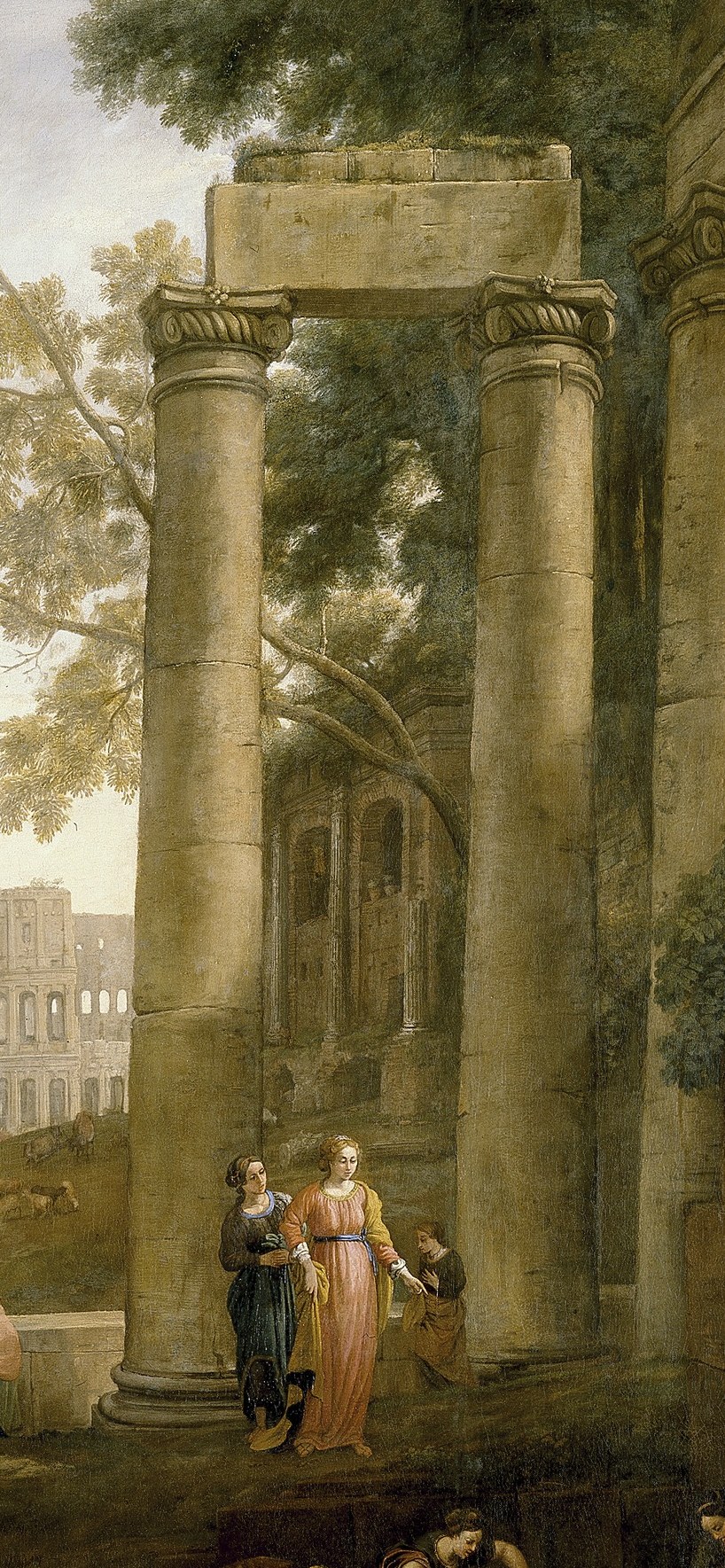
The painting shows the solemn burial of Saint Serapia, with mourners gathered around her sarcophagus. Look closely at the lid, where an inscription clearly identifies the saint. The grand, crumbling classical columns and distant Colosseum ruins firmly place the scene in an idealized Roman landscape.
At the time of the commission, it was widely believed that Saint Serapia was martyred on Rome's Aventine Hill. This contemporary belief influenced the artist's choice of setting, even though modern scholarship has since located the historical site of her martyrdom near present-day Terni, a significant distance from Rome.
This blend of historical understanding and artistic interpretation shows how commissions could shape the visual narrative of a painting. What details do you notice that speak to this blend of fact and belief?
Details
Transcript
This grand scene was painted for King Philip IV of Spain. It depicts the burial of Saint Serapia. The inscription on the sarcophagus lid names Saint Serapia. The King believed Serapia was martyred on Rome's Aventine Hill. Modern scholars now place the site near Terni, far from Rome. His commission shaped how the artist depicted this landscape.