Roundel with Saints Barbara and Catherine by http://www.wikidata.org/.well-known/genid/ad5127a3b1cf96a11f91542f7b71cf59
This "Roundel with Saints Barbara and Catherine," painted by an artist from the German School around 1500, offers a glimpse into the visual language of early Christian art, where every detail served to identify a saint and tell their story.
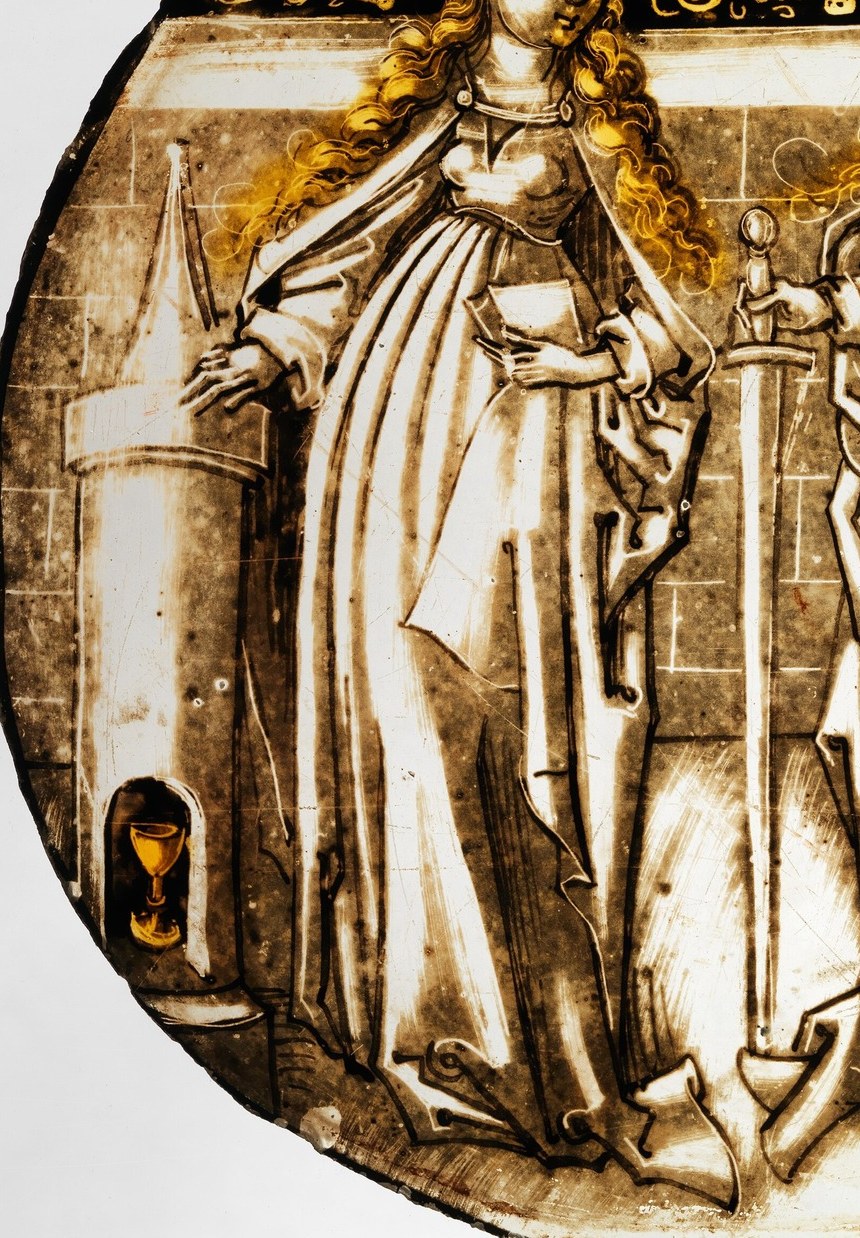
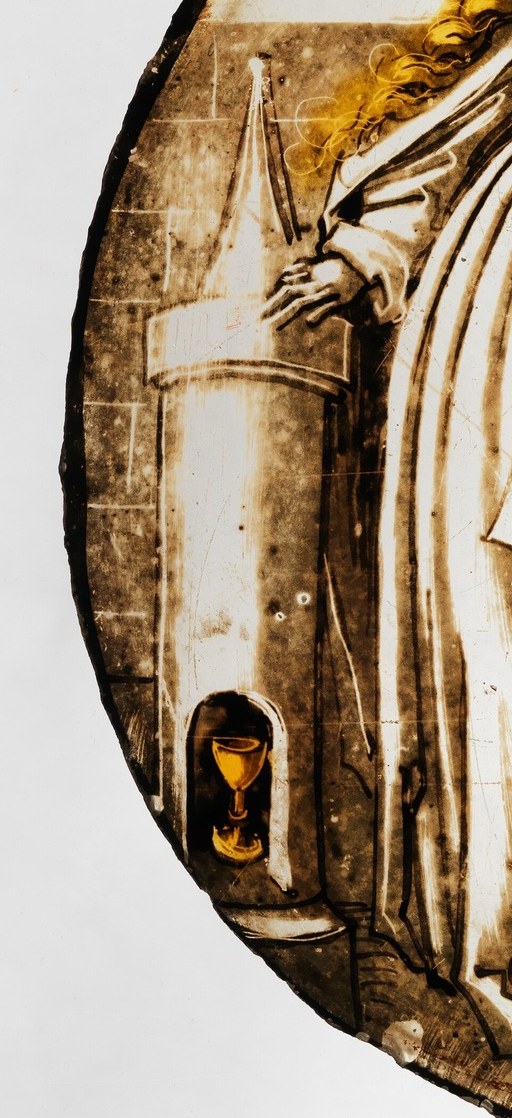
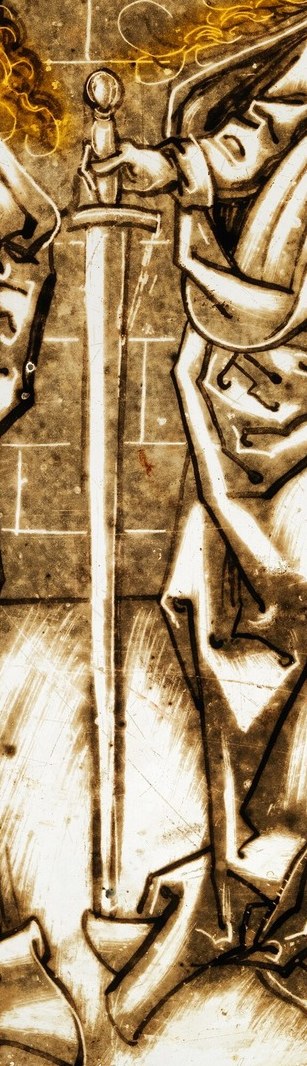
Look closely at the figures. Saint Barbara is identified by the tower in which her father imprisoned her for her Christian faith. Beside her, Saint Catherine holds a sword, symbolizing her martyrdom, and at her feet, a broken wheel, a direct reference to the instrument of her torture. These attributes were vital visual cues for devotional practice.
During this period, many people were illiterate, so visual storytelling was paramount. Paintings like this acted as powerful teaching tools, communicating complex narratives and theological concepts through easily recognizable symbols. The gold patterned background and radiant halos further emphasize their divine status, inviting contemplation and reverence.
What other 'secret languages' do you see in art that might be lost to modern eyes?
Details
Transcript
In early Christian art, paintings were often like visual puzzles. Every symbol helped the viewer identify a saint. This is Saint Barbara, known for her tower. Her father imprisoned her in it for her faith. Her companion is Saint Catherine, identified by her sword. And this broken wheel, the instrument of her torture. These details were like a secret language, understood by all.