Titus as a Monk by Rembrandt
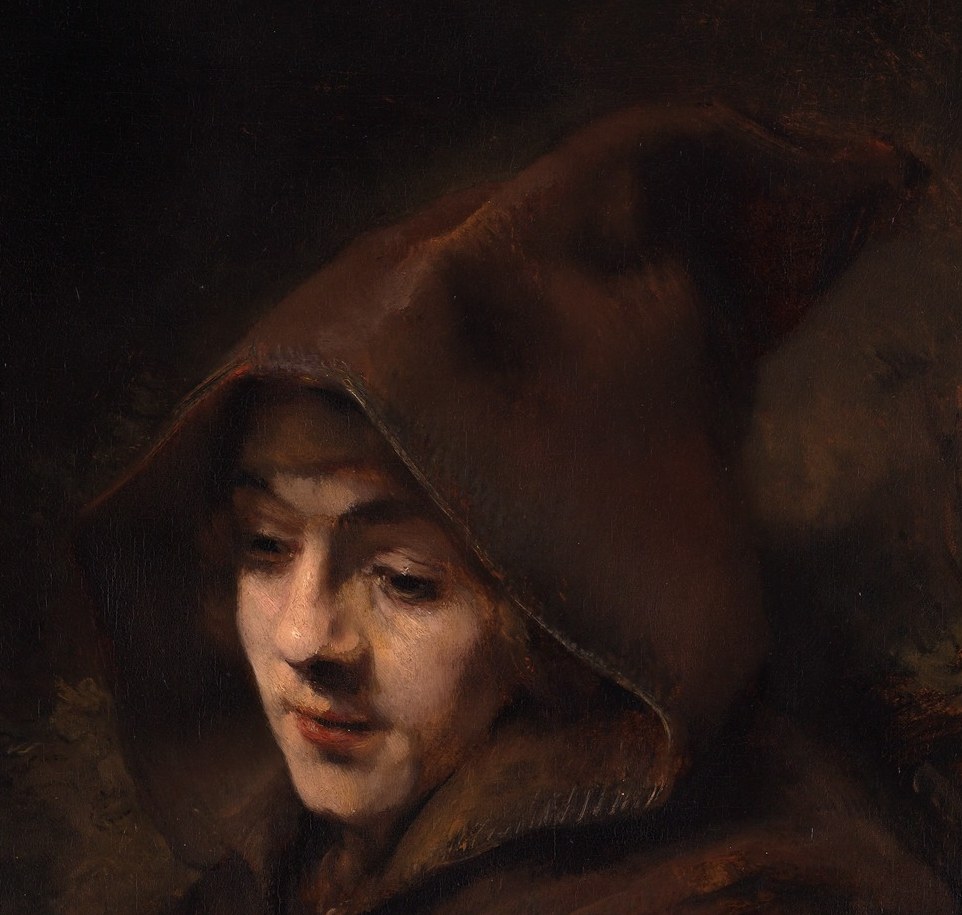
Rembrandt's "Titus as a Monk," painted in 1660, is a masterclass in how light and shadow can create a living presence on canvas. Housed at the Rijksmuseum in Amsterdam, this intimate portrait of his son, Titus, demonstrates the artist's unparalleled ability to evoke mood and depth.
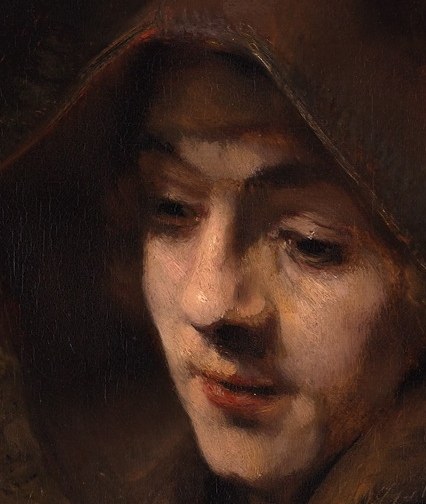
Observe how the voluminous monastic hood frames Titus's face, plunging much of the scene into shadow. Yet, his young face emerges, bathed in a soft, diffused light that seems to emanate from within. This subtle illumination highlights his contemplative expression, particularly the delicate catchlight in his left eye and the slight parting of his lips, giving him an almost breathing quality.
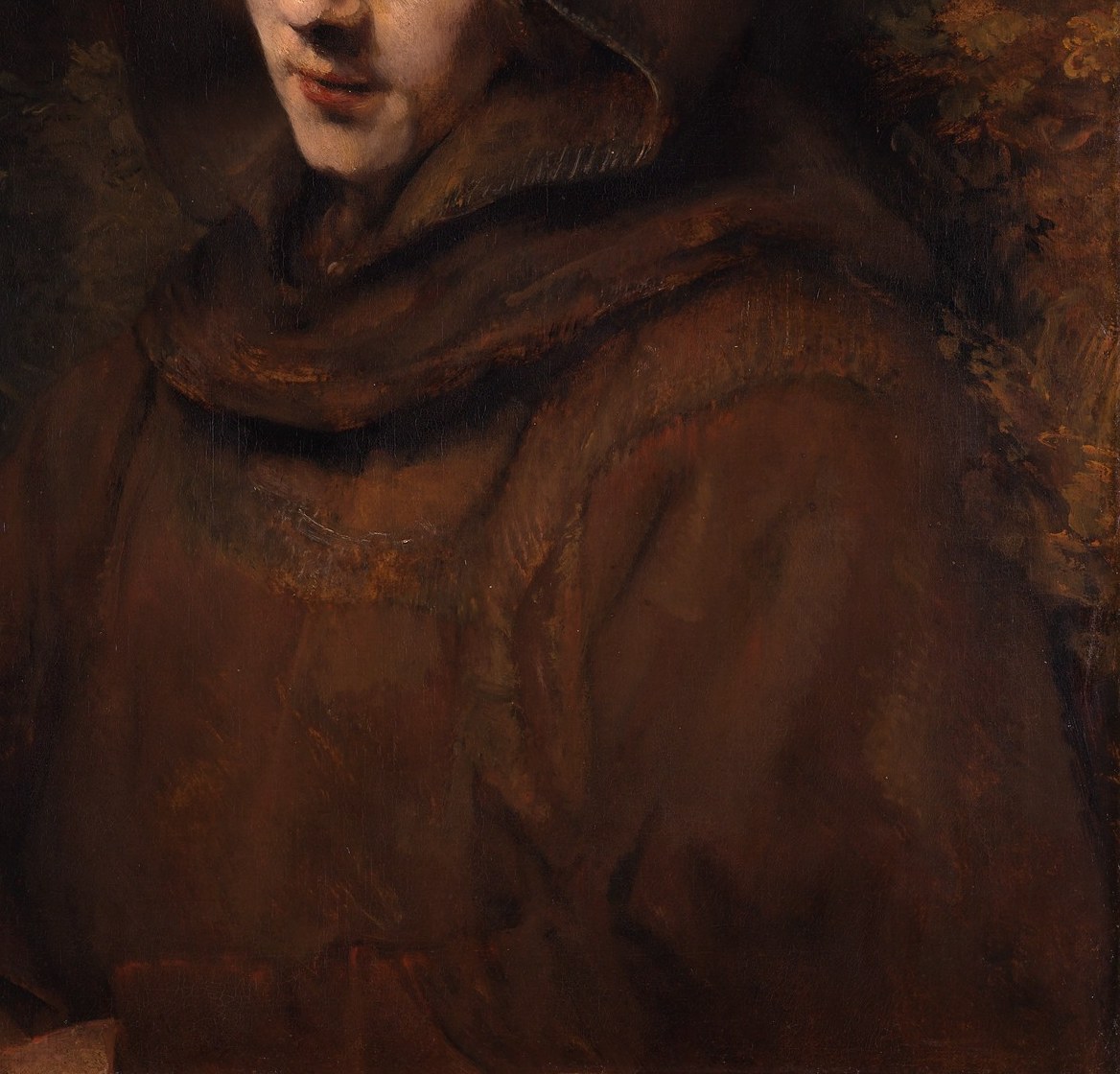
Rembrandt's characteristic chiaroscuro, a technique of strong contrasts between light and dark, is used here not for drama, but for quiet introspection. The rough texture of the habit and the loose brushwork in the background recede, allowing the viewer's gaze to settle on the illuminated face. This focus on light was central to Rembrandt's unique style, allowing him to explore the psychological depth of his subjects.
Consider how Rembrandt makes us feel the presence of his son, not through bold gestures, but through the delicate interplay of light and shadow. What do you see in the light?
Details
Transcript
This painter was a master of light. See how the monk's hood creates deep shadow. But his face glows with soft, diffused light. The light catches his left eye, drawing you in. This trick of light gives the illusion of life. It's all painted to make him feel present.