Willem II (1626-50), Prince of Orange, and his wife Maria Stuart (1631-60) by Gerard van Honthorst
Gerard van Honthorst's 1647 double portrait of Willem II, Prince of Orange, and his wife Maria Stuart, is more than just a likeness; it's a powerful declaration of status and alliance. Part of the Rijksmuseum's collection, this painting captures a crucial moment in European royal history.
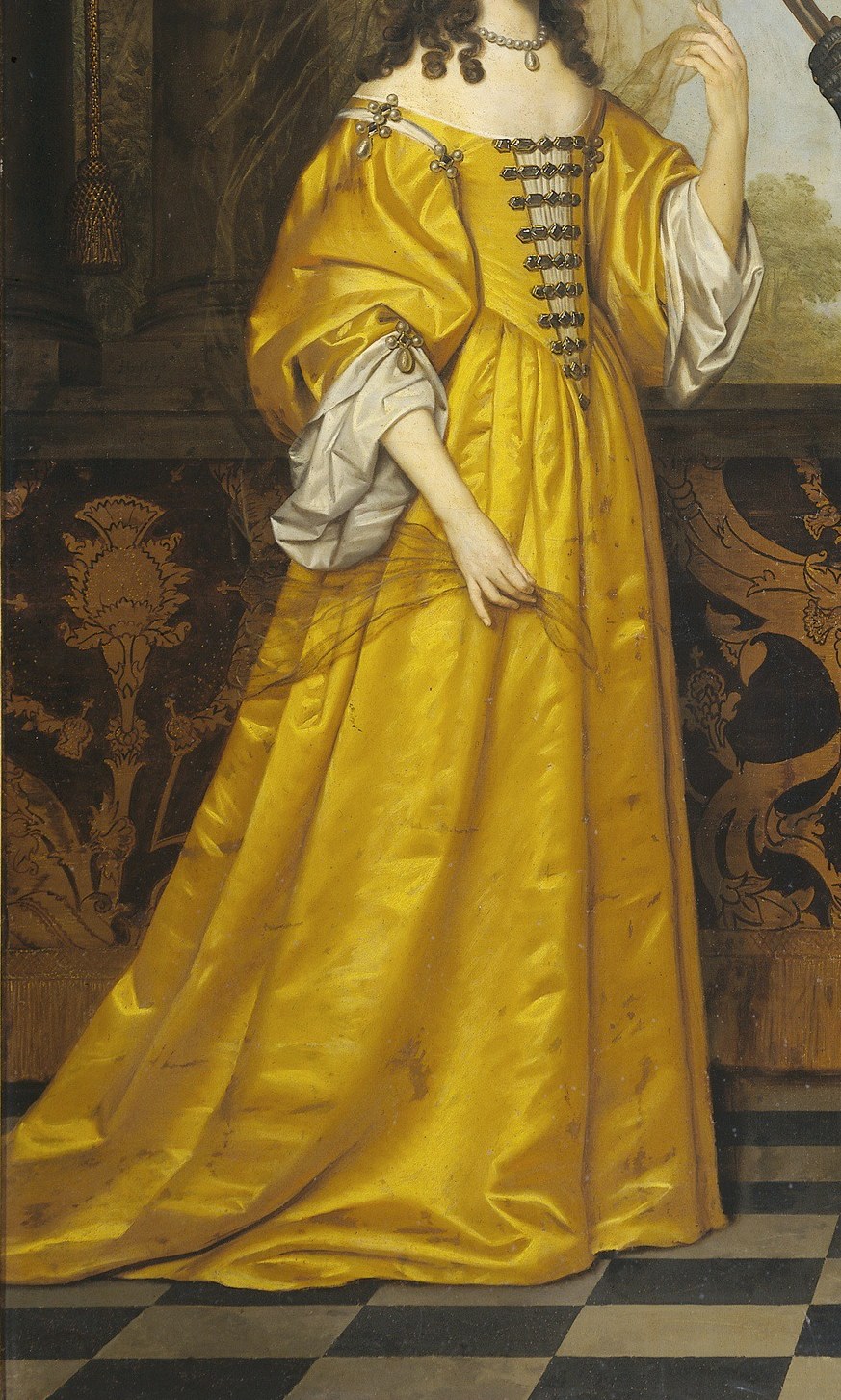
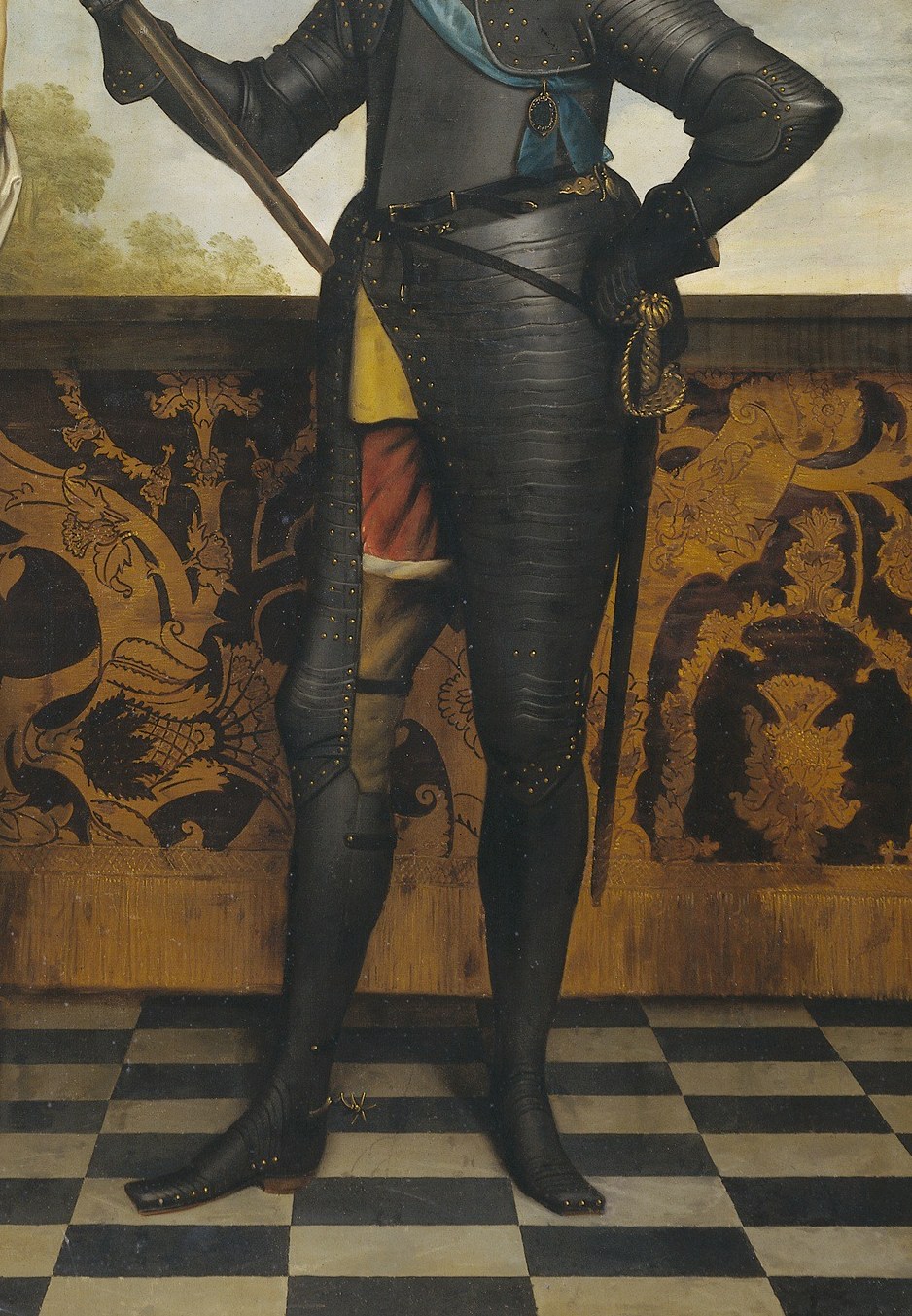
Look closely at the details: Maria Stuart, daughter of England's King Charles I, is resplendent in a luminous yellow dress, symbolizing her regal status. Her husband, Willem II, is presented in gleaming armor, asserting his military and political power as a young prince.
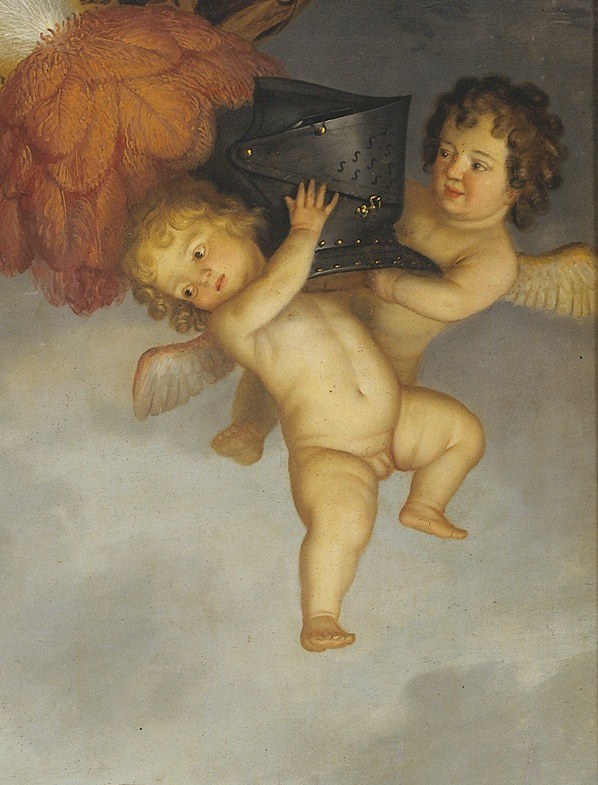
Van Honthorst, known as "Gerard of the Nights" for his mastery of chiaroscuro after studying with Caravaggio, uses dramatic lighting to emphasize the textures of the silk and metal. Even the cherubs add to the grandeur, bearing symbols that underscore the couple's importance.
This painting not only showcases the artist's skill but also provides a glimpse into the strategic marriages and political imagery of 17th-century European royalty. What details do you find most striking?
Details
Transcript
This isn't just a portrait, it's a political statement. Maria Stuart, age 16, wears a dress of luminous yellow silk. She was the daughter of King Charles I of England. Her husband, Willem II, Prince of Orange, appears in full armor. He was just 21 when this was painted, a powerful young leader. Even the cherubs carry symbols of their power, like this helmet. The painter, Gerard van Honthorst, was famous for dramatic lighting. He captures the glint on armor and silk with Caravaggio-like skill.