The Annunciation by Gerard David
Gerard David's "The Annunciation," painted in 1506, is a key work of the Early Netherlandish tradition, housed in a major collection. The painting depicts the pivotal moment when the Archangel Gabriel informs the Virgin Mary of her divine conception.
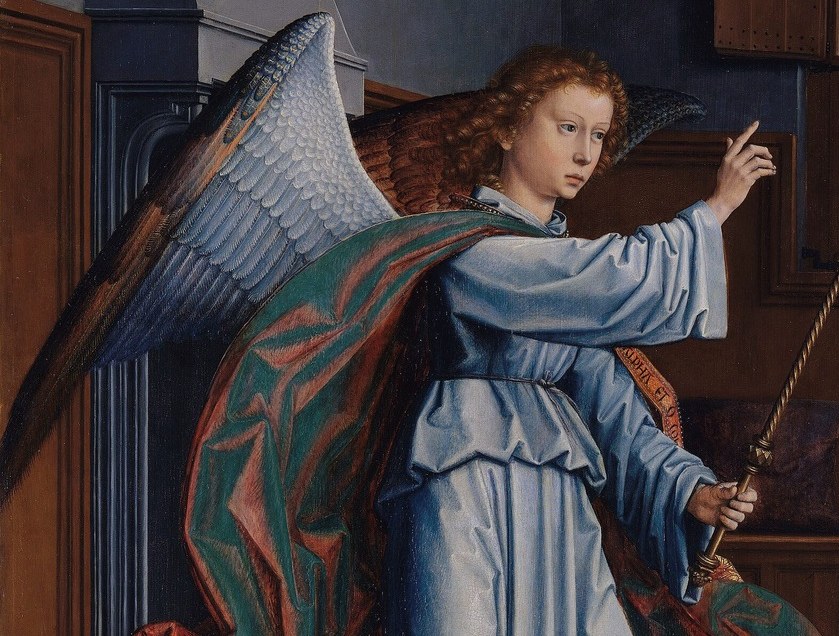
Notice the rich symbolism: Gabriel's vibrant wings and authoritative staff, Mary's serene expression, and the purity of the white lily. These details draw the viewer into a moment of profound spiritual significance.
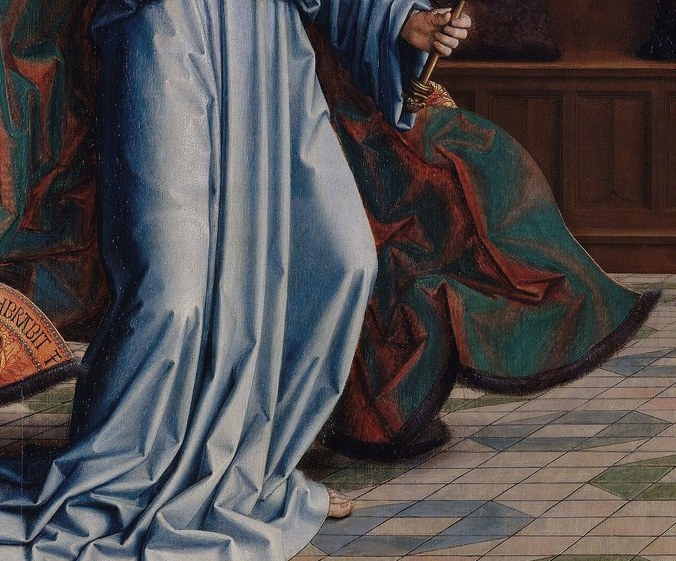
One intriguing detail often overlooked is the Latin inscription on Gabriel's blue robe, 'Ecce ancilla Domini,' which translates to 'Behold, the handmaid of the Lord.' This phrase is Mary's response to Gabriel's message, subtly woven into the fabric of the scene itself, highlighting her humble acceptance.
David, a successful painter of his time, operated workshops in both Antwerp and Bruges. Though his reputation faded after his death, it was revived centuries later, re-establishing his place among the masters of the Northern Renaissance. What other hidden messages might this painting hold?
Details
Transcript
This quiet scene depicts a moment of divine revelation. The Archangel Gabriel announces Mary will bear a child. Mary’s crossed hands show humble acceptance of her fate. His iridescent wings suggest a divine, ethereal presence. But look closely, there is a hidden message on his robe. It’s a Latin inscription, part of Mary's response. “Behold, the handmaid of the Lord.”