Venus Blindfolding Cupid by Italian 16th Century

This is Venus Blindfolding Cupid, painted around 1570 by an anonymous Venetian workshop artist working in Titian's orbit. It hangs today at the National Gallery of Art in Washington, D.C., and it contains something the master's own version does not.

Look at the right edge. A woman lifts a basket, her body cut off by the frame. She exists here in full color, fully painted. In Titian's original, now in the Borghese Gallery in Rome, she is gone. X-radiographs of that canvas show he painted her, then changed his mind and painted her out. This follower copy preserved the earlier state.

The painting belonged to Charles Jervas, Principal Painter to George I and II, and hung at Stowe House for two centuries before passing through the Contini Bonacossi collection and the Kress Foundation to the National Gallery in 1952. Scholars Fern Rusk Shapley and Harold Wethey both studied it as a key document of Titian's studio practice.

A workshop copy is usually less valuable than the original. But sometimes, accidentally, it becomes the only witness to a decision the master reversed. What else might be hiding under a finished surface?

#arthistory #titian #renaissanceart

Details
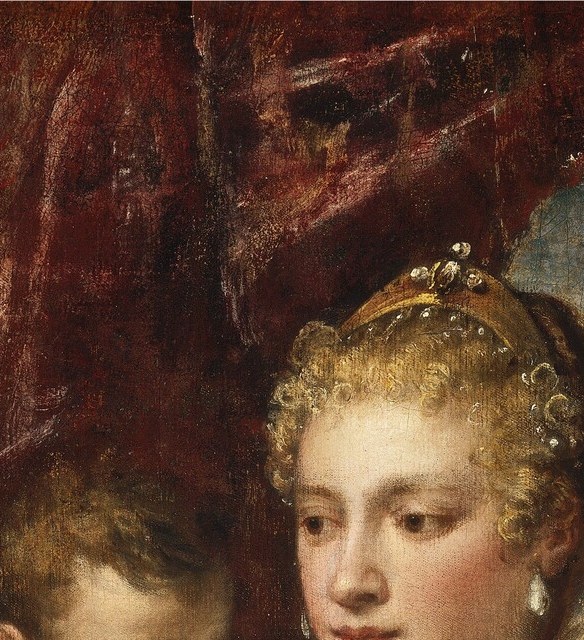
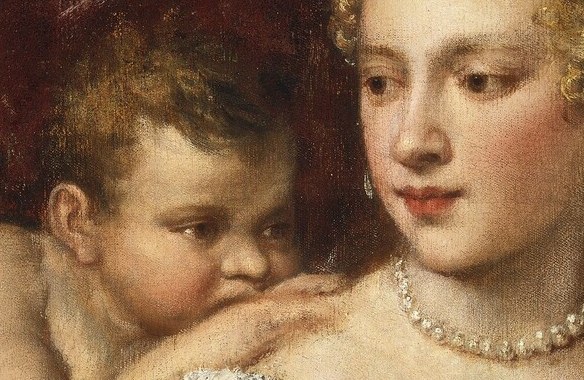
Her concentrated, slightly downward expression captures the decisive act of binding love , the deity of desire voluntarily subduing her own son.
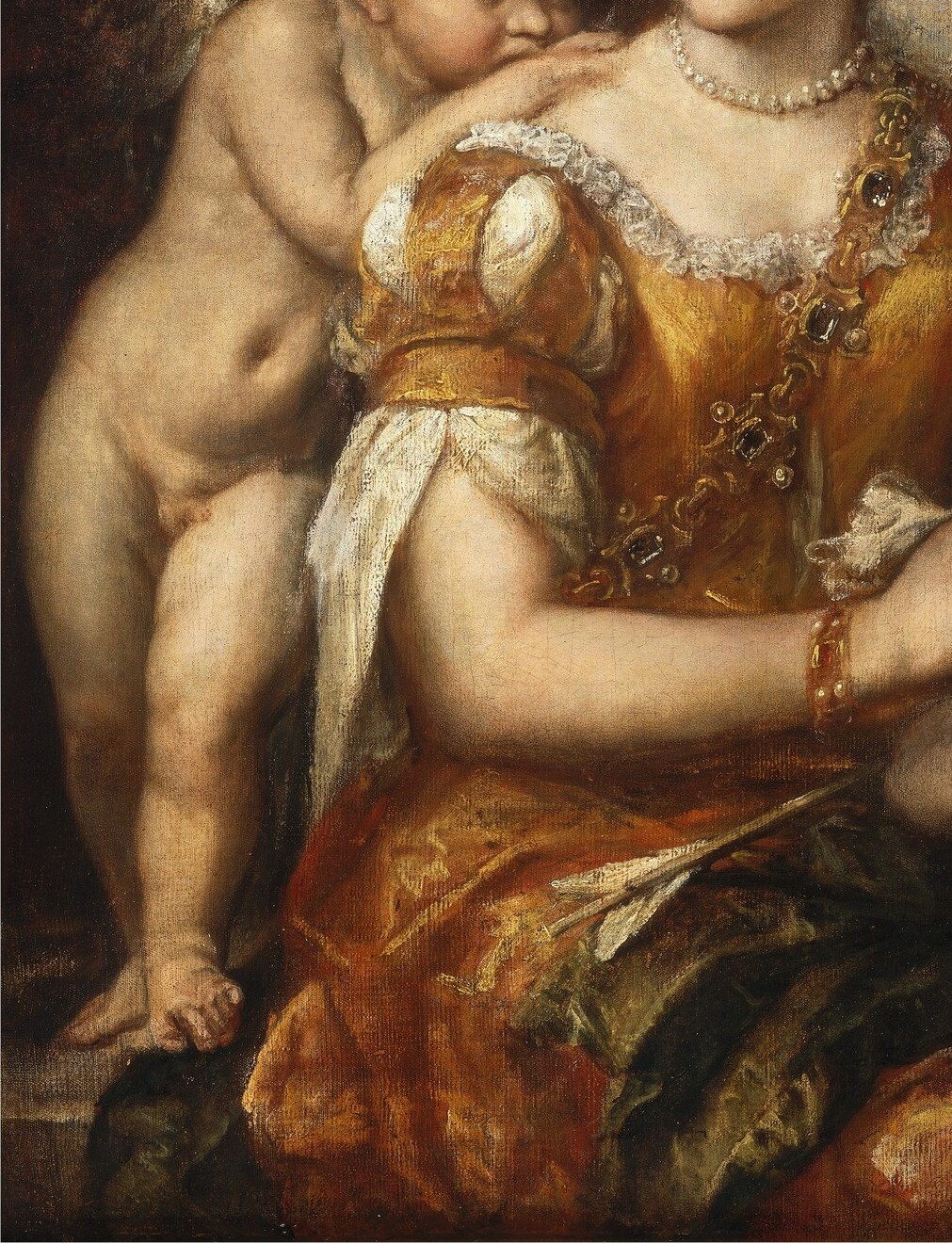
Venetian workshop virtuosity on display: the slashed and puffed sleeves in warm gold demonstrate the studio's command of sumptuous textile painting, the commercial signature of Titian's circle.
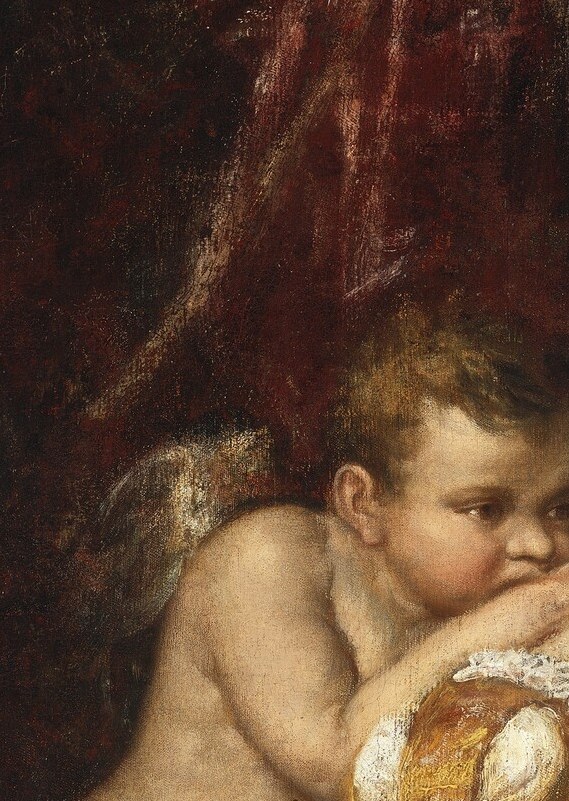
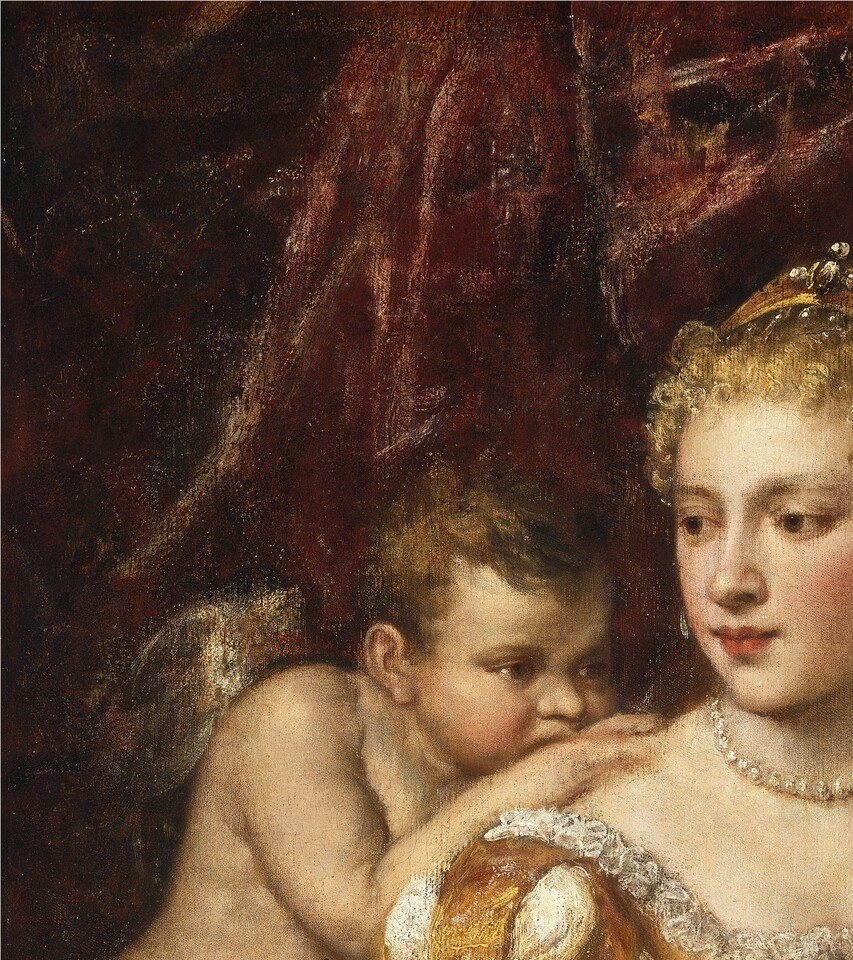
The Cupid's passive, submissive look as the blindfold is applied literalizes the Renaissance emblem of amor caecus , love made blind , with unusual tenderness rather than struggle.
The deep red ground is the standard Venetian theatrical backdrop, but its warmth also rhymes with flesh tones, binding figures and setting into a single chromatic field , a characteristic Titianesque unification.
Pearls signal Venus's sea-birth and also high-Renaissance patronage taste; the specific strand may encode the commissioner's identity.
Transcript

Venus ties a blindfold over her son's eyes. Love goes blind. A second Cupid watches it happen. This was painted in Titian's Venice, around 1570. But Titian did not paint it. His workshop did. Now look at the right edge of the canvas. A woman lifts a basket. Titian's own X-rays show he deleted her. This copy is the only record of what Titian erased.