Joan of Arc by Jules Bastien-Lepage
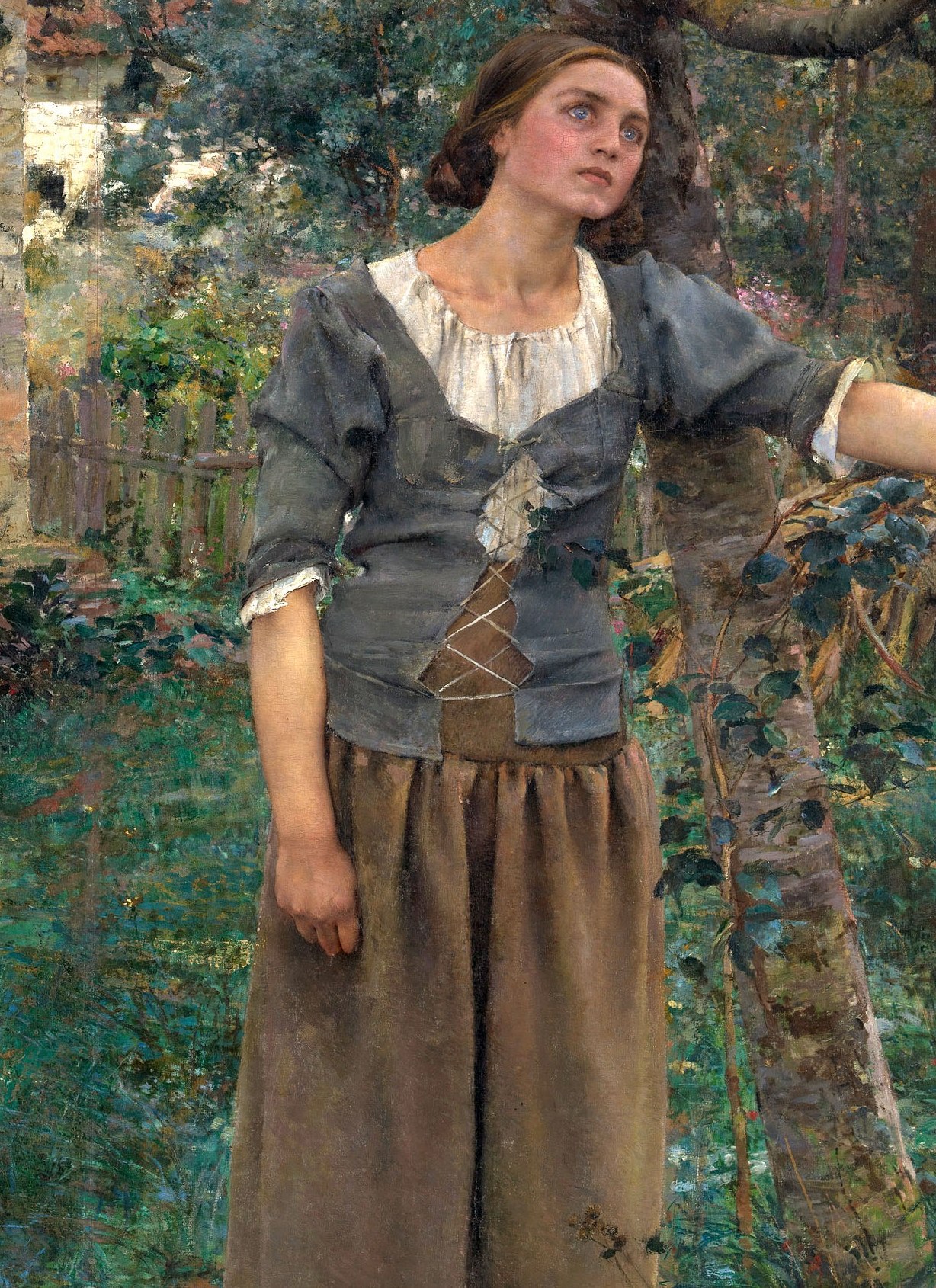
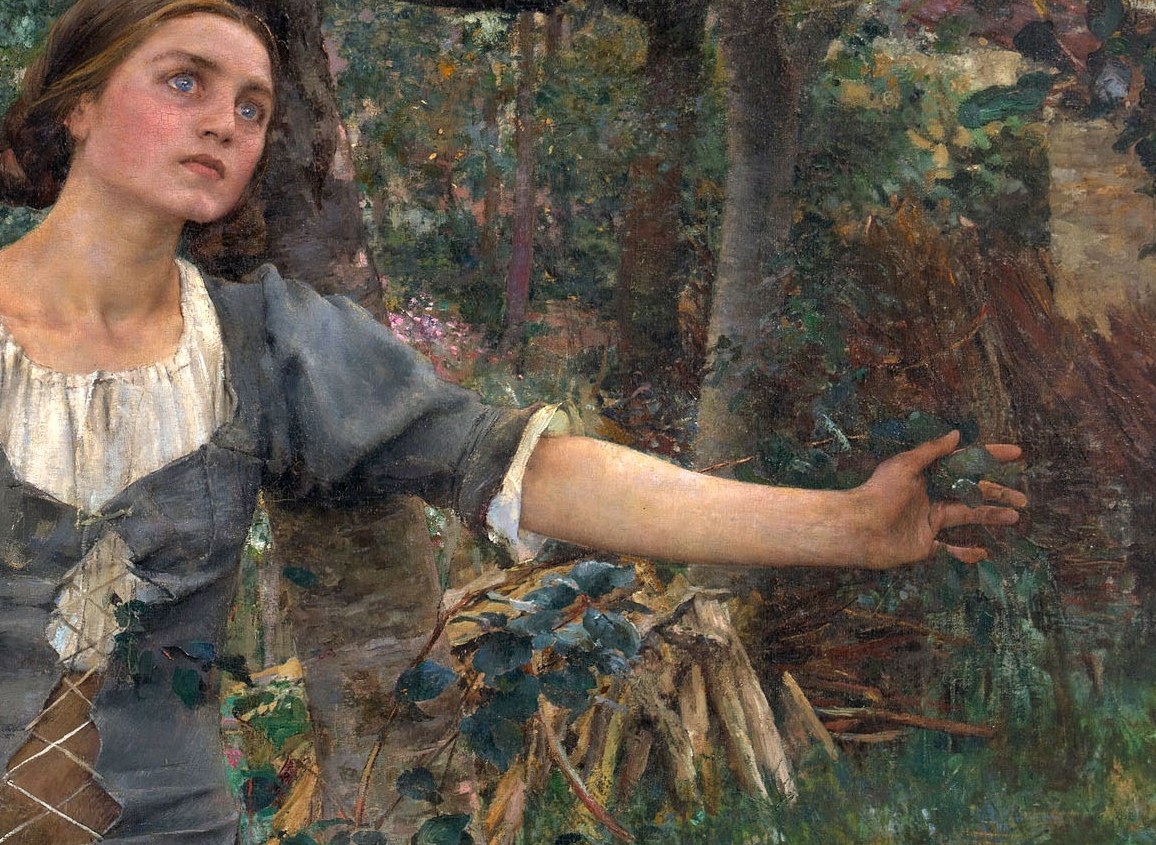
Jules Bastien-Lepage painted Joan of Arc in 1879, not Joan the armored martyr on horseback, but Jeanne the peasant girl from Domrémy, standing in her parents' backyard at the exact moment the voices arrived. The painting hangs at the Metropolitan Museum of Art in New York.
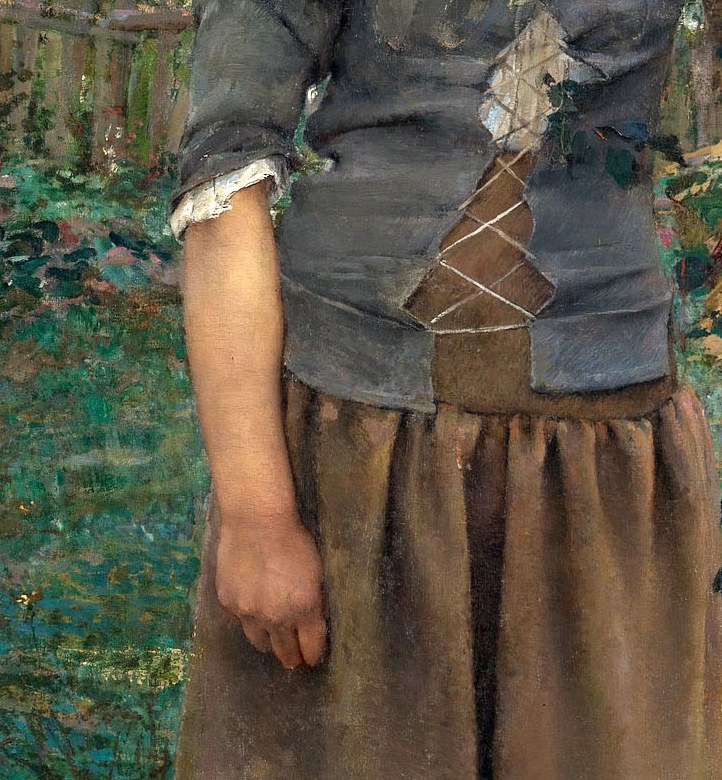
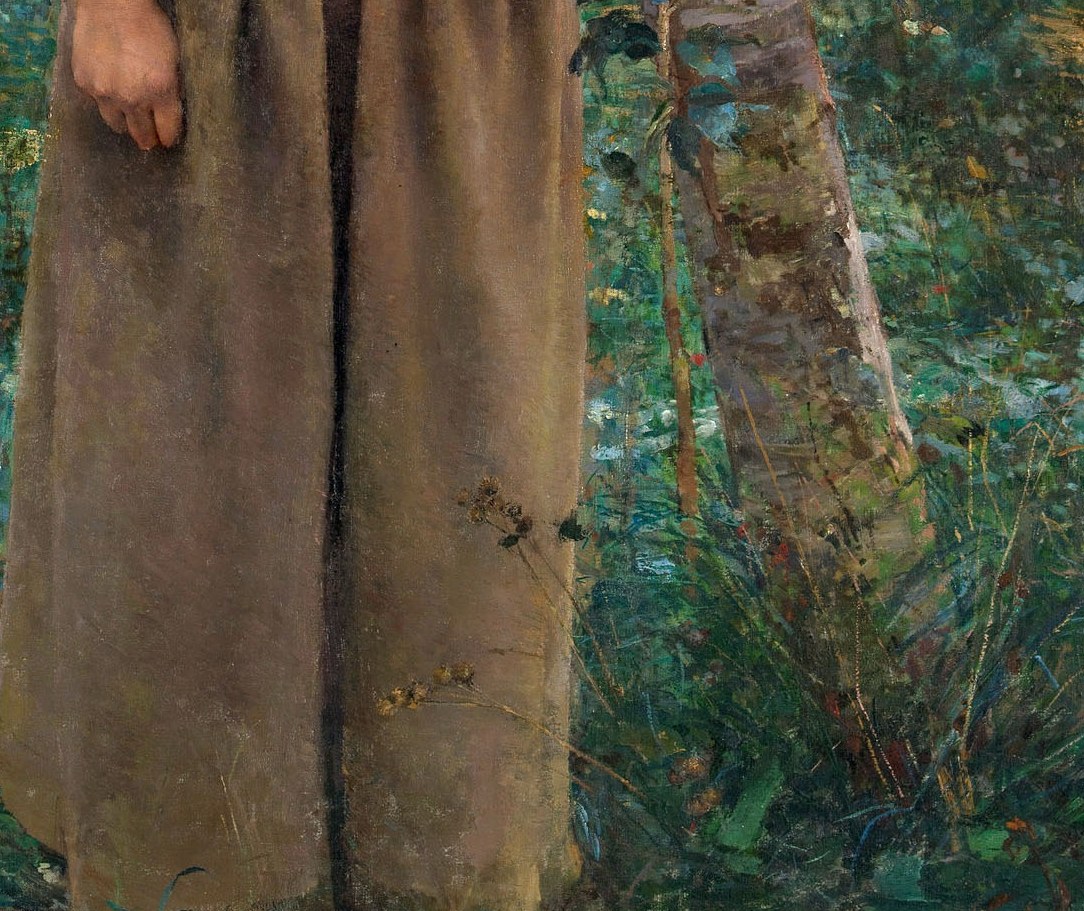
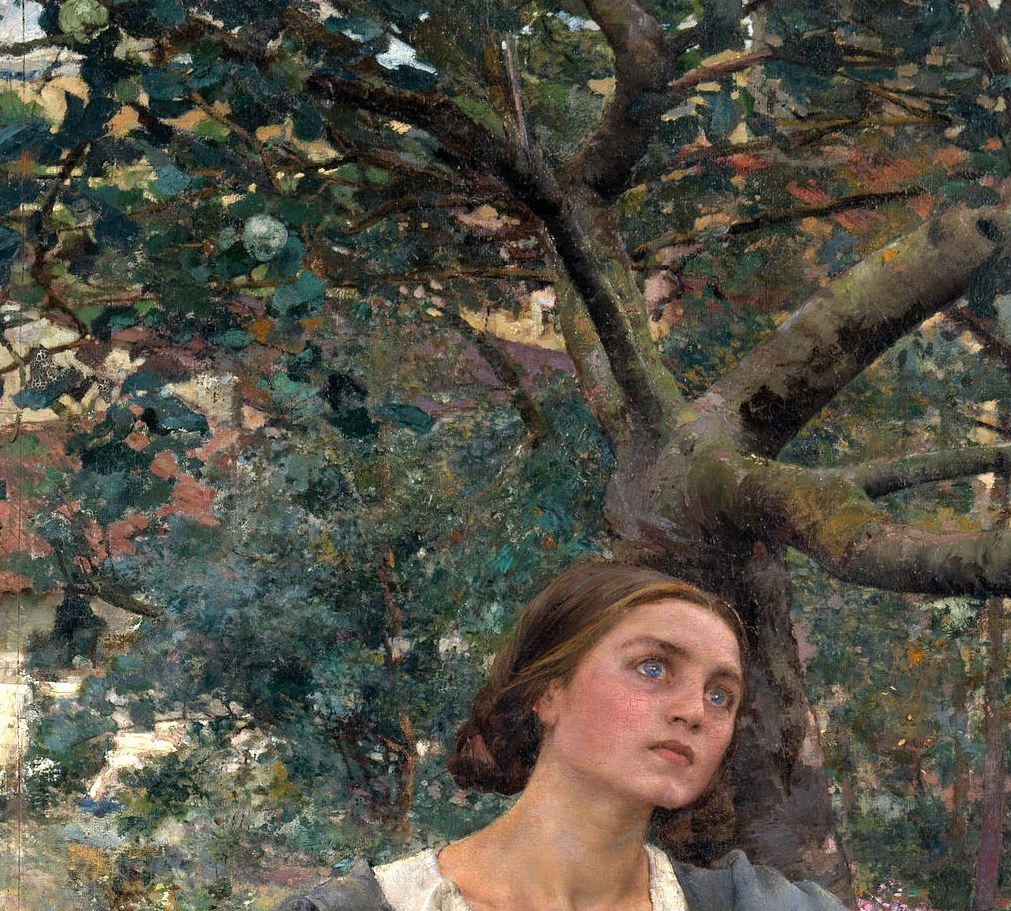
What makes the painting so striking is what it refuses to show. No sword, no banner, no battlefield. Instead you find a girl in a grey wool smock with cut wheat stalks at her feet. The supernatural figures, St. Michael and either St. Catherine or St. Margaret, hover in the garden foliage, painted in a deliberately vaporous style that makes them feel less like visitors and more like symptoms. The dense orchard canopy blocks any opening to heaven above. The light comes sideways through leaves, not down from God.
Bastien-Lepage was the great hope of French Naturalism, Émile Zola called his work "Impressionism corrected and adapted to the taste of the crowd." He painted peasants at life size, treating their lives with the seriousness history painting usually reserved for generals and saints. He finished Jeanne d'Arc when he was 31 and died of cancer five years later, at 36. This was effectively his last statement.
The slack left hand and the parted lips took months of study. He painted Joan's face from a local girl who sat in his studio garden, reportedly holding the pose until she fainted. The result is one of the most psychologically precise portraits of dissociation in 19th-century painting. A farm girl stares past the ordinary world, and her life, and France, are about to change.
Details
Transcript
She was just a girl from a village called Domrémy. Look at what she's wearing. Not armor. A grey smock and a work skirt. She was in the middle of cutting wheat when the voices came. Her left hand has gone completely slack. And her eyes are no longer seeing the garden. The painter died at 36. This was his last great work.