Untitled by After Gessen
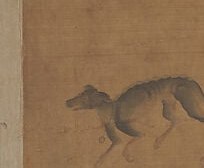
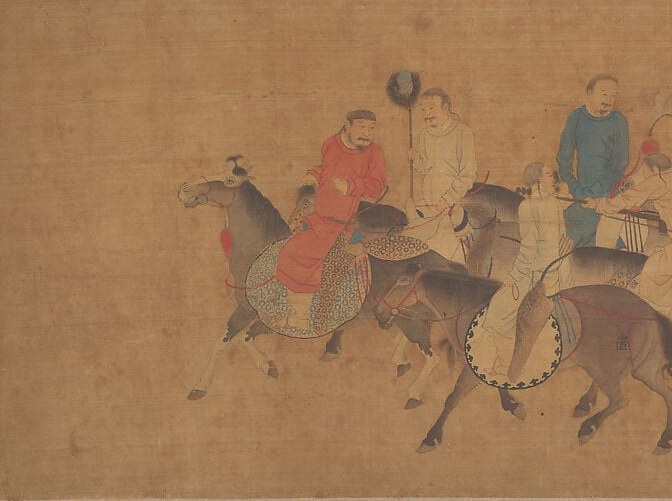
This is an untitled ink and color painting on silk from 1506, attributed to the artist known as After Gessen. It captures a hunting party mid-pursuit, yet the composition holds the riders in a strange, suspended stillness.
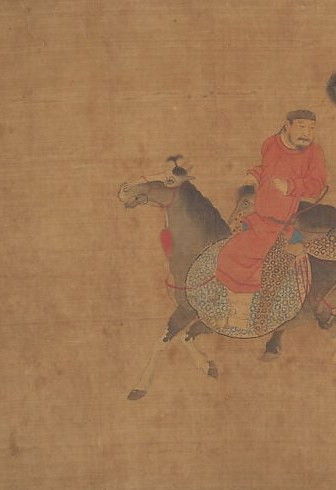
The first thing to follow is the lone dog at the far left, already sprinting well ahead of the horses. Then look down at the tangle of horse legs beneath the cluster. Most Japanese painting from this era kept horses stiff and emblematic, four legs planted like a statue. Here the brushwork skips and flicks, building real gait and weight through rapid, overlapping strokes.
The artist layers horse bodies across the middle of the silk without a single landscape element, creating depth purely through the density of overlapping forms. Above it all, the unpainted gold ground opens into a breathing, silent sky, the void doing as much work as the ink.
Gessen, who lived from 1721 to 1809, was known for this lively, almost impatient hand. A painting ranked far from the most famous, but when you look at the legs and feel the speed, you understand what he was chasing.
Details


Transcript
A hunting party sweeps across the silk, then pauses. The lone dog has already raced ahead of everyone. Look at the horses' legs. In 1506, most Japanese painters gave horses a stiff, frozen gait. This painter used rapid, skipping brushstrokes to build real movement. Overlapping bodies create depth without a background. And beyond them, the silk itself becomes the sky. The artist was named Gessen. He painted energy itself.