En jagt af kongelige personer by http://www.wikidata.org/.well-known/genid/9812a32b9eee9a2495bdc8bbb78b122c
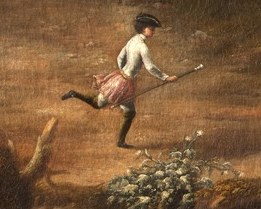
J.C. Dahl's “A Hunt of Royal Persons” (1848) at the Statens Museum for Kunst captures more than just a chase; it's a vibrant display of aristocratic privilege.
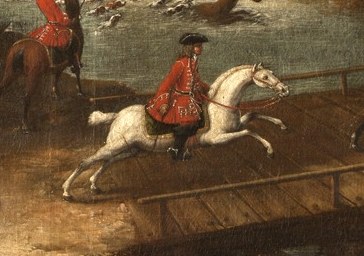
Notice the riders' striking red coats. These were not mere garments, but symbols of status, dyed with cochineal, a rare and costly pigment from insects. This expense signaled the wearer's wealth and position.
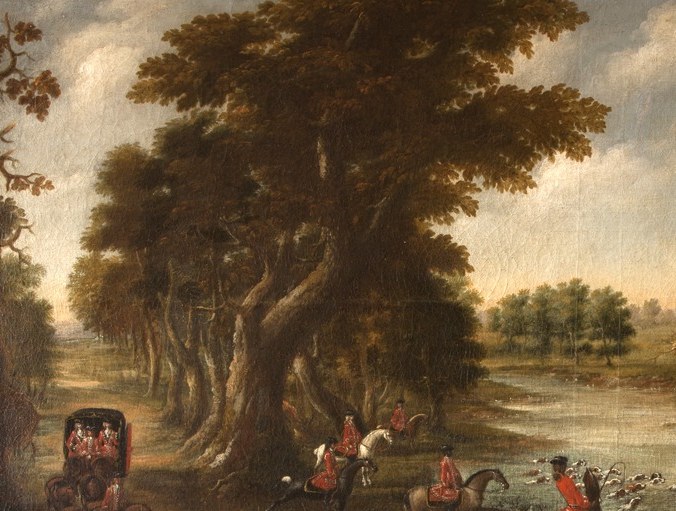
The hunt itself was less about catching prey and more about public demonstration of power and social standing. From the energetic white charger to the elegant carriage waiting under the oak, every detail reinforces the ceremonial aspect of the event.
What other subtle clues do you spot that speak to the status of this hunting party?
Details
Transcript
This painting shows a royal hunting party. The bright red coats immediately catch the eye. These coats were expensive, dyed with rare cochineal. Such hunts were not for food, but for status. Even the elegant carriage in the background suggests ceremony. This was a spectacle of power and privilege.