Boy Carrying a Sword by Édouard Manet
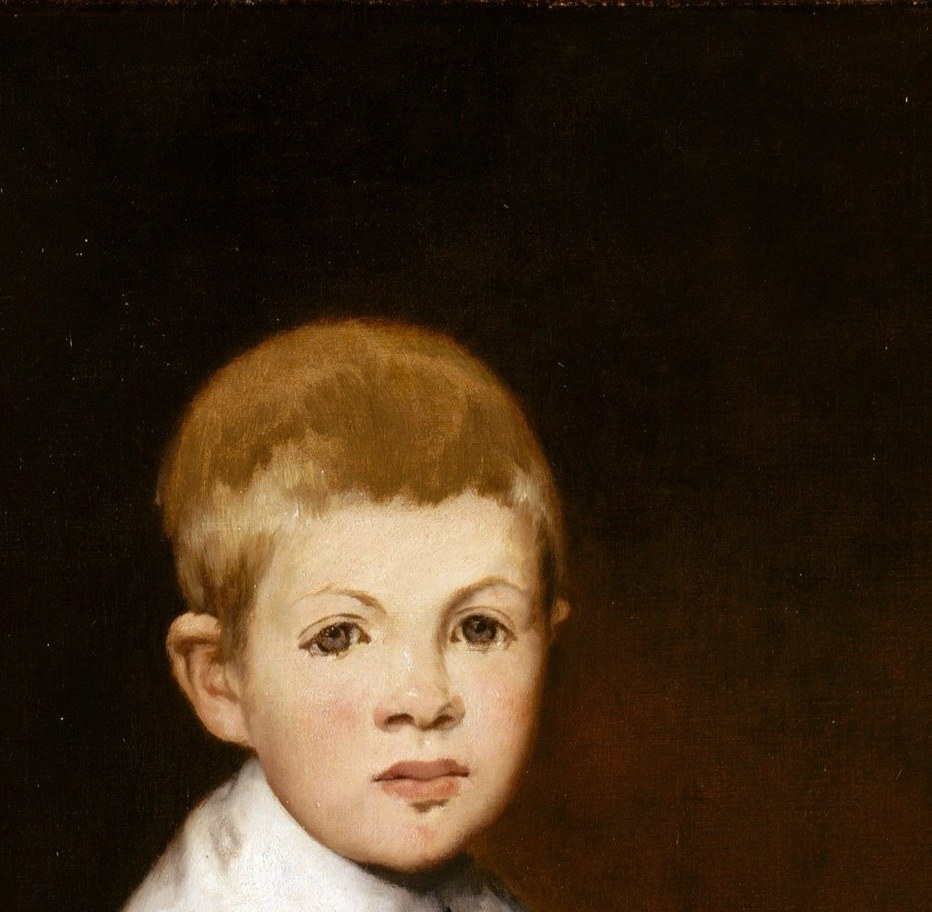
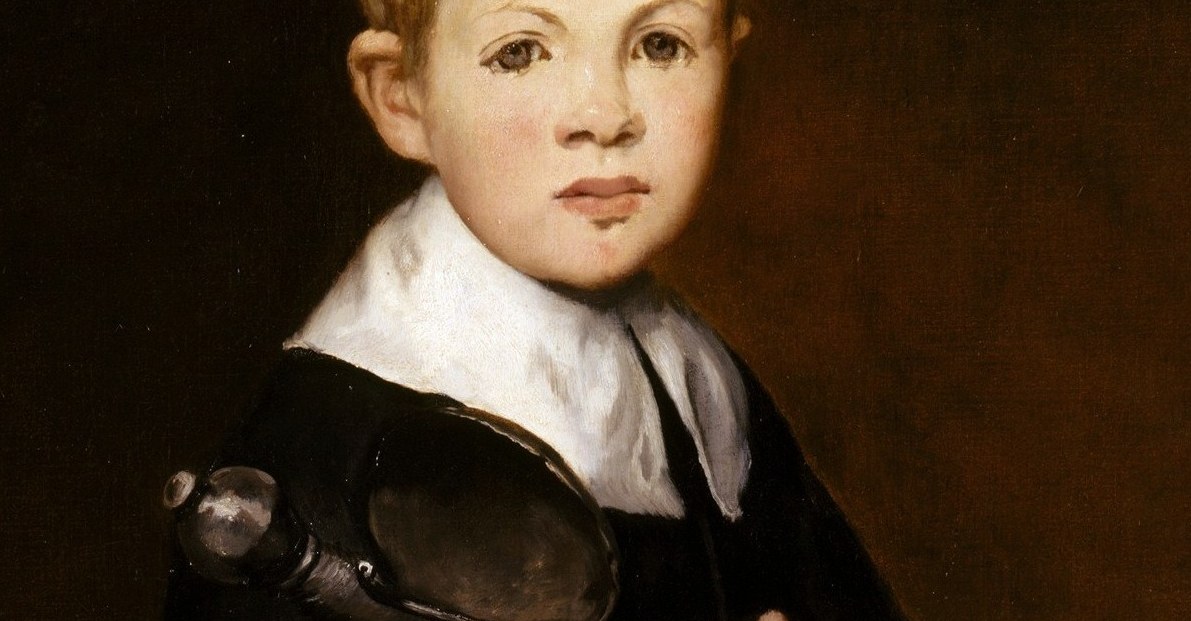
This is Édouard Manet's 'Boy Carrying a Sword,' painted in 1861 and now at the Metropolitan Museum of Art. The most surprising thing about it is that the model was not a professional sitter. He was a child Manet and his wife Suzanne Leenhoff found scavenging on the streets of Paris, brought home, and eventually adopted.
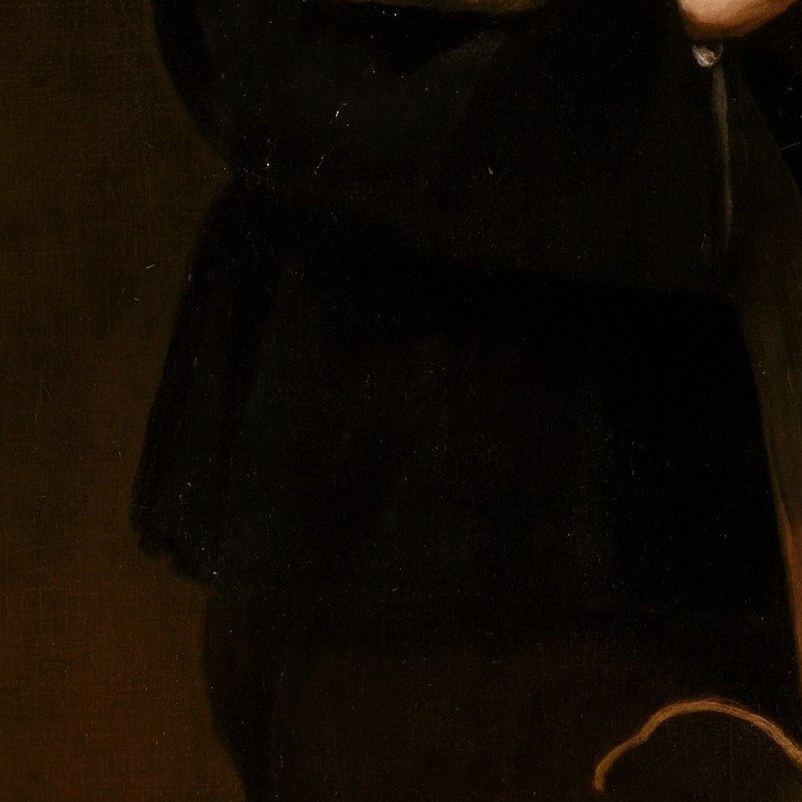
Look first at his eyes. The boy's direct, unflinching gaze was radical for a child portrait in the 1860s. Then look at his small hand wrapped around the heavy leather belt and the full-sized sword. The contrast between the child's body and the adult weapon he is dressed to carry is what the whole picture is quietly about.
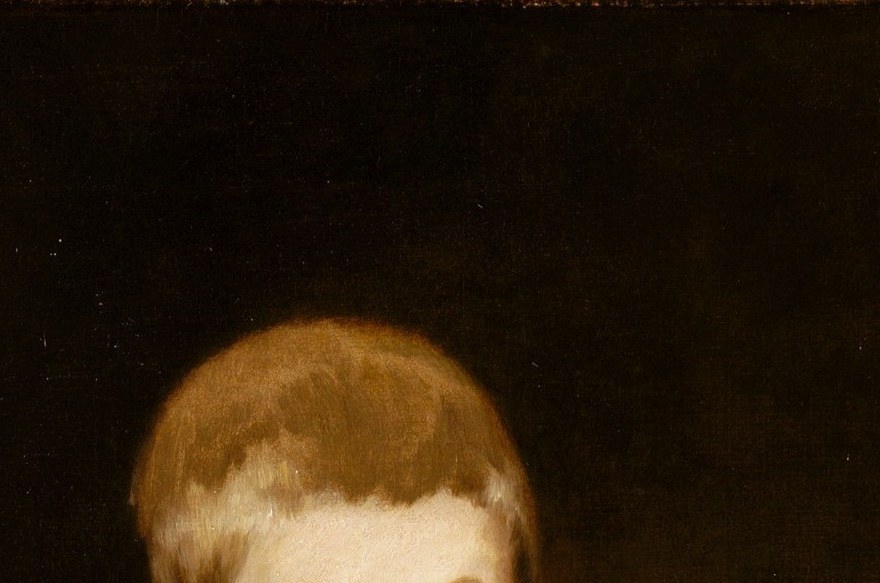
Manet borrowed the boy's elaborate 17th-century Spanish costume from his own studio trunk of props, and painted him quoting Velázquez: the flat dark background, the broad planes of black, the bright isolated collar. It was one of his earliest attempts to flatten modern portraiture into something psychologically direct. The boy, Léon-Édouard Koëlla, later became the subject of several more works, and the relationship between Manet, Suzanne, and Léon has been a quiet biographical puzzle for historians ever since.
A found child dressed as a court page, holding a sword that does not belong to him, meeting the viewer's eye as an equal. The scandal here is not on the canvas. It is in the life behind it.
Details
Transcript
Paris, 1861. A thirty-year-old painter finishes a strange portrait. A small boy dressed like a Spanish prince from another century. But the costume was borrowed from Manet's own studio trunk. And this boy is not an actor. He was a child scavenger Manet found on the street. He meets your eye without deference. Given an adult sword, he holds it like a child would. Manet and his wife Suzanne took him in, fed him, and paid him to sit. He called the boy Léon. Six months later, he adopted him.