Still life with flowers in a glass vase by Jan Davidsz. de Heem
Jan Davidsz. de Heem's "Still life with flowers in a glass vase," painted around 1700, is a masterful example of Dutch Golden Age still life. Created on copper, its smooth surface allowed de Heem to achieve extraordinary detail and luminous color, making every element appear three-dimensional. It is part of the collection at the Rijksmuseum.
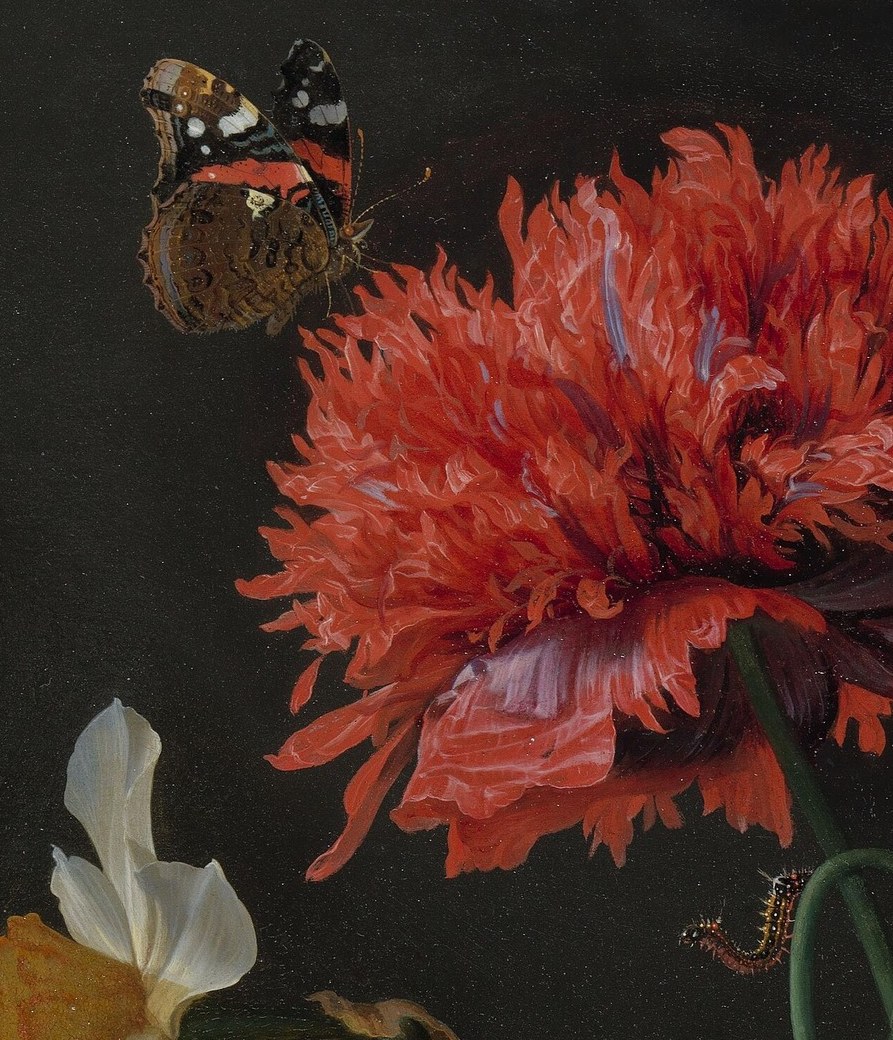
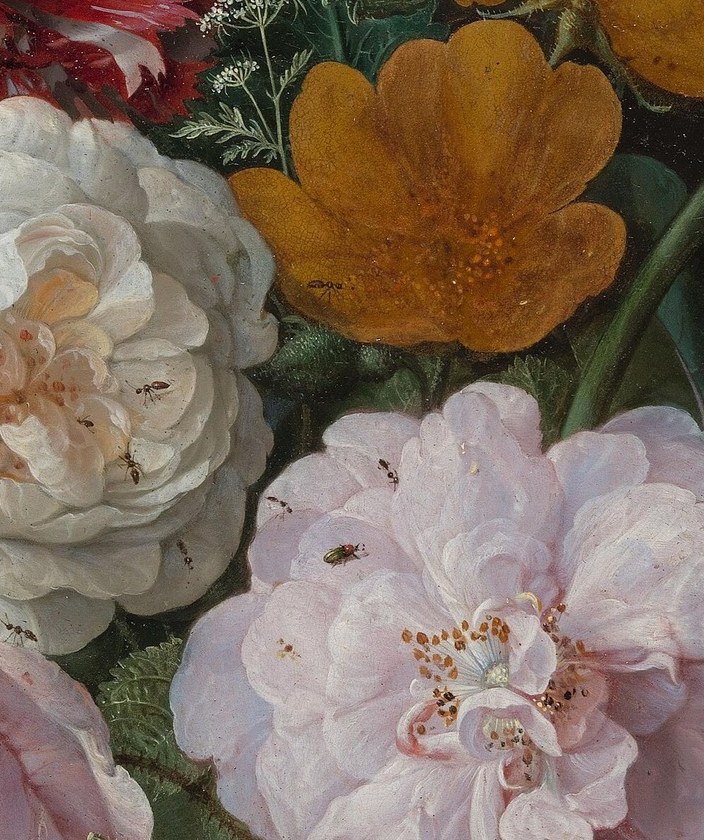
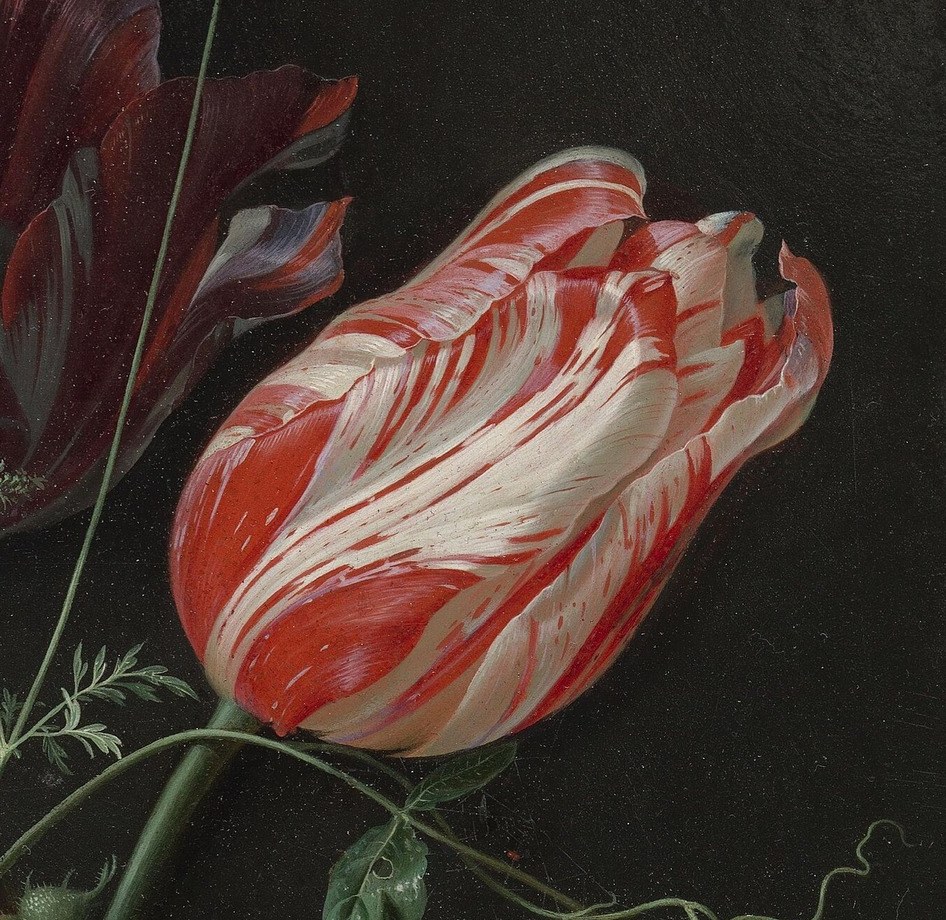
De Heem meticulously rendered each petal, stamen, and tiny creature. From the vibrant red poppy to the delicate ladybug on a white flower, and even a subtle snail on the ledge, every detail contributes to the painting's intricate beauty. The clear glass vase also reflects its surroundings, showcasing the artist's skill with light and transparency.
During the late 17th and early 18th centuries, Dutch artists perfected still-life painting, blending scientific observation with decorative appeal. De Heem's work, characterized by sumptuous arrangements and careful rendering of texture, reflects this tradition. These paintings celebrated the fleeting beauty of nature, often carrying symbolic meanings of transience and abundance.
What hidden details do you find most captivating in de Heem's intricate still life?
Details
Transcript
This painting on copper is over 300 years old. It was painted by Jan Davidsz. de Heem around 1700. Every blossom, leaf, and insect is rendered in perfect detail. His meticulous brushwork creates incredible depth and texture. Look closely for the tiny snail on the ledge. The smooth copper surface allowed for such fine details. It reminds us of nature's beauty, and how quickly it fades.