A peasant with his wife and child in front of the farmhouse by David Teniers the Younger
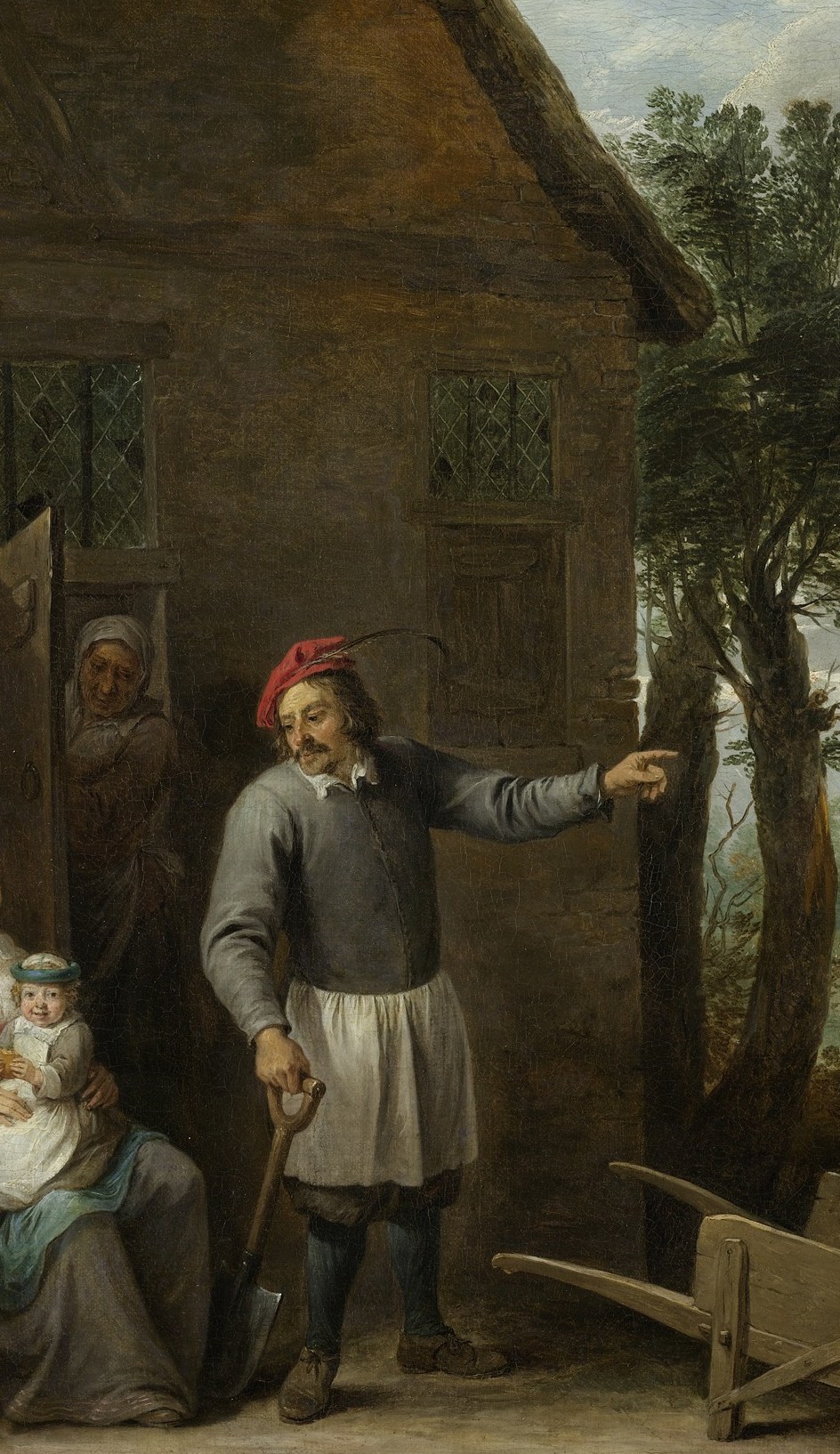
David Teniers the Younger painted this farmyard scene around 1650, and almost nothing in it is accidental. The painting is called "A peasant with his wife and child in front of the farmhouse," and it hangs in the Rijksmuseum in Amsterdam.
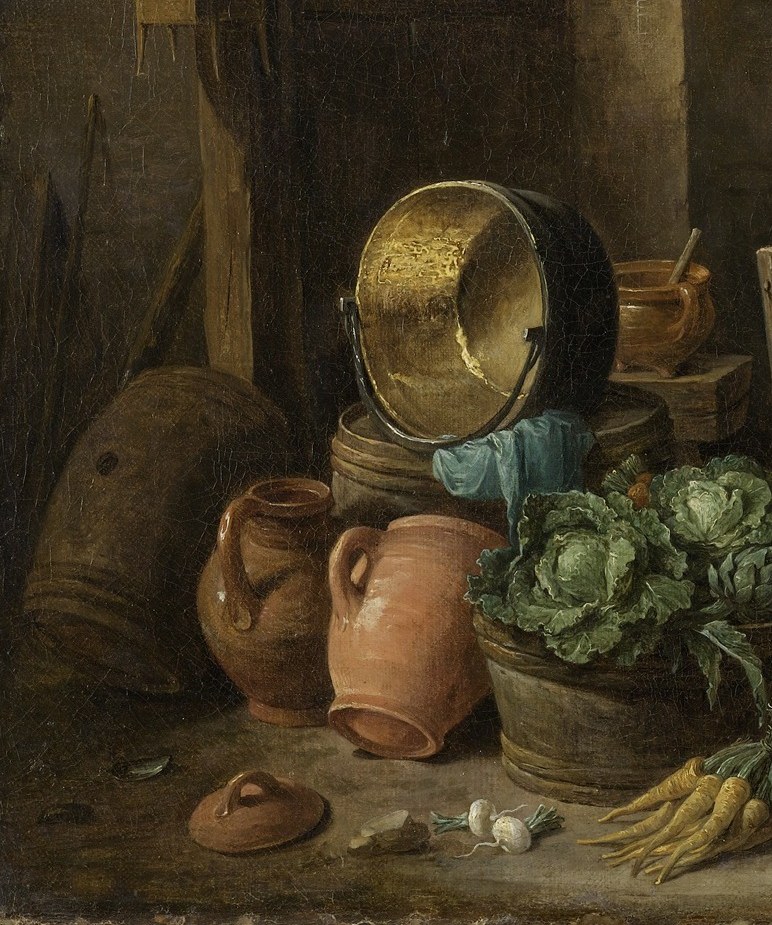
The red cap on the standing man is a class signifier, a saturated chromatic marker Teniers used repeatedly to identify male peasants in the Flemish genre vocabulary. His outstretched hand directs the eye toward the open landscape, and with it, the entire composition pivots from the shadowed farmyard into light. The domestic vessels at lower left, barrels, jugs, glazed earthenware, are a still-life passage that also functions as a material inventory of a subsistence household.
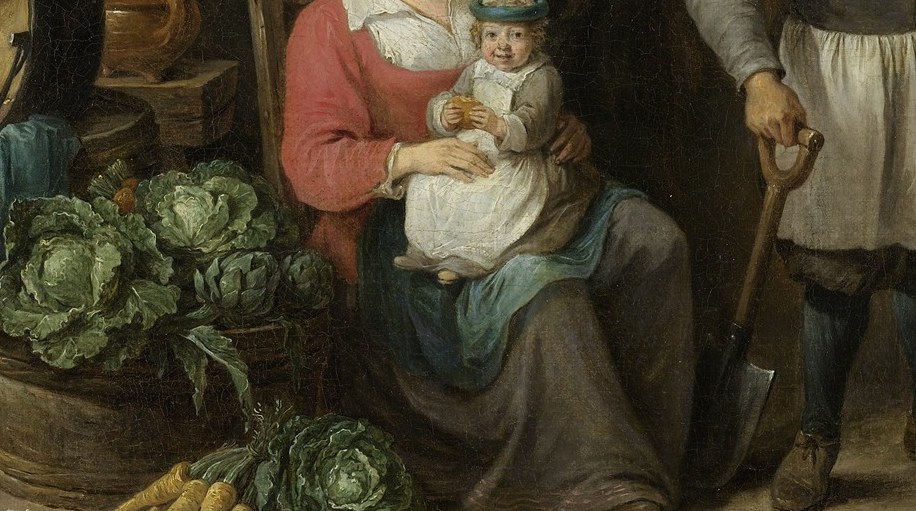
Teniers was the leading Flemish genre painter of his day, producing an extraordinary number of scenes like this one. He was not a moralist. His peasants are not punished or mocked; they are simply observed. The third figure half-hidden in the dark doorway tells you this is a fuller household than the three foreground figures suggest. The carrot on the ground, which the museum description names directly, roots the scene in the garden harvest cycle.
In a decade when such families rarely appeared in official records at all, a painting like this becomes a witness. What else do you notice once the man's hand has pointed you into the light?
Details


Transcript
A Flemish farmyard, around 1650. The man's red cap marks his rank immediately. That color was a working-class signal in Flemish painting. His hand directs everything outward, toward the land. A carrot lies on the dirt. The harvest feeds the family right where they sit. The objects at their feet, barrels, jugs, earthenware, are a subsistence inventory. A third figure watches from the doorway. The household is larger than three.