Tivoli by Sanford Robinson Gifford
Sanford Robinson Gifford painted Tivoli in 1870 for the New York collector Robert Gordon, and it has never been for sale. Gordon gave it directly to the Metropolitan Museum of Art in 1912, where it remains, a painting made for private walls that became a public inheritance.
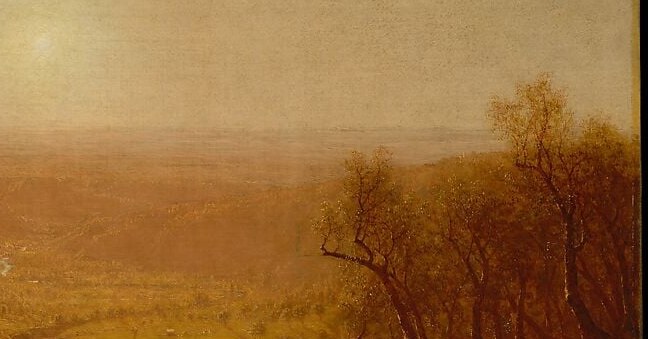
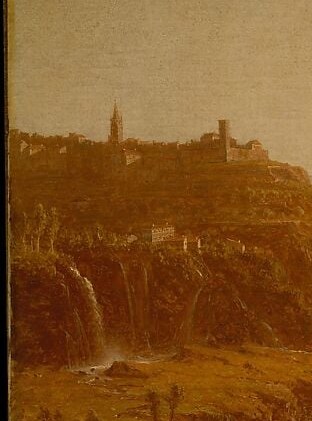
The eye goes straight to the solar disc at the center. Gifford dissolved its edges with pale glazes so the light seems to breathe. Follow it outward: the dark cliff on the left sharpens the gold, the river catches the glow, and the right valley opens into pure haze. The thin vertical tower on the hilltop crest is almost certainly a reference to Tivoli's famous ancient ruins.
Gifford first visited Tivoli in 1856 but returned in 1868 with pencil and paper. Those quick sketches became the bones of this canvas. He applied thin transparent layers of pigment, a Luminist technique, making the air itself the subject. The cascatelle, the man-made waterfalls on the left cliff, were the actual view he called 'one of the finest in the world.'
The money story here is not an auction price. It is a story of patronage: a collector who wanted Italian light on an American wall, an artist who traveled twice to capture it, and a museum that received it as a gift from the man who first loved it.
#arthistory #hudsonriverschool #luminism
Details


Transcript
1870. A New York collector wanted Italy on his wall. So Robert Gordon commissioned this view of Tivoli. The painter had already been there, twelve years before. He returned in 1868 to sketch these cascatelle. Two years later, he built the light in thin transparent layers. The sun dissolves the landscape into pure atmosphere. In 1912, Gordon gave it to the Met. It has never been sold.