Madame Édouard Bernier (Marie-Octavie-Stéphanie Laurens, 1838–1920) by Pierre-Auguste Renoir
Pierre-Auguste Renoir's "Madame Édouard Bernier," painted in 1871 and housed at The Metropolitan Museum of Art, captures a moment of quiet dignity and evolving artistic style.
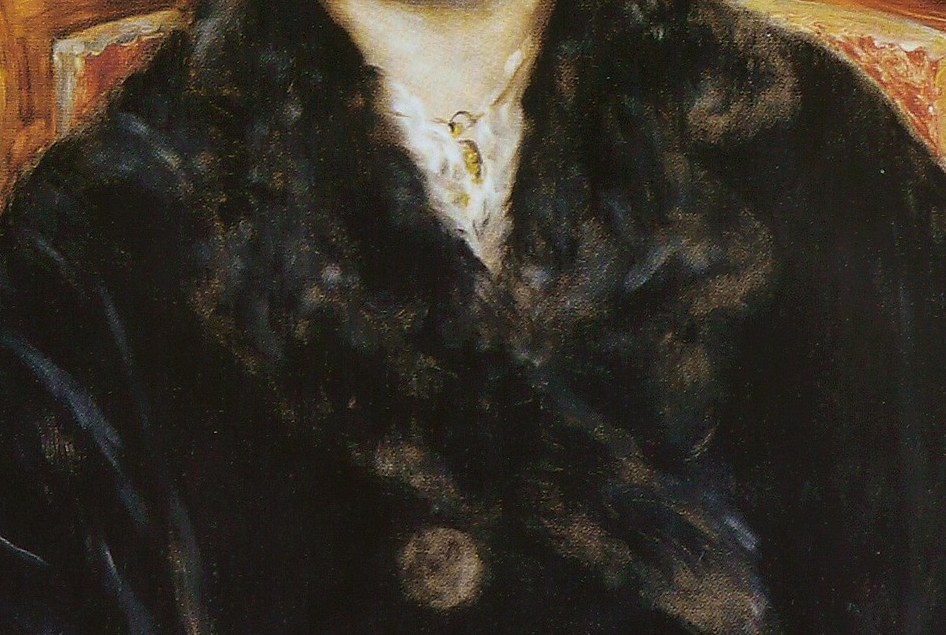
Observe the subtle details of her attire. The dark fur collar and the prominent rings on her folded hands are more than mere accessories; they are visual cues to her social standing and marital status in 19th-century France. Renoir's loose brushwork, particularly evident in her dress, hints at his burgeoning Impressionist style.
Created in a pivotal year for Renoir, this portrait shows the artist moving away from academic norms. It focuses on the sitter's individual presence, reflecting the emerging artistic currents just before the first Impressionist exhibition. This piece exemplifies his early approach to portraiture, blending realism with innovative painterly techniques.
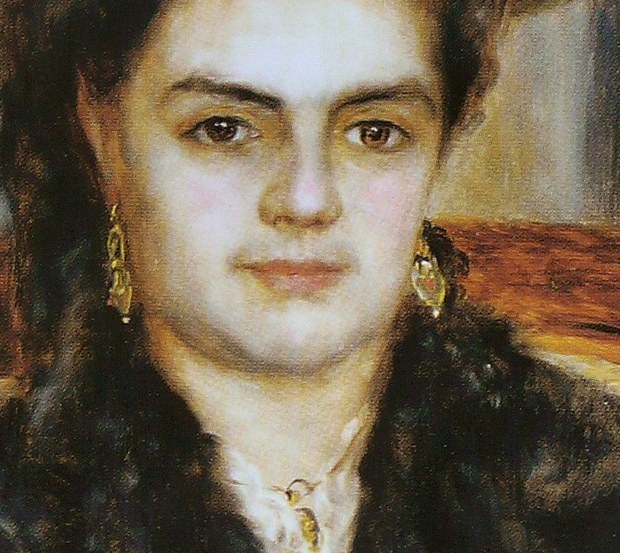
What details in her expression or attire do you find most striking?
Details

Transcript
This portrait from 1871 captures a woman of refinement. The dark fur collar speaks to her status and warmth. Her delicate rings symbolize wealth and marital standing. This painter was experimenting with new brushwork styles. Her direct gaze draws you into her quiet dignity. The painting highlights individual character, not grandiosity.