Chief and Members of the Konza Tribe by Catlin, George
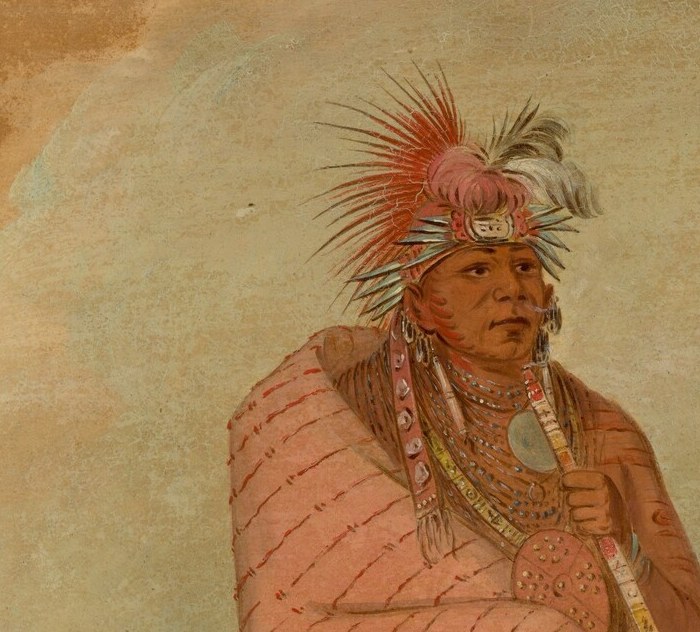
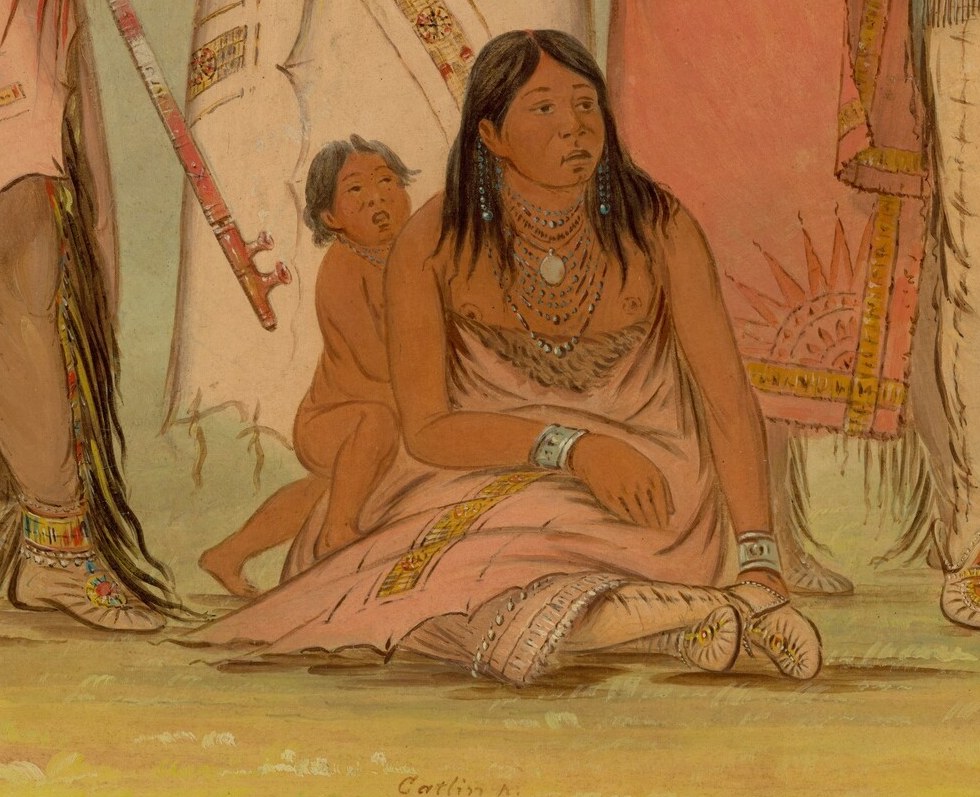
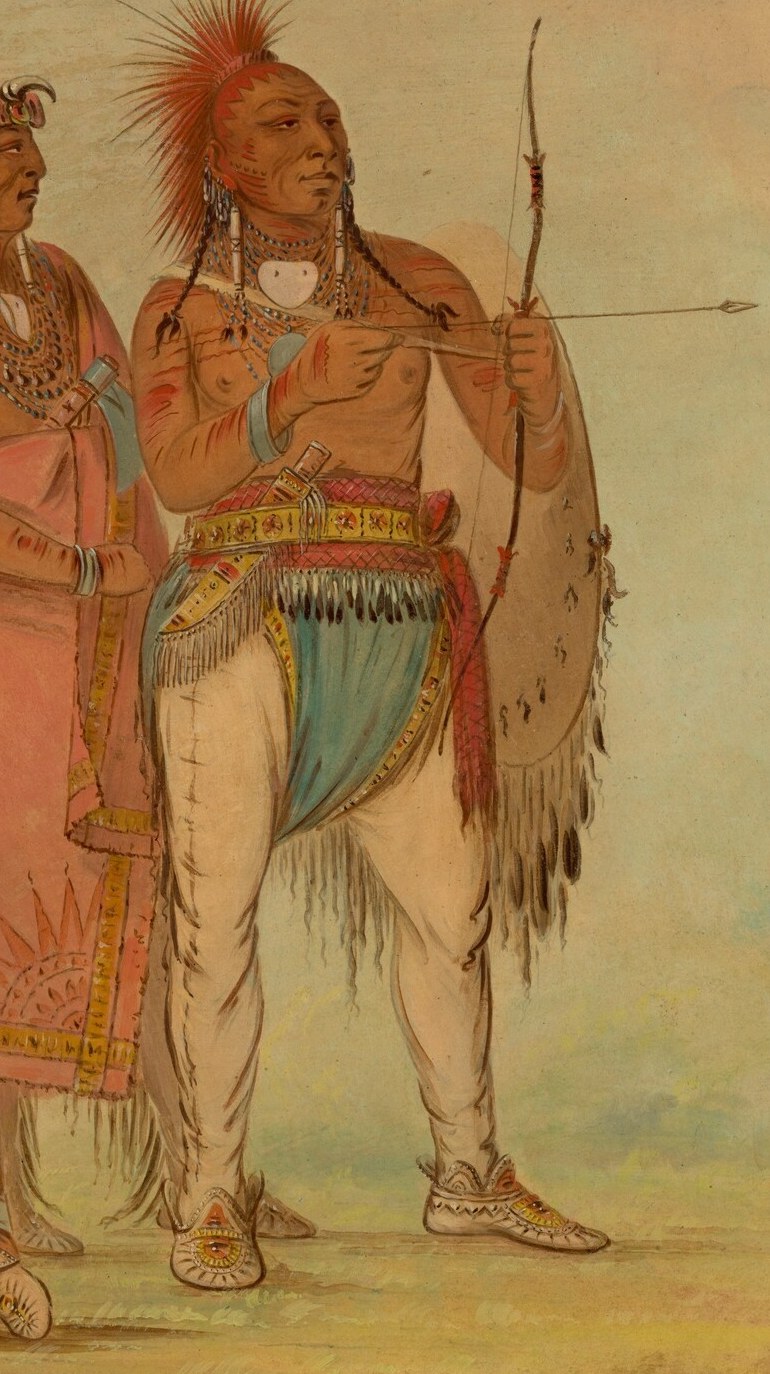
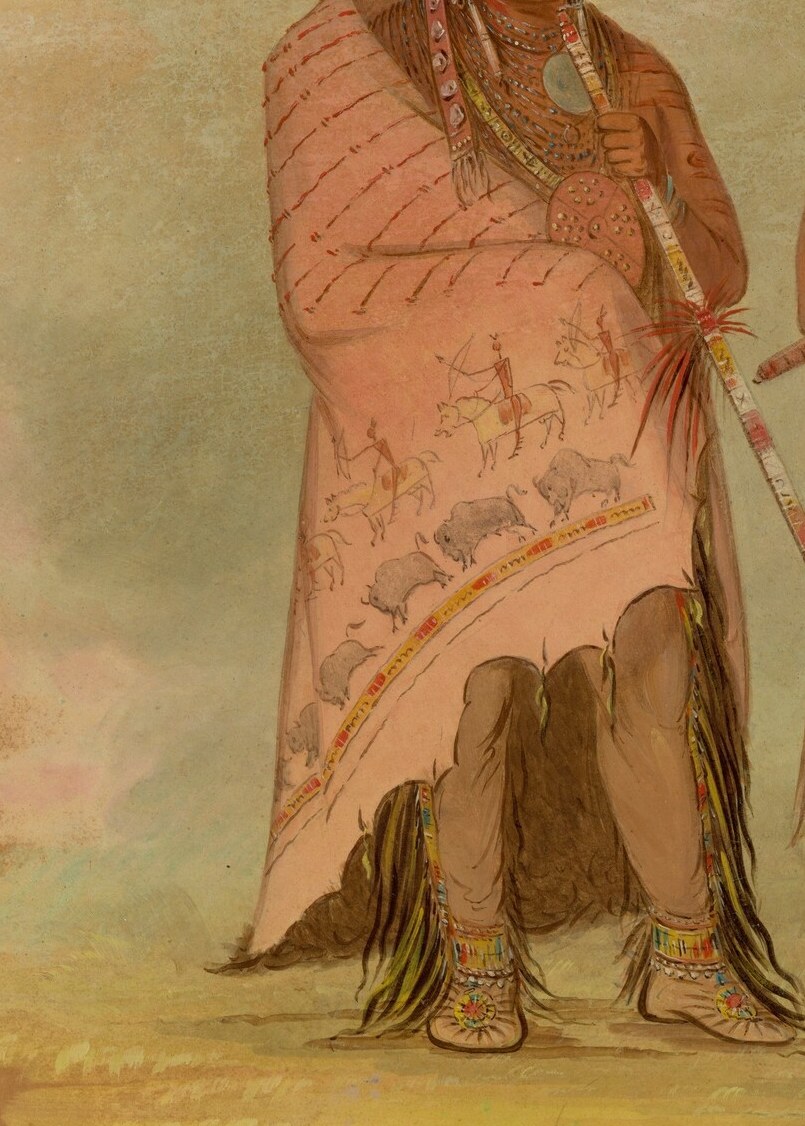
George Catlin, a lawyer turned painter, dedicated his career to documenting Native American life in the 19th century. This painting, "Chief and Members of the Konza Tribe" (1861-1869), created using oil on card mounted on paperboard, is part of his extensive collection housed in various museums, including the Smithsonian American Art Museum.
Look closely at the figures' attire. The feathered headdresses, ornate necklaces, and intricate beadwork on the moccasins offer a glimpse into the rich cultural identity and craftsmanship of the Konza people.
Catlin traveled the American West five times during the 1830s, creating thousands of portraits and scenes. His ethnographic approach aimed to preserve the visual record of Native American cultures, which he feared were disappearing due to westward expansion. Though sometimes romanticized, his work remains a crucial historical resource.
What details in their clothing or accessories capture your attention most?
Details
Transcript
In the 1830s, this artist traveled the American West. He documented Native American life, like these Konza tribal members. Notice the intricate beadwork on his moccasins. And the detailed feathered headdress, signaling his status. The painter was a lawyer, who left his practice to capture these scenes. His life's work preserved a visual record of many Plains Indian peoples.