La Cervara, the Roman Campagna by Jean Baptiste Camille Corot
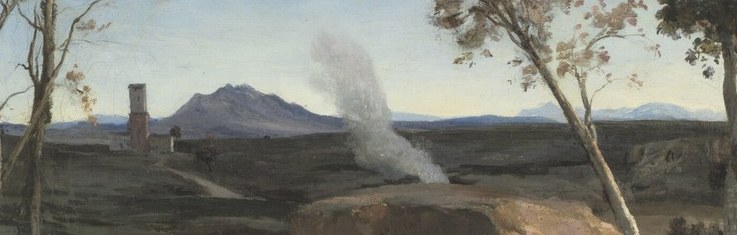
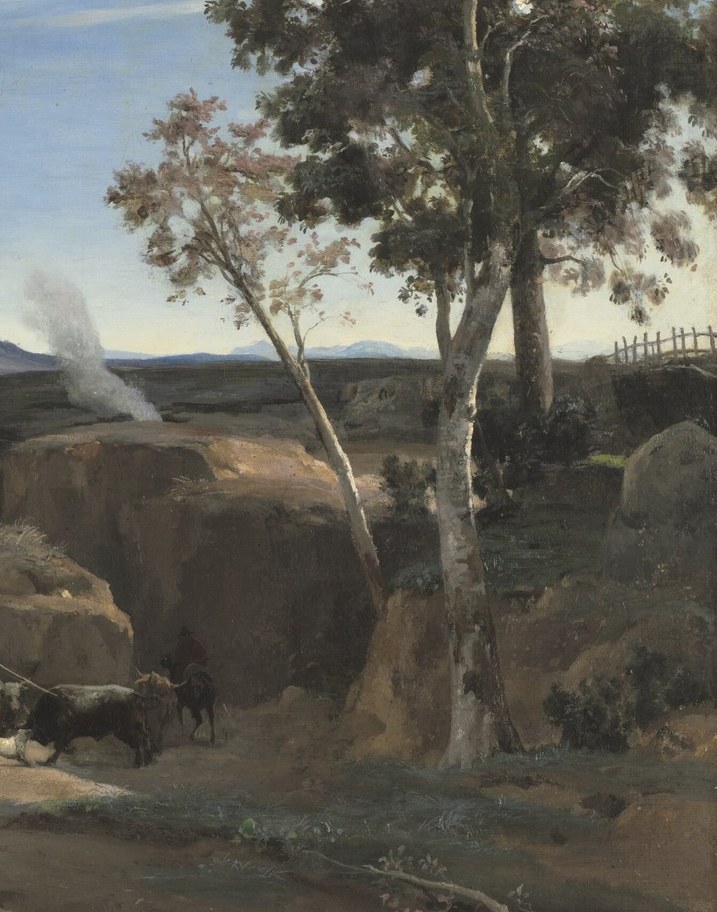
Corot’s *La Cervara, the Roman Campagna* (1830) is more than a quiet landscape. Look closely for hints of human life.
Notice the distant plume of smoke, a subtle yet significant detail. It suggests activity happening just out of frame, adding a layer of mystery to the expansive scene. The painter also includes distant ruins, hinting at the long history of this Italian region.
Corot, a key figure in landscape painting, worked during a time of transition. His style here blends the structured compositions of Neo-Classicism with a developing direct observation of nature, foreshadowing Impressionism.
This painting invites us to consider what lies beyond the visible frame.
Details
Transcript
This landscape feels vast and empty. Corot painted this in 1830. Look at the distant mountains and sky. A thin plume of smoke rises from the distance. It hints at unseen human activity. The painter shows us ruins too. Corot bridges old styles and new.