The Fable of the Miller, His Son, and the Donkey by Elihu Vedder
Elihu Vedder's *The Fable of the Miller, His Son, and the Donkey*, painted in 1867 and housed at The Metropolitan Museum of Art, illustrates a classic moral tale with a dramatic, realist sensibility. Vedder, an American Symbolist artist, often imbued his works with narrative depth, though he is perhaps most famous for his illustrations for Edward FitzGerald's translation of *The Rubaiyat of Omar Khayyam*.
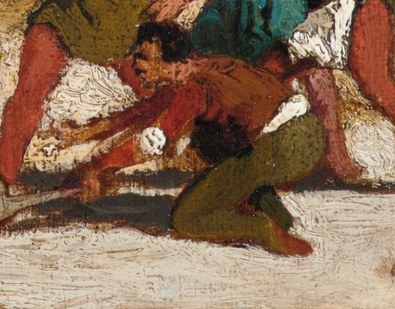
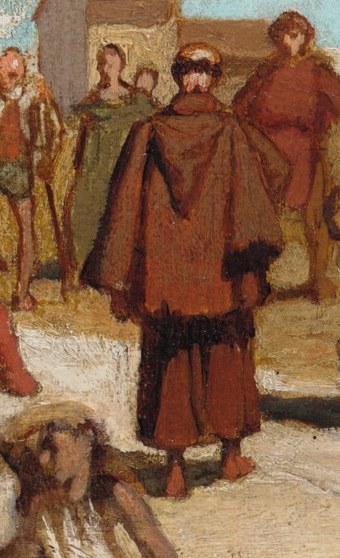
In this painting, we see a tumultuous moment on a rocky incline. The miller in red trousers struggles, his son falls from the donkey, and the animal itself has stumbled, seemingly from exhaustion. Other figures observe the chaos, underscoring the universal nature of the fable's lesson.
The fable warns against the futility of trying to please everyone, suggesting that such an effort ultimately leads to disaster. Vedder’s portrayal captures the physical and emotional toll of this struggle, highlighting the consequences of indecision and external pressure.
What do you think is the most striking detail in Vedder's depiction of this timeless story?
Details
Transcript
This painter was an American Symbolist from New York City. He is best known for illustrating a famous book of poetry. Here he tells an old story: the Miller, his Son, and a Donkey. The fable warns against trying to please everyone. The Miller is failing. His son is falling. And the donkey, overburdened, has collapsed on the path. This moral tale became a favorite subject for artists.