Sir Joshua Reynolds by Stuart, Gilbert
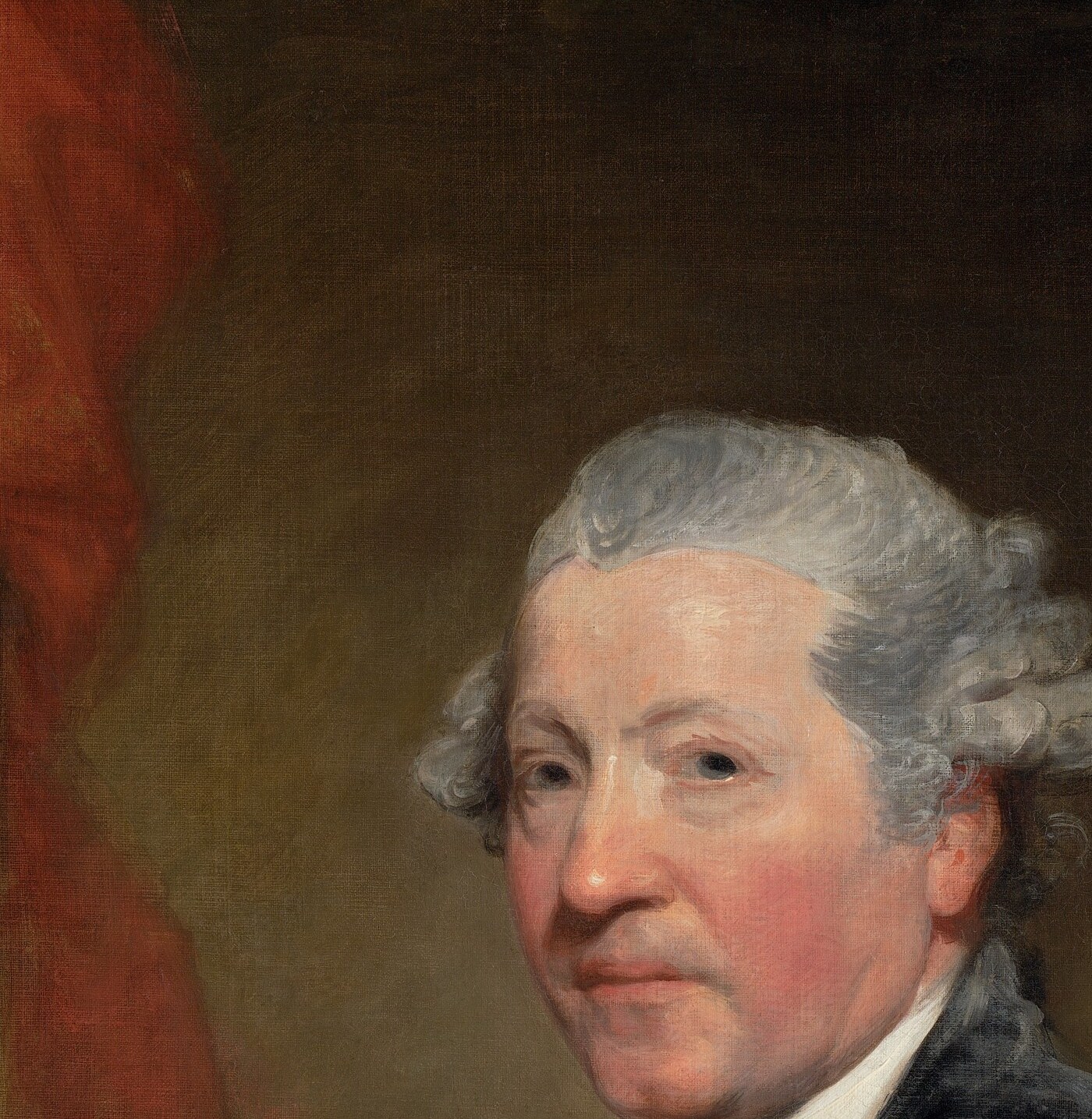
Sir Joshua Reynolds, painted by Gilbert Stuart in 1784, now at the National Gallery of Art. Reynolds was the most famous painter in England, the first president of the Royal Academy, and he almost never sat for anyone else. Stuart, a twenty-something American fresh off the boat from Rhode Island, needed to make his name in London. Getting Reynolds into his studio was a coup, and he knew it.
Forget the wig and the velvet for a moment and look at the eyes. Stuart had a famous working method: he finished the eyes and the face first, building the whole portrait outward from that point of life. It means Reynolds's gaze here is unusually present. The slightly parted lips and the cocked head suggest a man listening hard, which he was. Reynolds was going deaf. Stuart lit the ear prominently, a biographical detail hiding in plain sight.
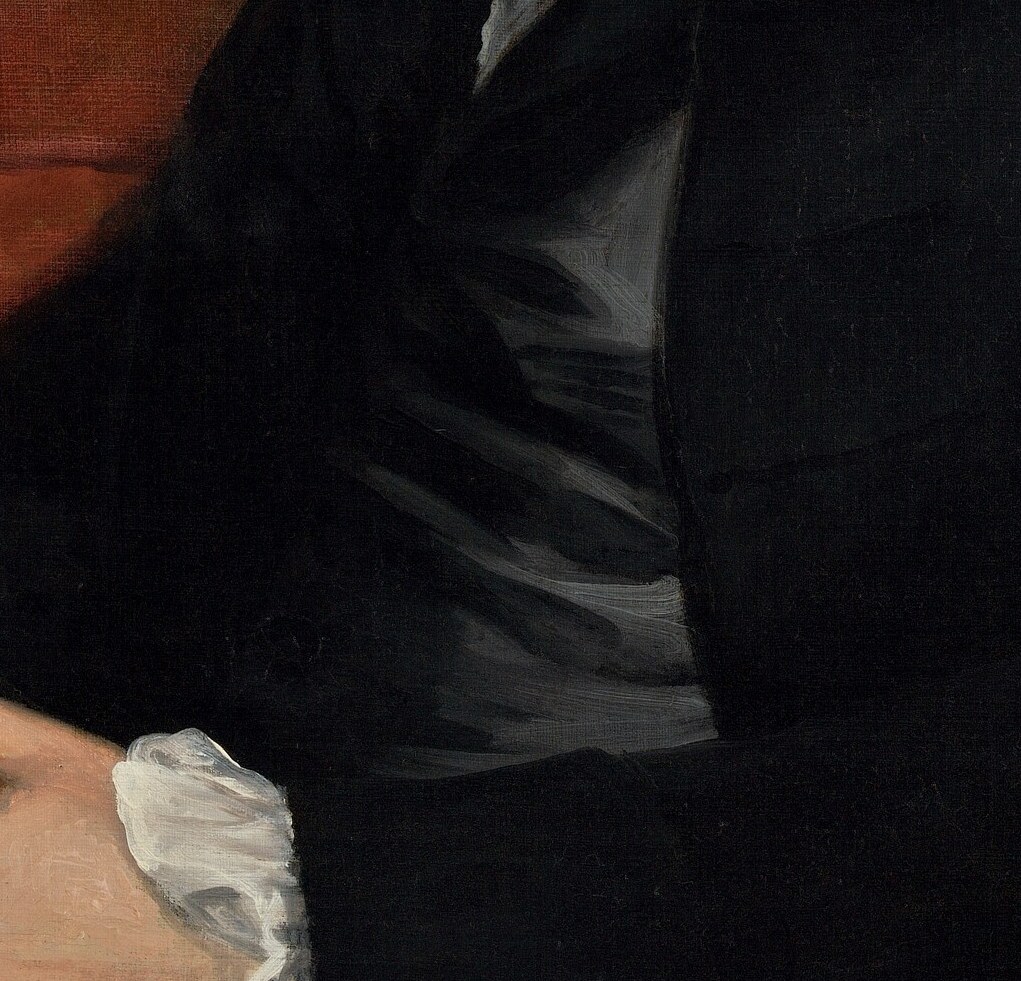
The other choice everyone noticed: the snuff box. No palette, no brushes, nothing that says "tradesman." Reynolds had spent his career arguing that portrait painters were gentlemen and scholars, not manual laborers. Stuart grants him exactly that, painting him with the silver box held lightly in a hand that looks like it never touched varnish. It is a portrait of a mind, not a pair of hands.
What does a young artist owe the old master he hopes to succeed? Maybe just this: to see him clearly.
Details
Transcript
1784. London. An American arrives to paint the king. First, he needs a calling card: the president of the Royal Academy. Reynolds rarely let anyone paint him but himself. Stuart found the life in his eyes before touching the rest. He gives Reynolds a snuff box instead of a palette. Not a painter at work. A gentleman at ease in the world. And that lit ear held the last sounds Reynolds would ever hear.