Flathead Indians by Catlin, George
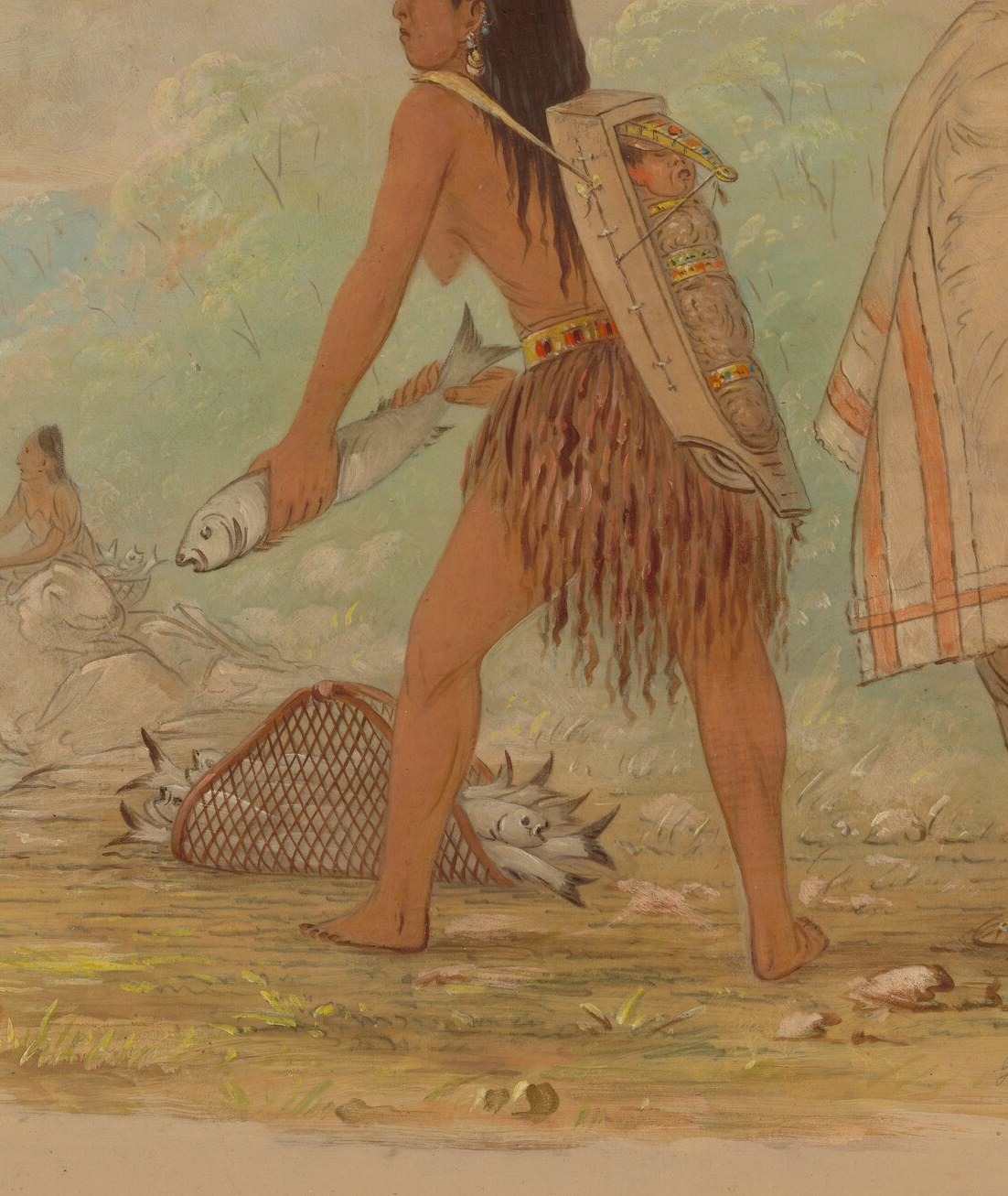
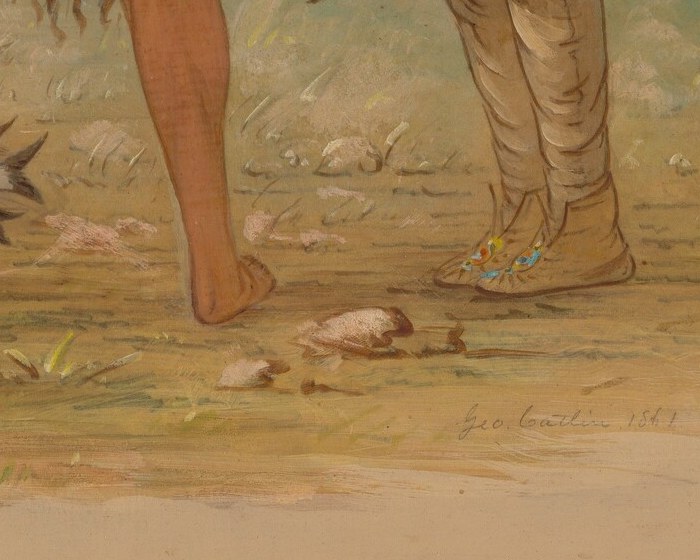
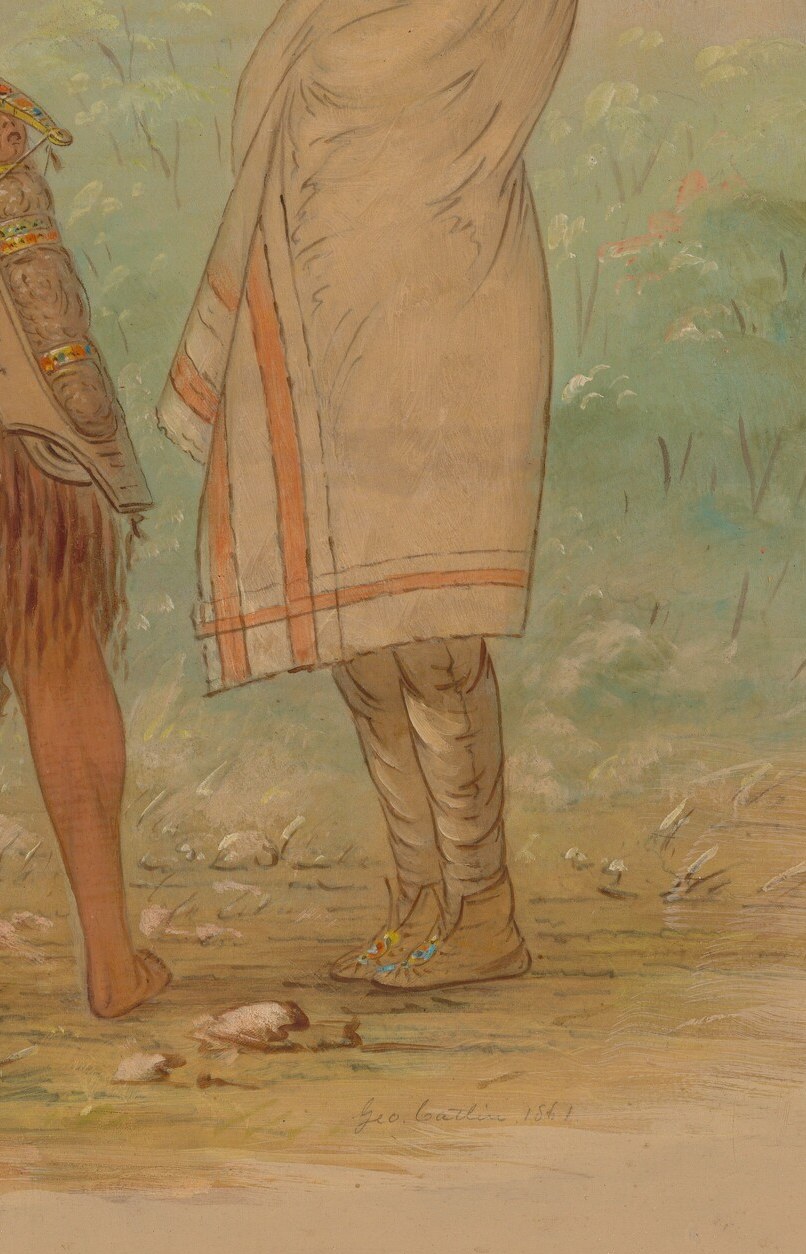
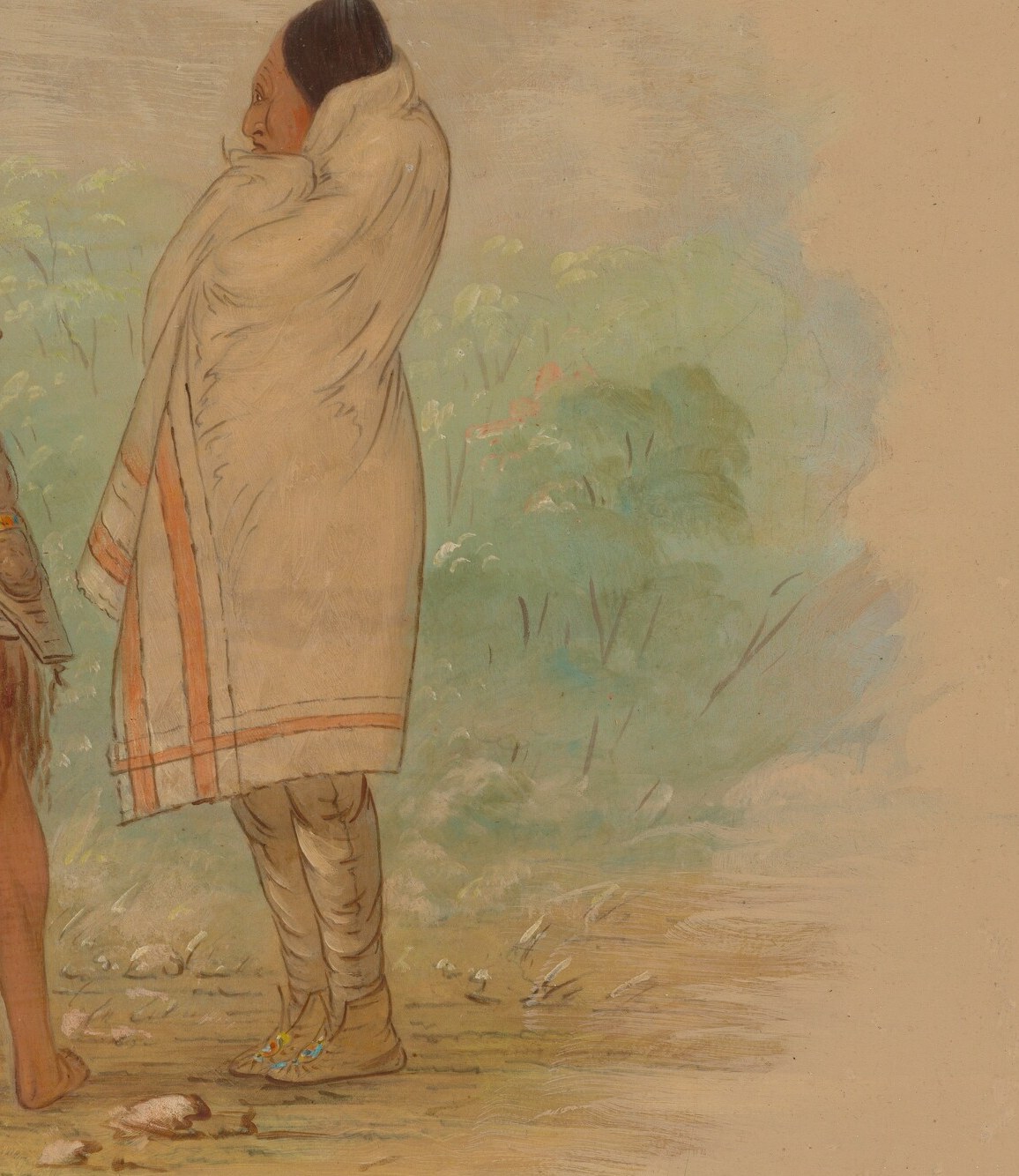
George Catlin's "Flathead Indians," painted in 1861, is an oil on card mounted on paperboard, housed at the Smithsonian American Art Museum. It's part of his extensive effort to document Native American cultures during a period of immense change.
In this work, observe the man proudly holding a large fish, a direct symbol of sustenance. The detailed fishing net, laden with fish, further reinforces the theme of skilled survival and the bounty of their environment. Look closer at the background, where another figure with a bow highlights hunting as a complementary means of life.
Catlin, an American lawyer and painter, undertook five journeys to the American West in the 1830s. He dedicated his career to creating an ethnographic record through his art, capturing the customs and environments of diverse Indigenous groups. His unique folk art style blended direct observation with clear representation.
The painting, through its carefully chosen elements, offers a visual narrative of a community deeply connected to its land and traditions. What other stories do you see in the details?
Details
Transcript
This painter documented Indigenous life in the American West. He sought to record cultures facing great change. This man holds a large fish, representing sustenance. The woven net and its catch symbolize skilled survival. Another figure with a bow and arrow emphasizes hunting. Together, these elements portray a resilient way of life.