Head of Medusa by Peter Paul Rubens
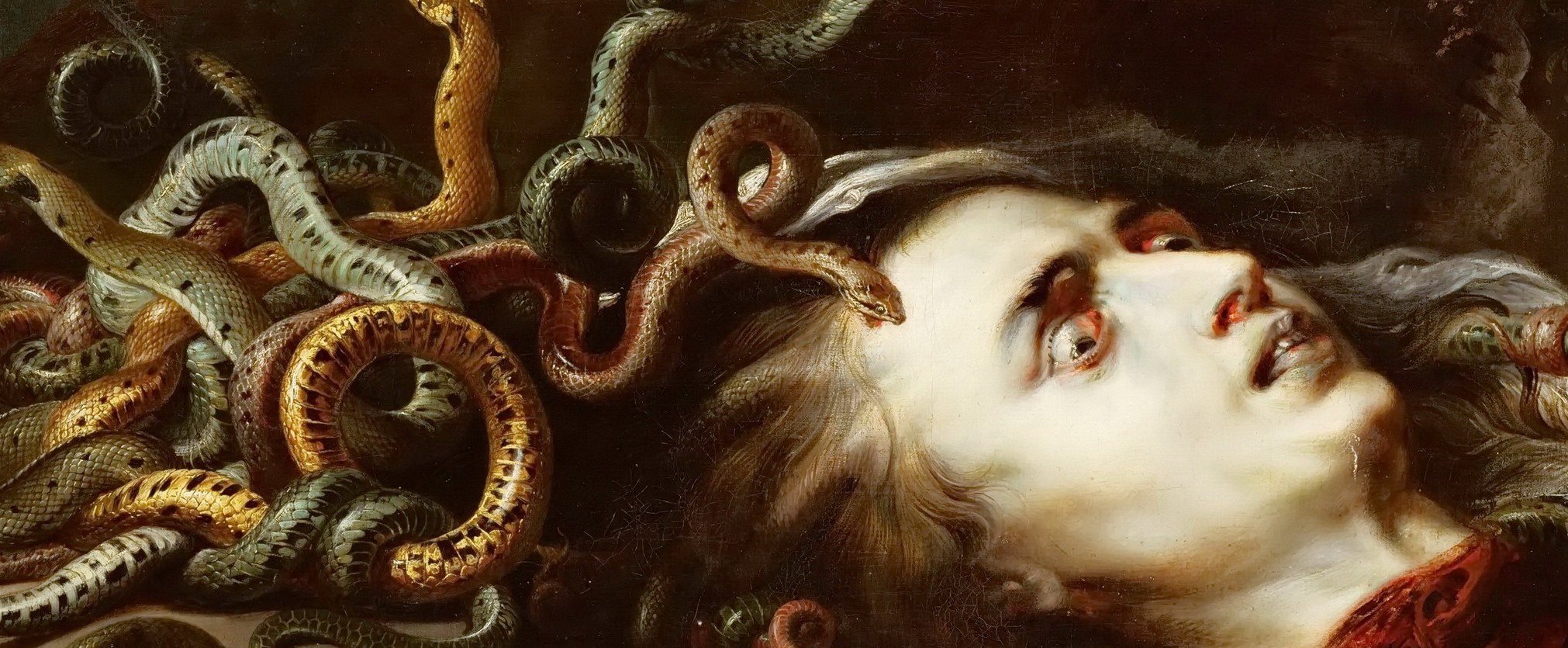
This is Peter Paul Rubens's Head of Medusa, painted around 1618 and housed in the Kunsthistorisches Museum, Vienna. Rubens was a master of capturing dramatic scenes and lifelike textures, making even mythological horror feel tangible.
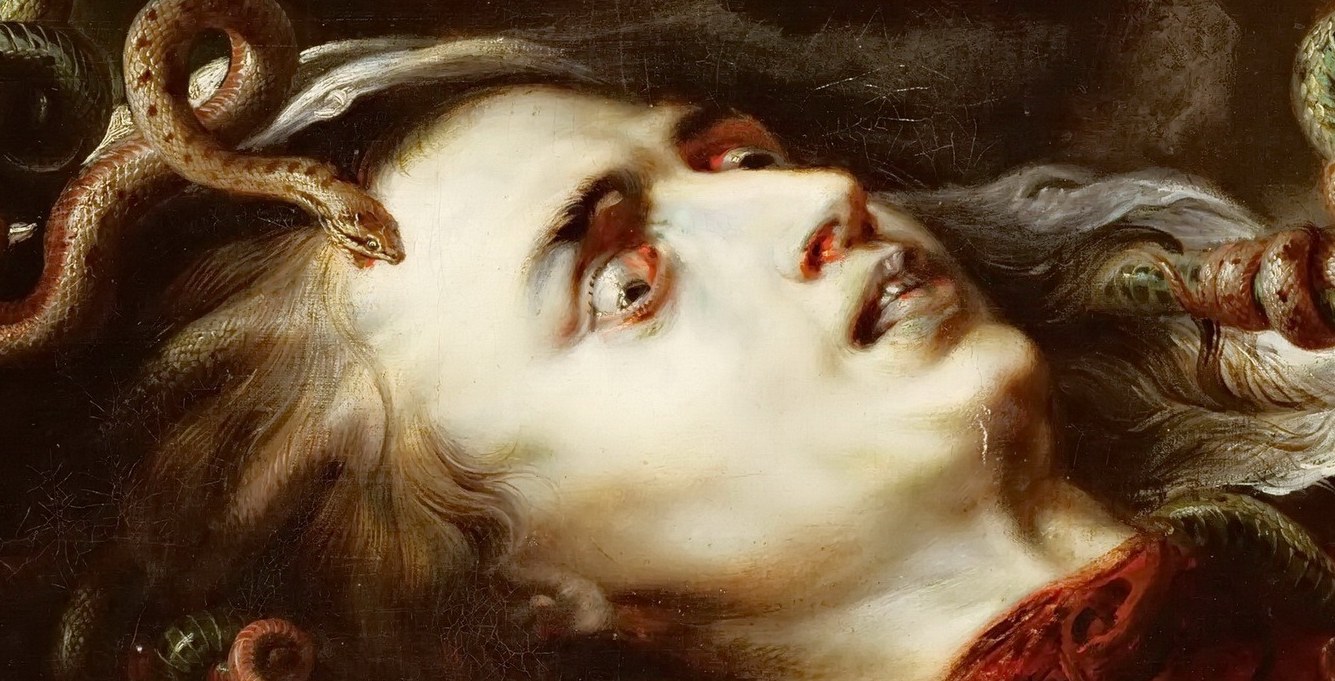
Look closely at Medusa's face. Her wide eyes and open mouth convey intense agony, but it is the handling of the paint itself that truly amazes. Notice how the light seems to pool and curve on her skin, creating an illusion of soft, living flesh despite her severed state.
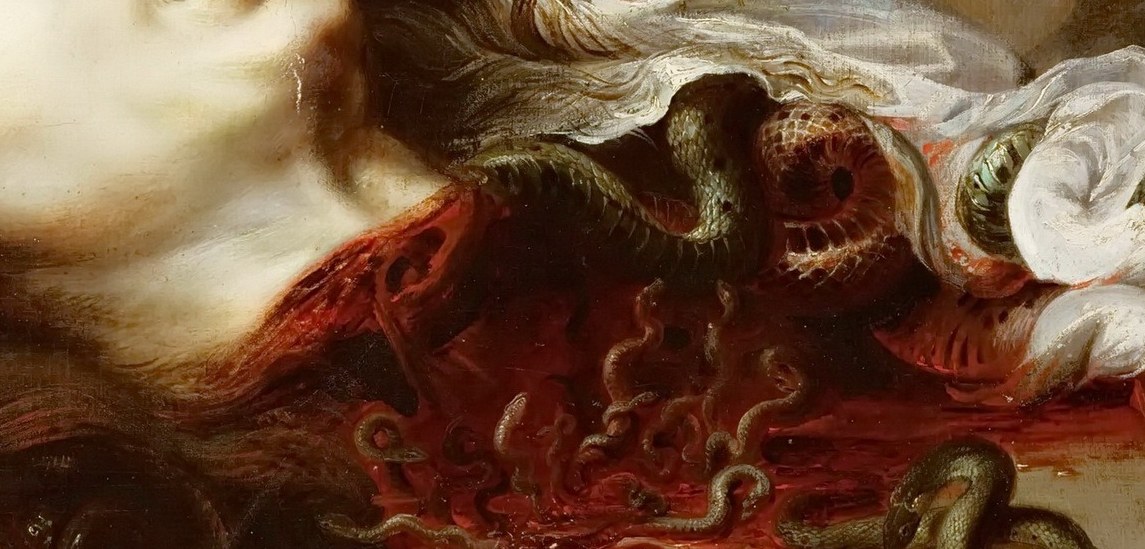
The writhing snakes that form her hair were actually painted by Frans Snyders, a frequent collaborator of Rubens. Snyders's skill with depicting animals shines through, with each individual scale rendered to catch the light and suggest movement.
This painting is a testament to the Baroque era's fascination with mythology and its artists' incredible technical prowess.
Details
Transcript
A face of myth, painted in horror. Look at her eyes; they still seem alive. Snakes are her hair. See how they writhe? Rubens painted each scale to shimmer. Another painter, Frans Snyders, did the snakes. Light seems to curve and pool on her skin. He captures skin texture with pure skill. Even in death, her face is so real.