The Neigh of an Iron Horse by Faris, Joseph Anderson
This is 'The Neigh of an Iron Horse' by Joseph Anderson Faris, painted around 1860. It holds a fame rank of 12,311 out of roughly 241,000 artists; a painter who left behind a powerful warning and then vanished from the historical record entirely.
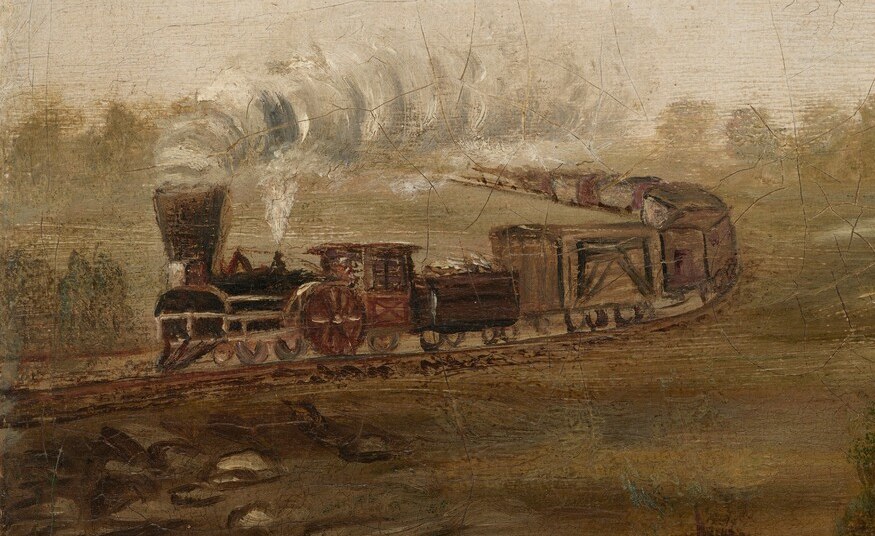
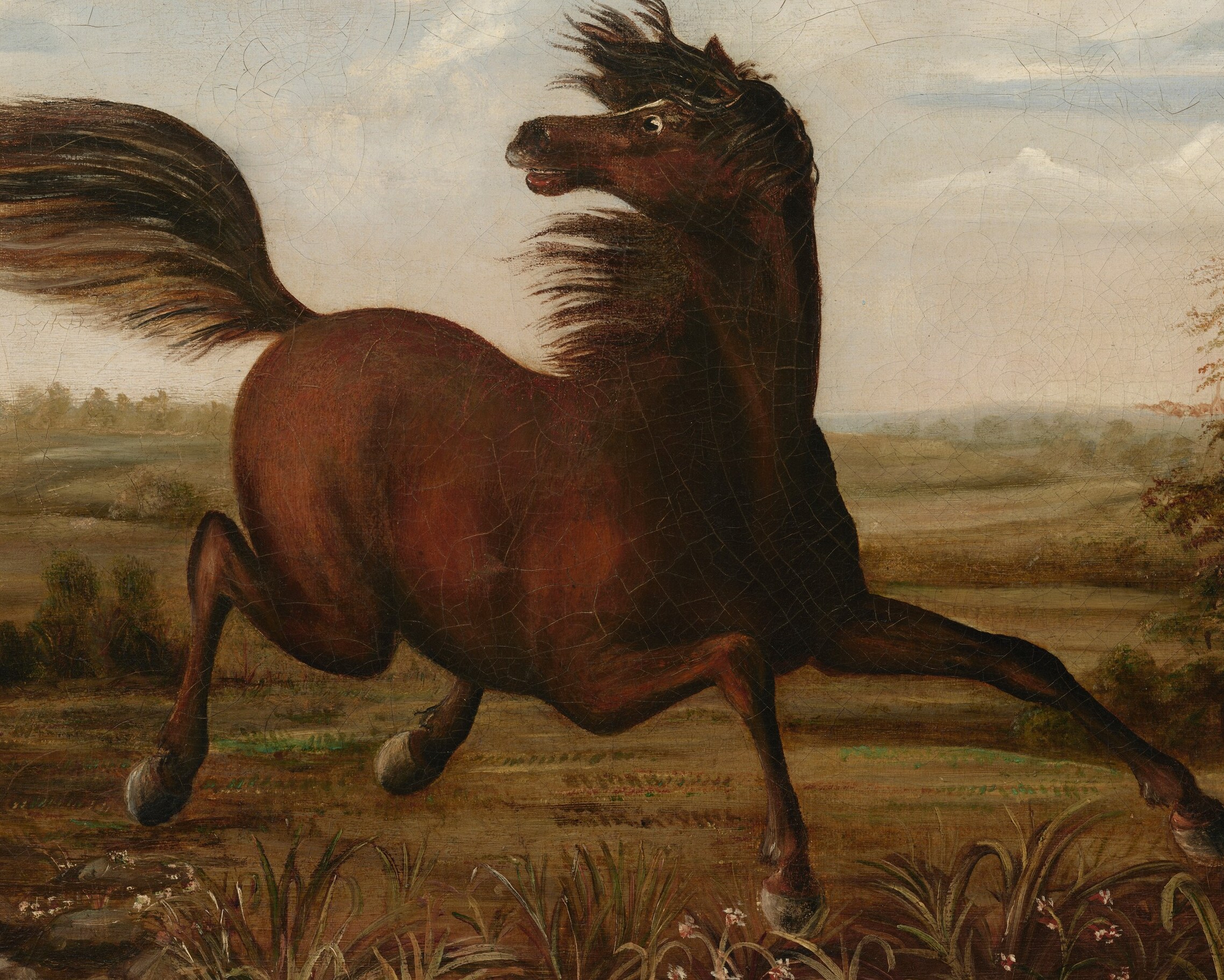
Look first at the horse's eye. The whites are showing, a clear, biological signal of panic. Across the canvas, the locomotive is rendered as a black, faceless mass, its plume of smoke smearing into the countryside. The autumn tree on the right is shedding its leaves, marking a time of decay that mirrors the scene below.
The painting dates from a period when railroads were violently reshaping the American landscape. In the pastoral foreground, the detailed grass and small flowers ground the work in a natural world that was actively being destroyed. The soft line of distant trees in the background is the only thing separating the rearing animal from a vast, unsettled sky.
This is an image of a genuine, historical rupture, painted by someone we know almost nothing about. Joseph Anderson Faris completed this work, showed us the exact moment of collision between nature and industry, and then his biography simply stops. What do you think happened to him?
Details
Transcript
It looks like the horse is simply afraid of the train. Look at the eye. This is not mild alarm. This is terror. The locomotive is faceless, black, and breathing smoke. Painted around 1860, as railroads tore across America. The artist was Joseph Anderson Faris. Almost nothing is known about him. He painted this warning, and then he disappeared from the record.