Man with a Hoe by Seurat, Georges
Georges Seurat painted "Man with a Hoe" around 1882, when he was barely 22 years old. It is an anomaly in popular imagination: a Seurat without dots. The painting, oil on a modest wood panel, belongs to a private collection and is rarely seen, yet it holds a key to one of art history's great technical revolutions.
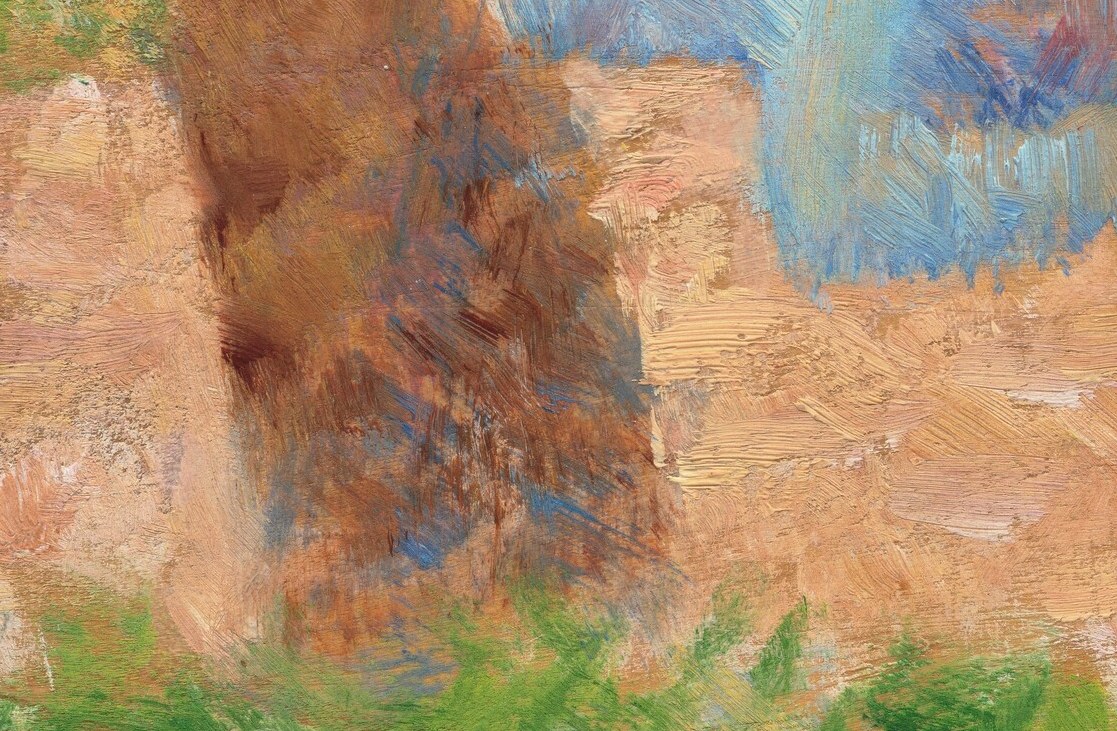
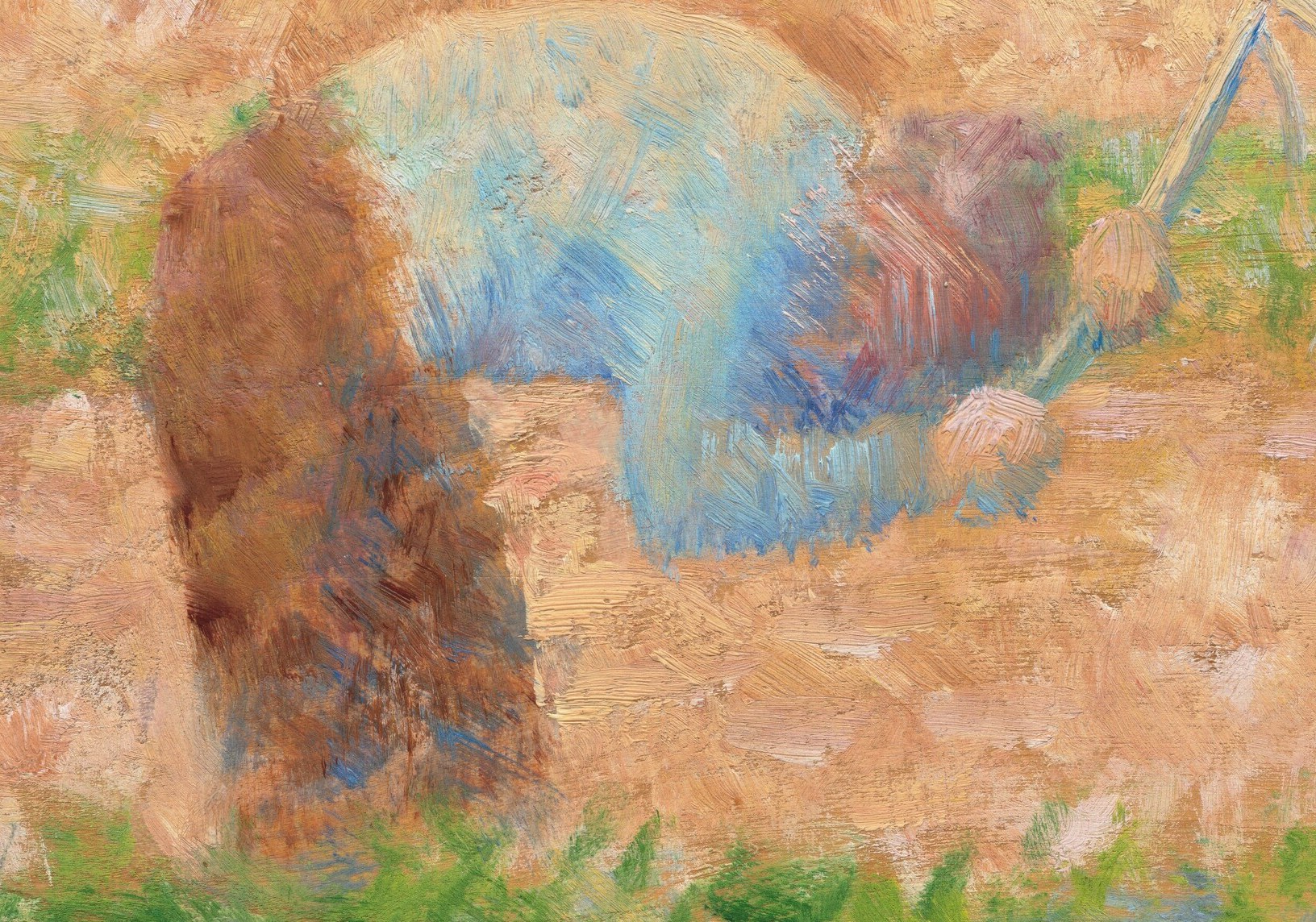
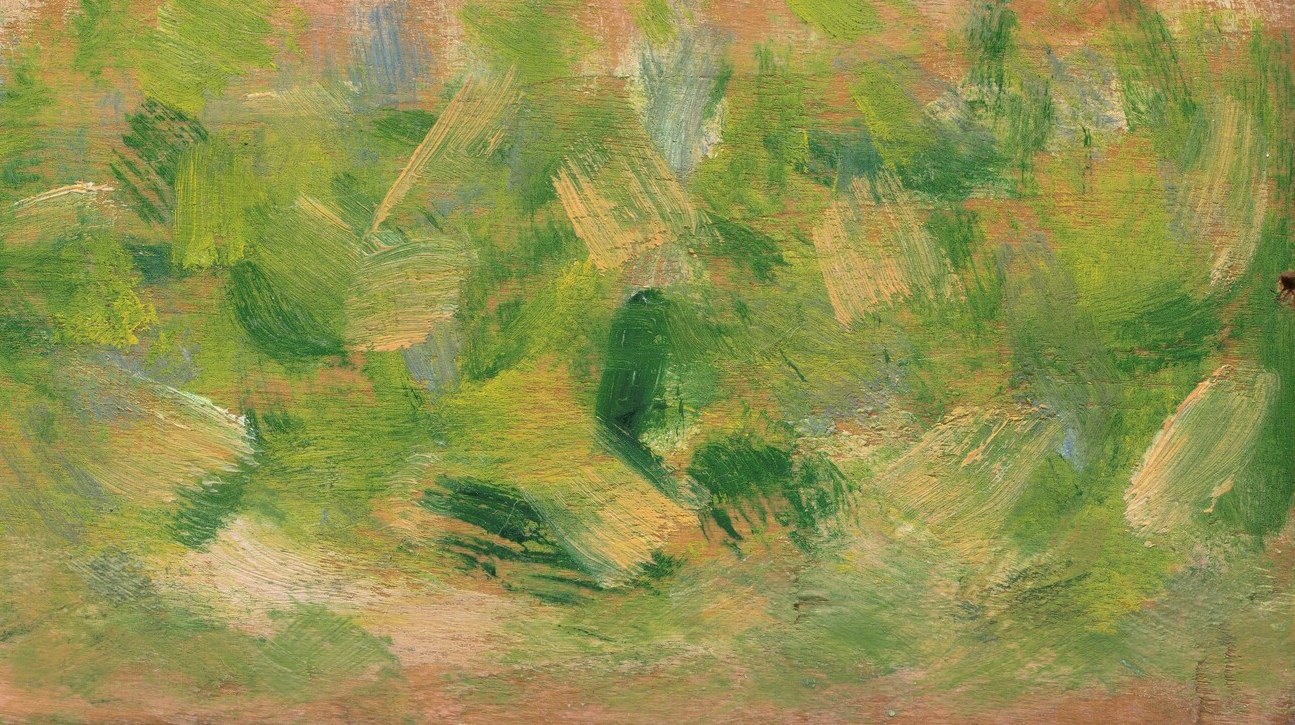
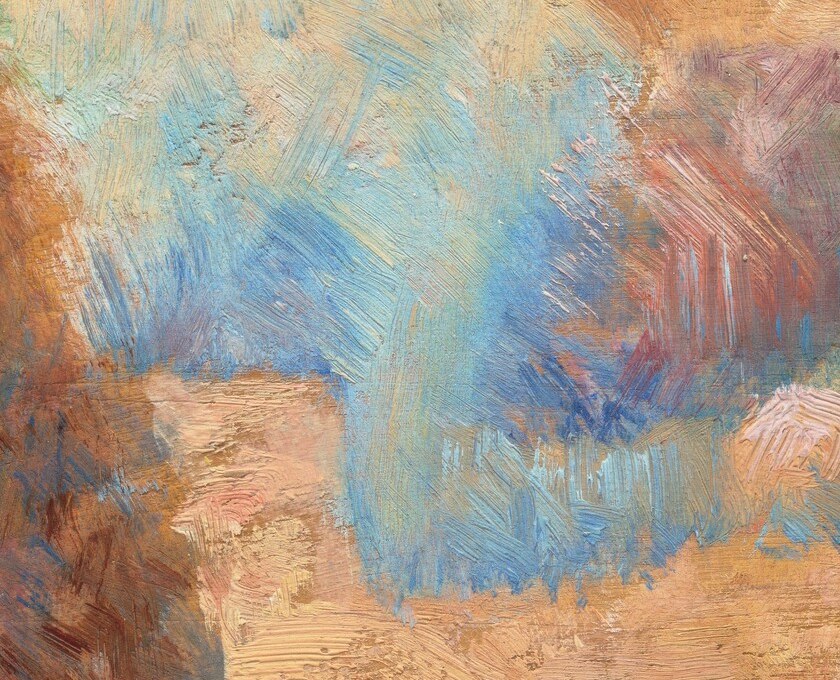
What to look at: The subject's face is intentionally hidden. The drama is in the thick, earthy texture of the trousers, the blunt weight of the hoe, and the visible, almost sculptural brushstrokes dragging through the grass. This is a painting about physicality, not personality.
The history: Created as the Industrial Revolution was dismantling agrarian traditions across France, this work is a quiet act of witness. Seurat comes from a middle-class Parisian family; his choice to monumentalize an anonymous, bent back on a small wooden plank is political in its silence. Within a few years, this same intense young man will walk into a studio and begin to disassemble light itself, inventing the painstaking pointillist technique with methodical, scientific precision.
This panel is the raw, urgent prelude to that quiet revolution: a young man learning to see before he learned to measure.
Details
Transcript
Look at the dirt on his trousers. This man is a farmworker. We never see his face. It is 1882. The Industrial Revolution has upended rural life. The painter is only 22 years old. He builds the whole world with rough, heavy brushstrokes. Soon he will invent pointillism, using a million tiny dots. But here, he honors a silent body with the blunt edge of a brush.