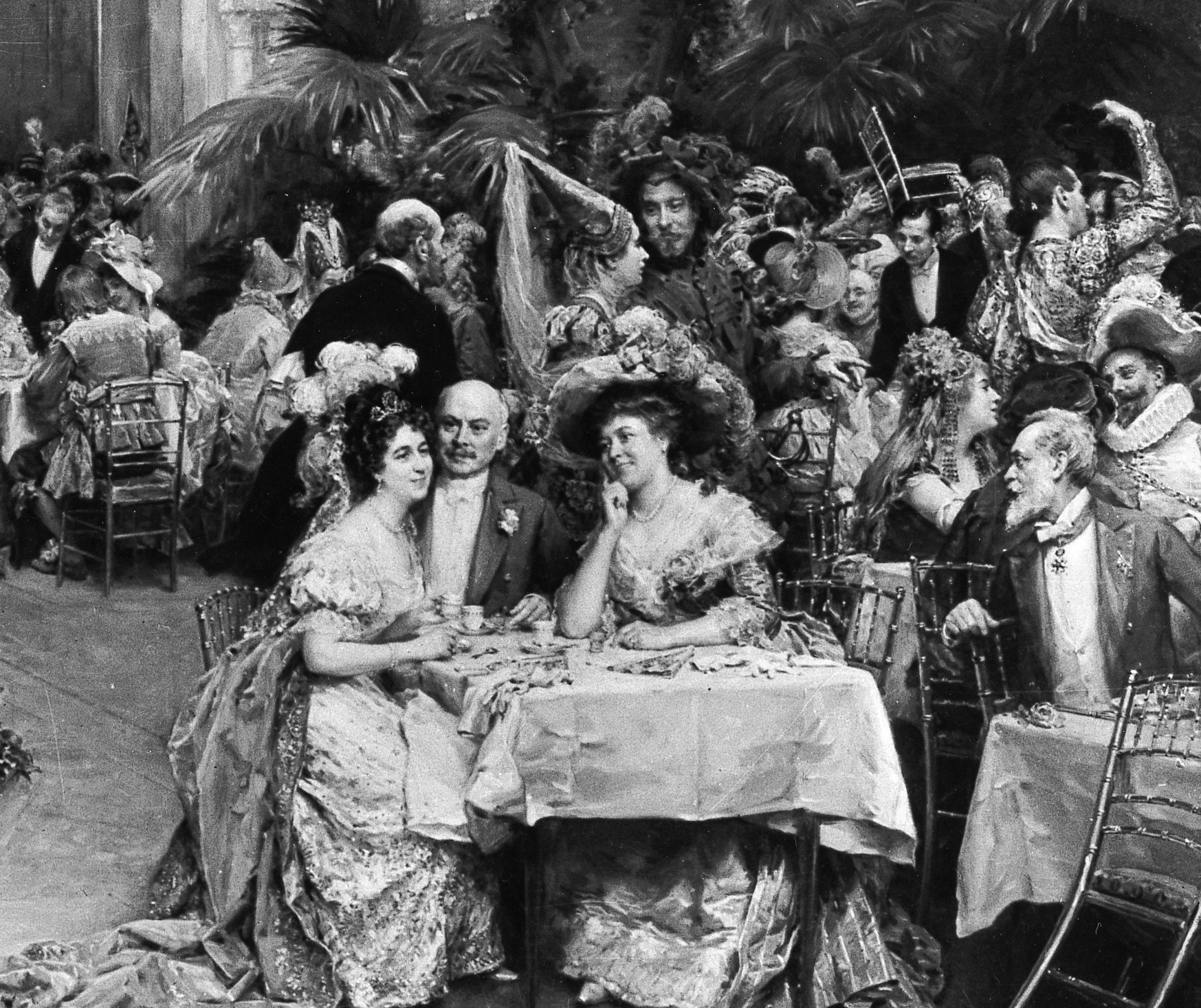
Masquerade Ball at the Ritz Hotel, Paris by Raimundo de Madrazo y Garreta
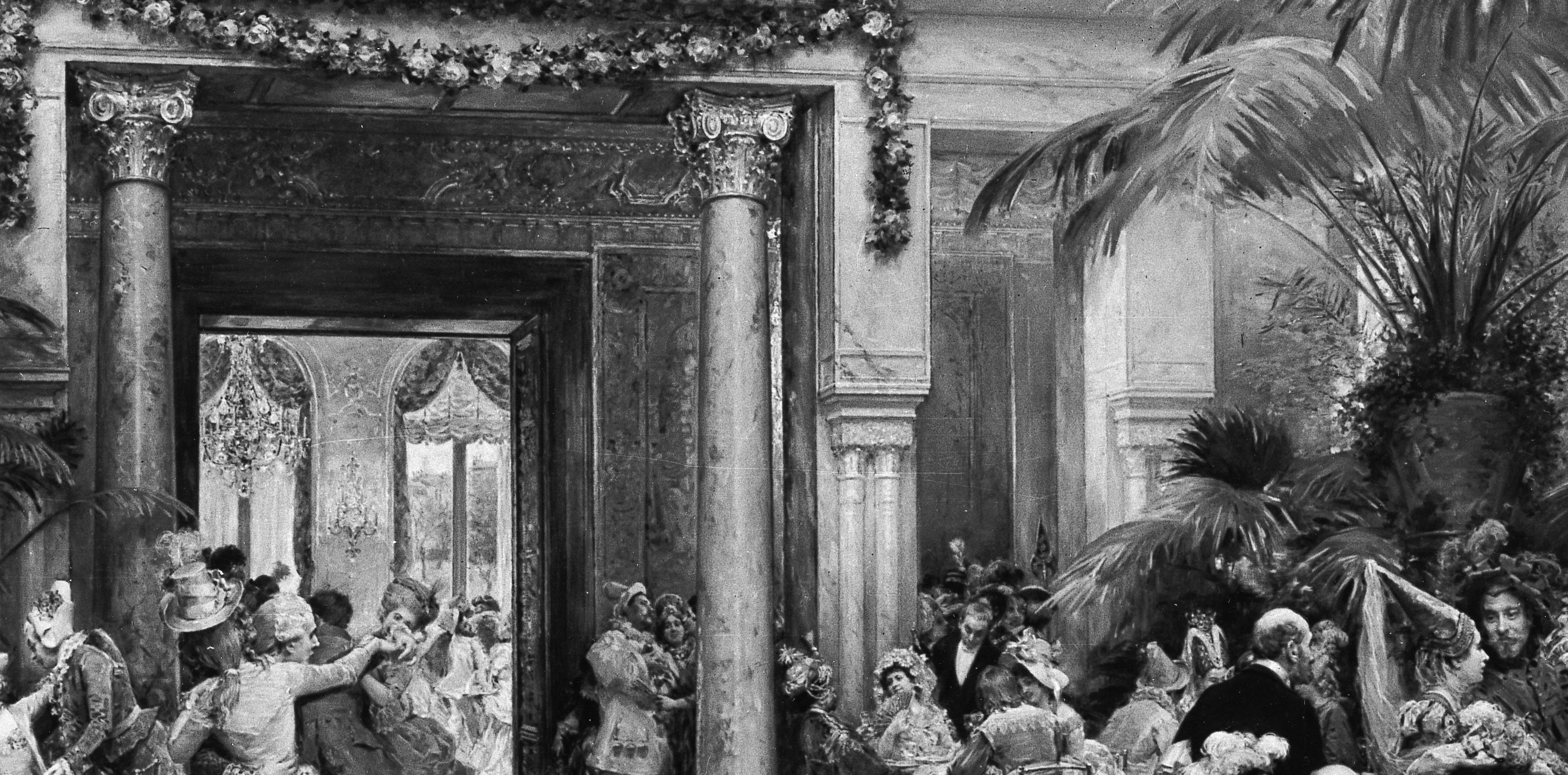
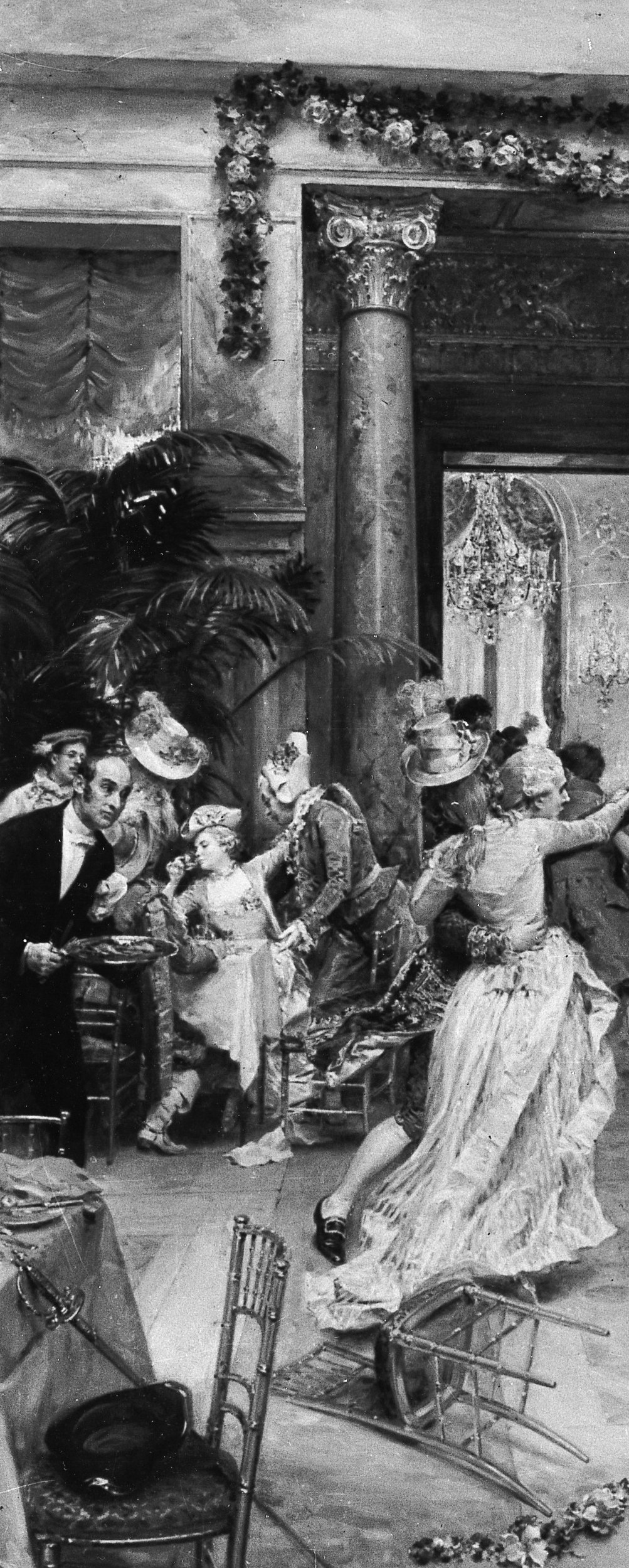
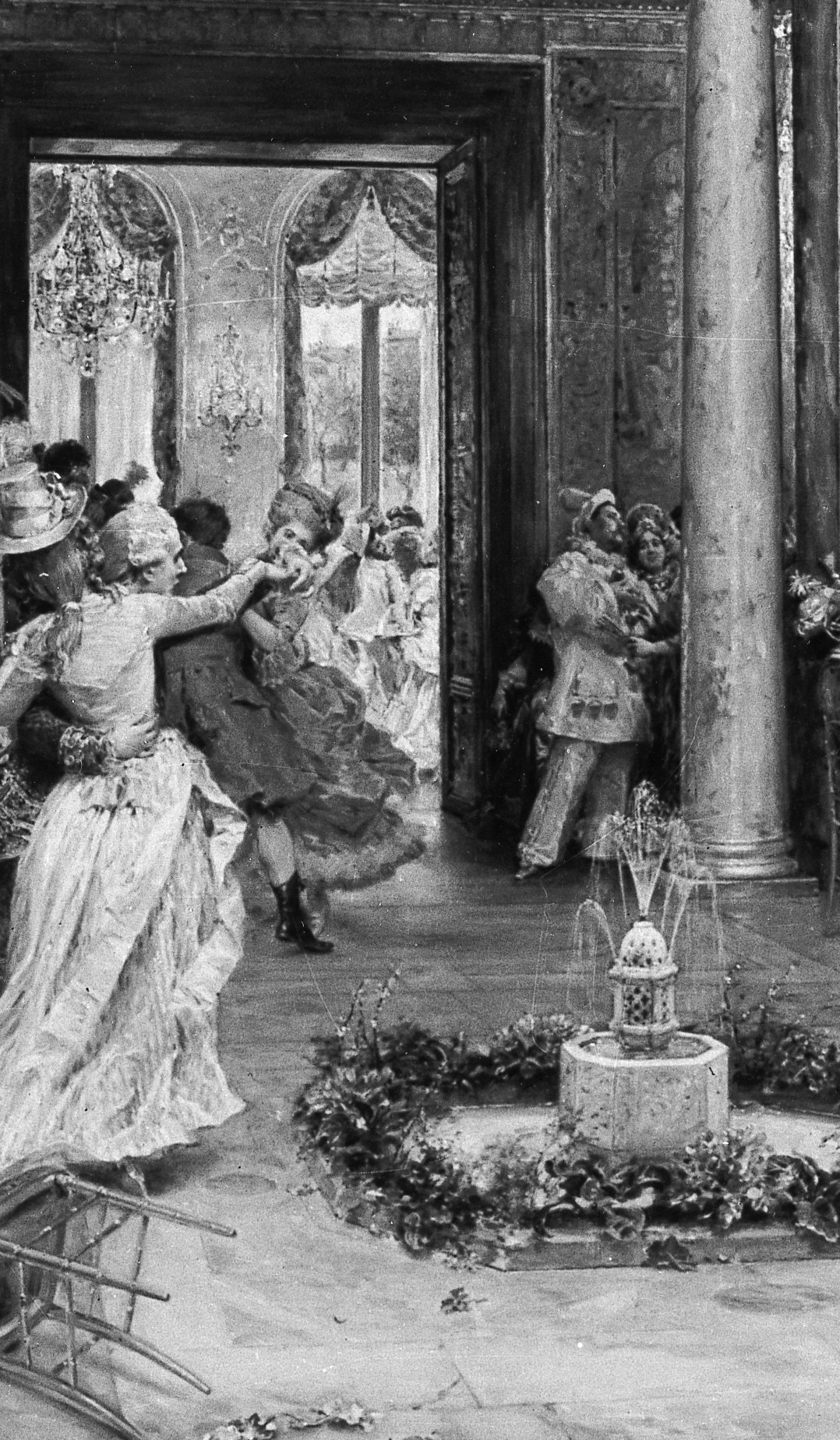
Raimundo de Madrazo painted "Masquerade Ball at the Ritz Hotel, Paris" in 1909, capturing the height of Belle Époque luxury at the newly opened hotel on Place Vendôme. The Met holds the painting now, a glittering document of a world about to vanish in the First World War.
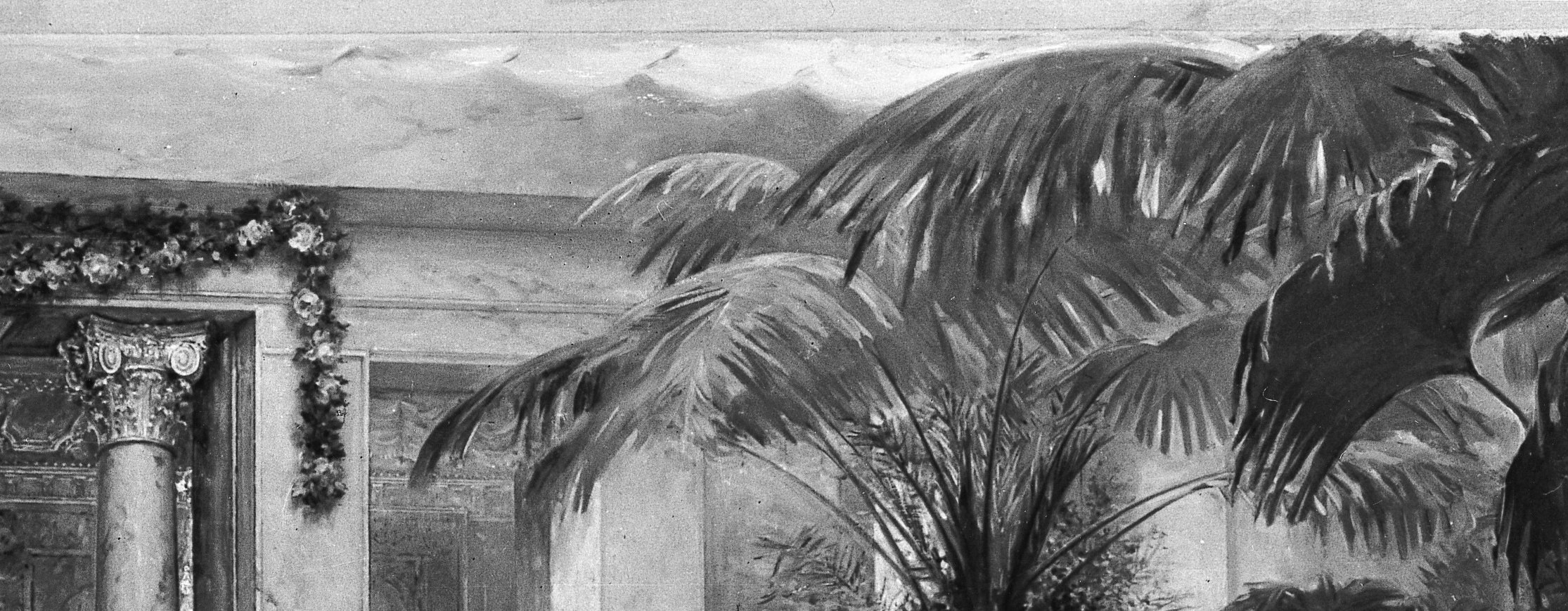
It is easy to get lost in the swirl of white gowns and black evening coats in the middle of the floor. Madrazo was a master of texture: you can almost feel the weight of the silk and the rough fronds of the Ritz's famous tropical palms lining the walls. The painting reads at first like a who's who of Parisian society dissolving into a raucous, anonymous night.
But the most important figure is hiding in plain sight, in the shadow of the upper gallery. Madrazo was not just a guest at these parties; he was a documentarian. The solitary silhouette watching the scene is likely the artist himself. He doesn't join the dance. He stands apart, recording the spectacle from the margins, half-visible and untouchable.
He was 68 years old when he painted this, looking down on a room full of youth and motion. It turns the painting from a simple party scene into a self-portrait of an aging artist observing a world that is already starting to leave him behind.
Details
Transcript
1909. A masked ball at the Ritz in Paris. A thousand identities lost in silk and shadow. Madrazo painted this from life, but he hid something in the dark. The energy here is all dance and champagne. Now look up, past the palms. There is a man in the gallery. Alone. Watching. The painter put himself in the painting, not as a guest, but a ghost.