Weary Wayfarers by Cazin, Jean-Charles
Jean-Charles Cazin painted "Weary Wayfarers" in 1888, and it holds a quiet, specific gravity. He came to this subject after walking away from a successful career directing a ceramics factory. He traded the kiln for the open road, devoting himself entirely to painting the rural poor.
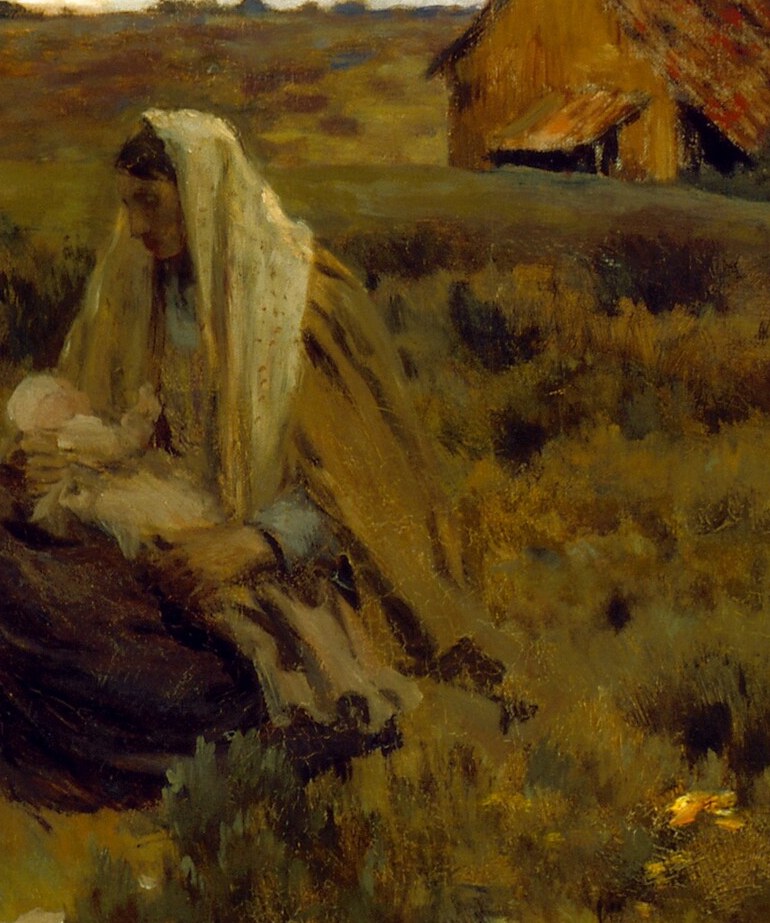
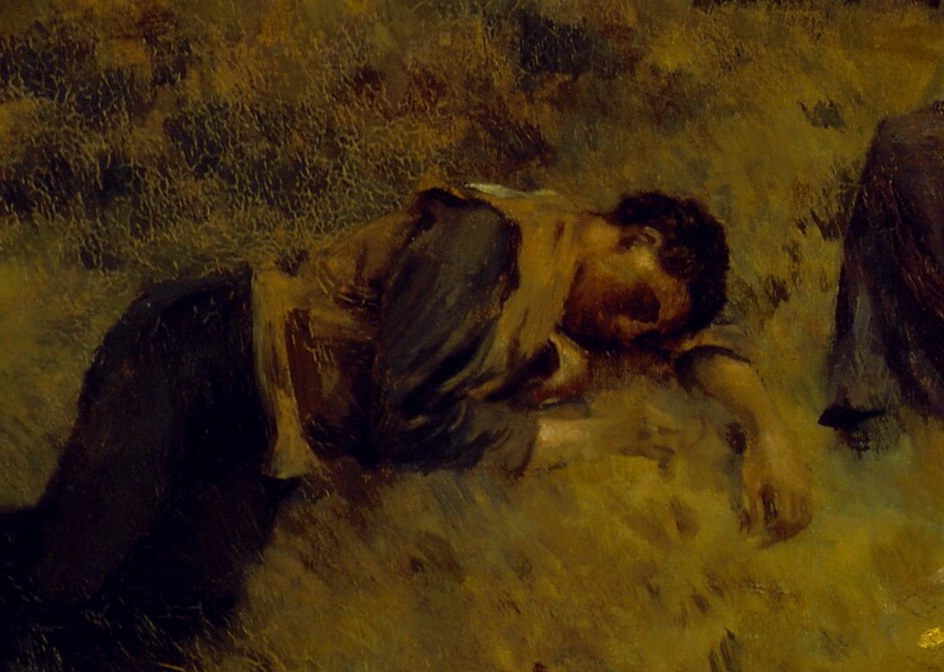
Look at how the mother's head is veiled and bowed. The baby in her arms is limp with the deep sleep only a child can find. Beside her, a second child lies face-down in the grass, completely spent. The golden sky suggests the end of a long day, but there is no shelter in the frame they can quite reach.
Cazin gave up commercial security to chase a truth he felt only paint could hold. The thick, rough impasto on the canvas, visible in the textured grass and the heavy sky, makes the scene feel almost sculpted, as if the weight of their exhaustion is built into the surface itself.
This isn't a grand history painting. It's a moment of pure human pause, and it asks a simple question: what will she do when she finally rises, and the road continues?
Details
Transcript
She has been walking for a long time. Her child sleeps, unaware of the journey. Another child, too exhausted to go on, lies in the grass. Cazin painted this in 1888, after abandoning his career as a successful ceramicist. He left the factory to capture scenes of rural life exactly like this one.