The Windmill at Wijk bij Duurstede by Jacob van Ruisdael
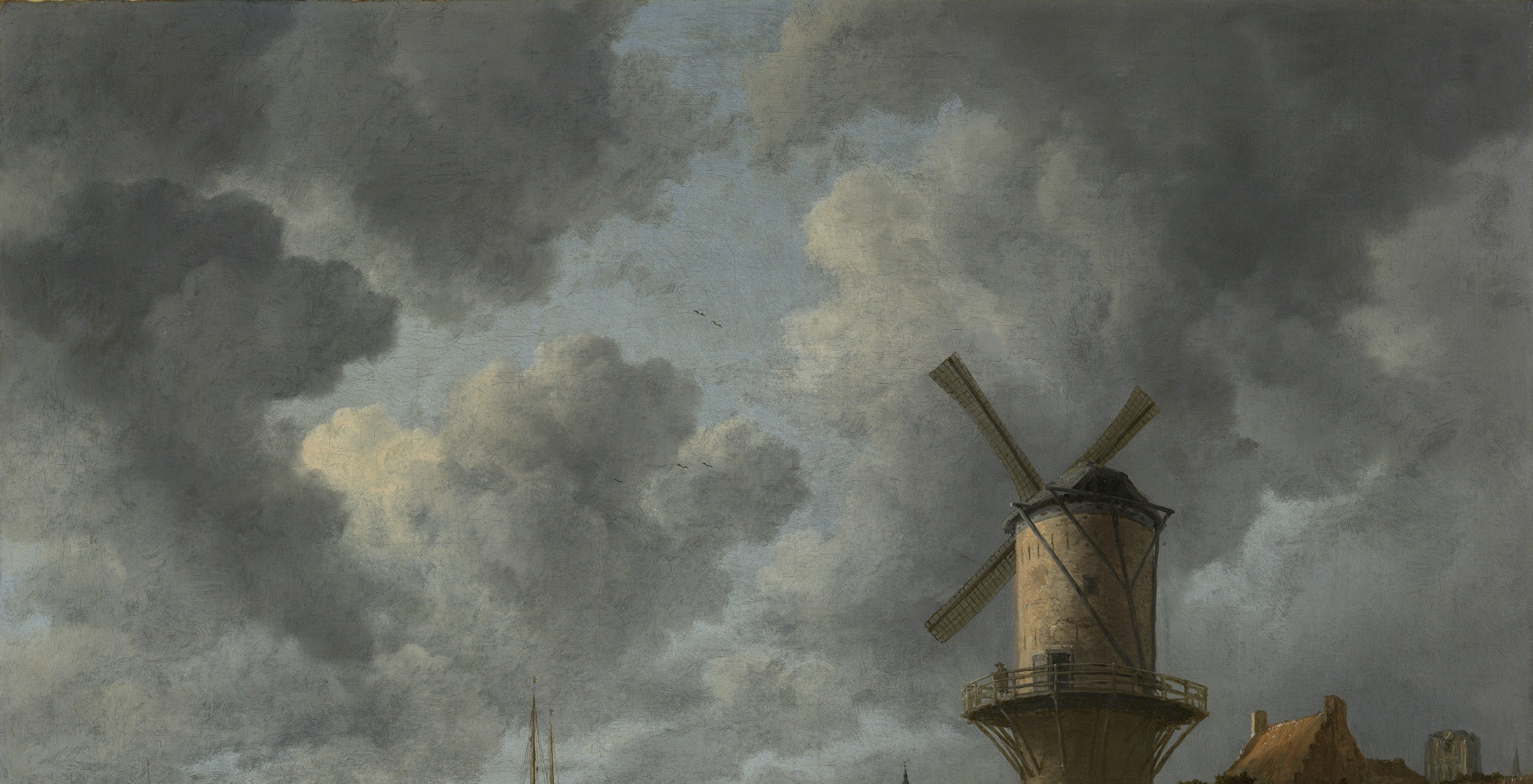
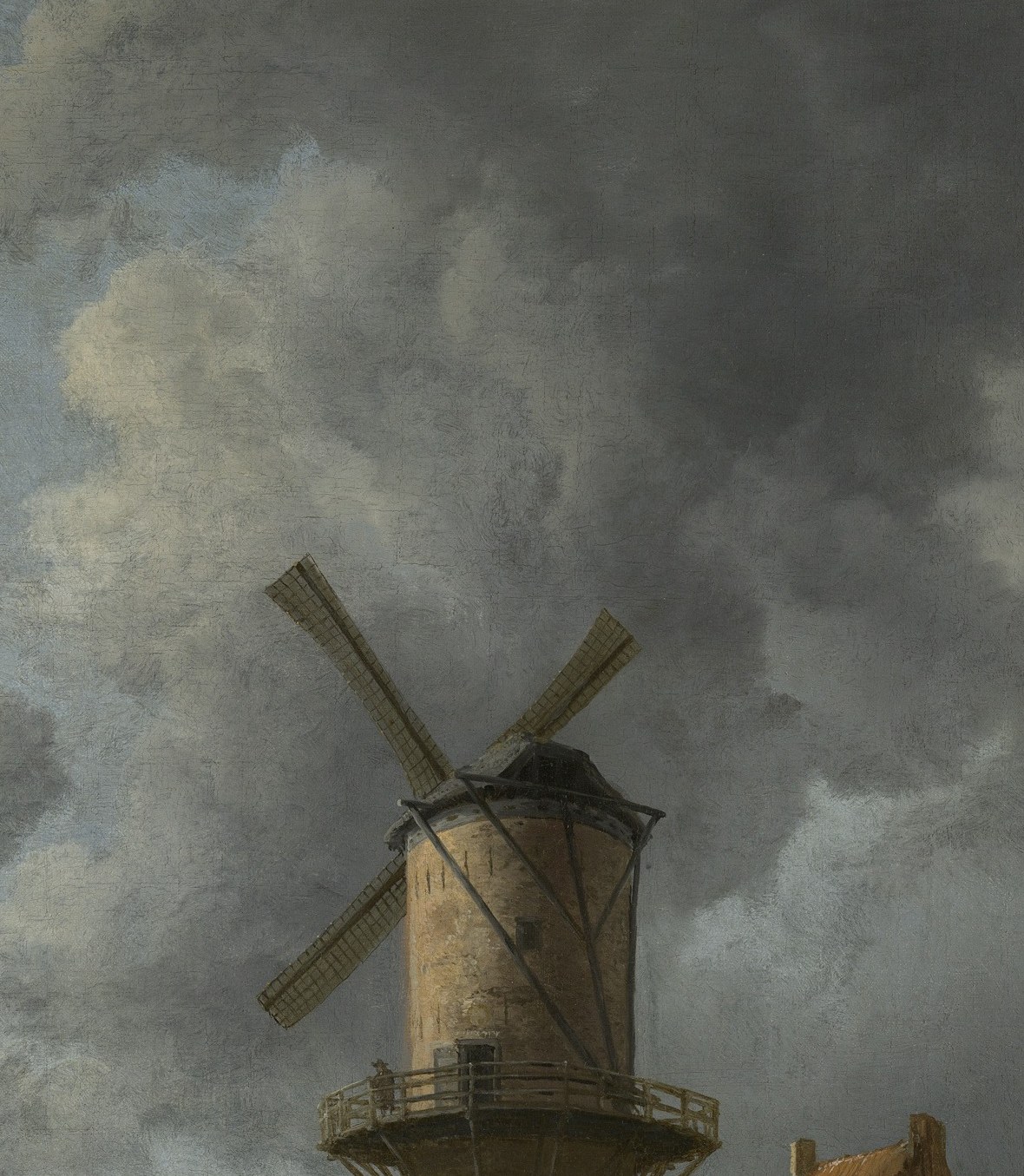
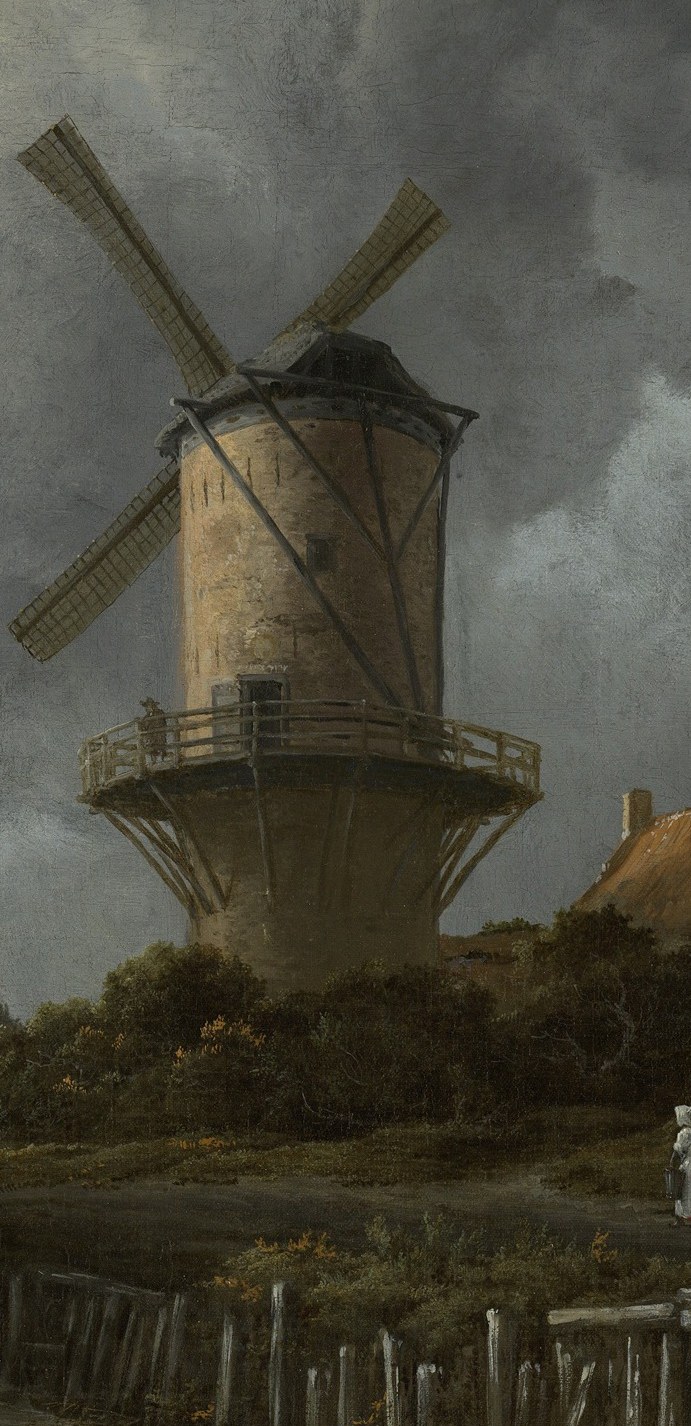
Jacob van Ruisdael's The Windmill at Wijk bij Duurstede (c. 1670) is the most famous windmill in art history, and it began as a quiet act of rebellion. In an era when Dutch landscapes were expected to be broad, serene panoramas of a flat shared world, Ruisdael made a single working grain mill dominate the sky like a monument. The painting now hangs on loan from the Amsterdam Museum at the Rijksmuseum.
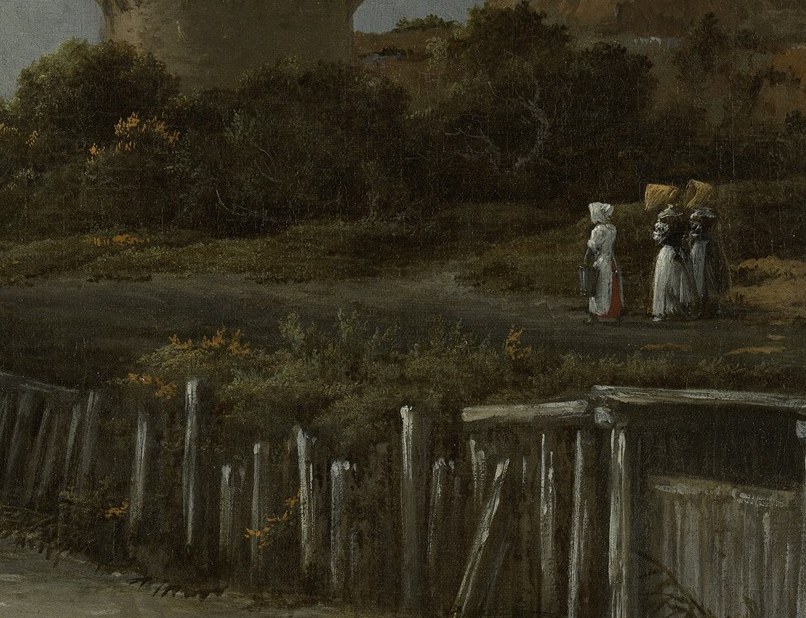
Let your eye start at the lower left, on the dark bank. Ruisdael deliberately keeps this corner in shadow so the river pulls you toward the light. Follow that silvery path on the water and you arrive at the mill's sails, frozen against the only bright gap in the storm. Notice the tiny figures at the water's edge, their scale is the whole argument of the painting.
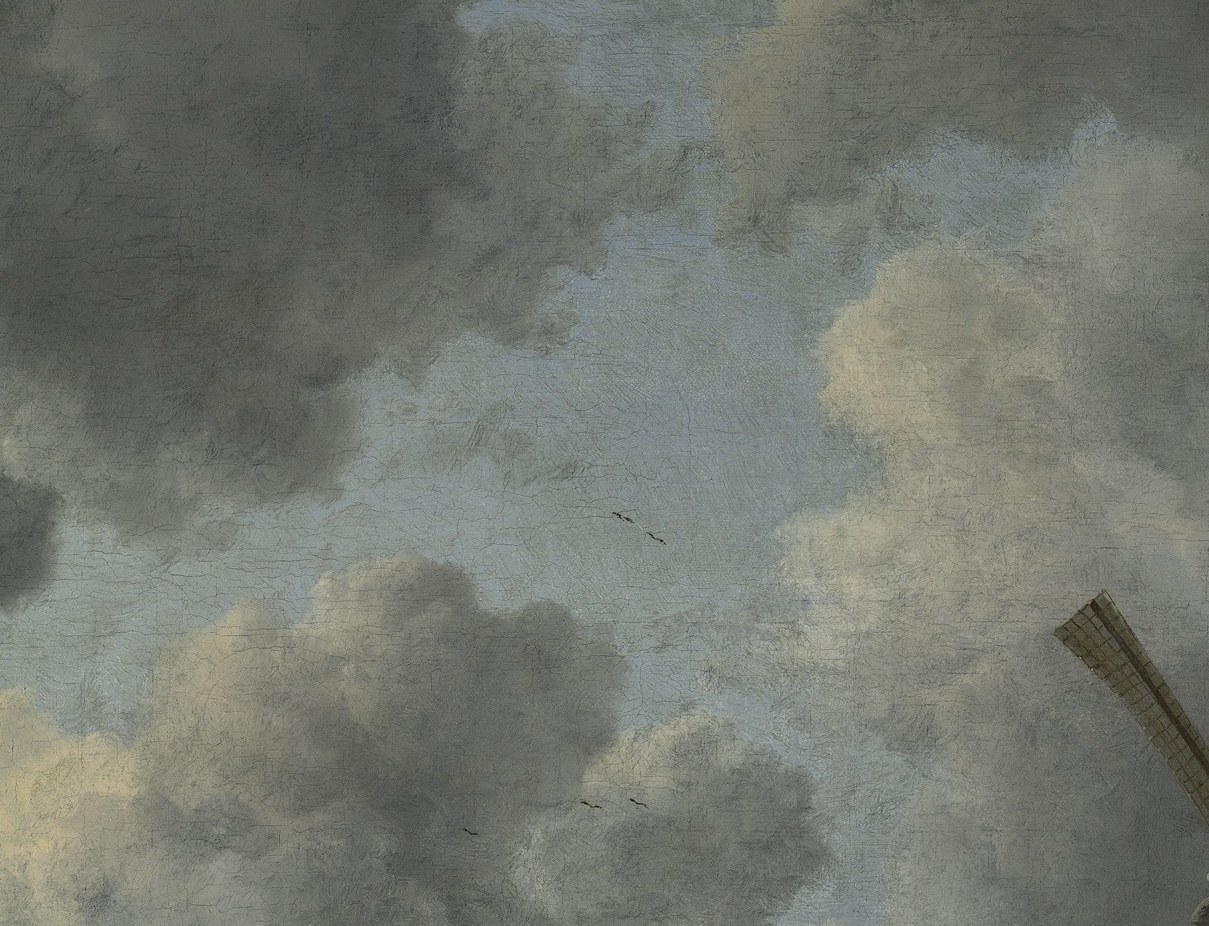
Contemporary viewers found this troubling. A landscape was not meant to center industrial labor, nor to treat a mill with the compositional weight of a church tower. The billowing clouds, which take up more than half the canvas, were considered excessive and emotionally manipulative. Ruisdael's choice to fuse the everyday with the sublime pushed against the genre's accepted modesty and pointed toward Romanticism, a movement still a century away.
The tower you see behind the mill belongs to the church of Wijk bij Duurstede, confirming this is a real, specific place. By insisting that a real Dutch working town was as worthy of grandeur as any invented Italian vista, Ruisdael changed what landscape painting could be.
Details
Transcript
Around 1670, Ruisdael painted a landscape that broke the rules. Dutch landscapes were supposed to be vast, open, and calm. Here, a windmill dominates the sky like a cathedral. Look at the clouds. They churn, dark and heavy. Then a shaft of light breaks through, backlighting the sails. Ruisdael makes the mill the hero, pushing nature into supporting role. Critics were baffled. A working mill did not belong in an epic. But Ruisdael saw the divine in Dutch labor, and refused to back down.