Horse by Anton Mauve
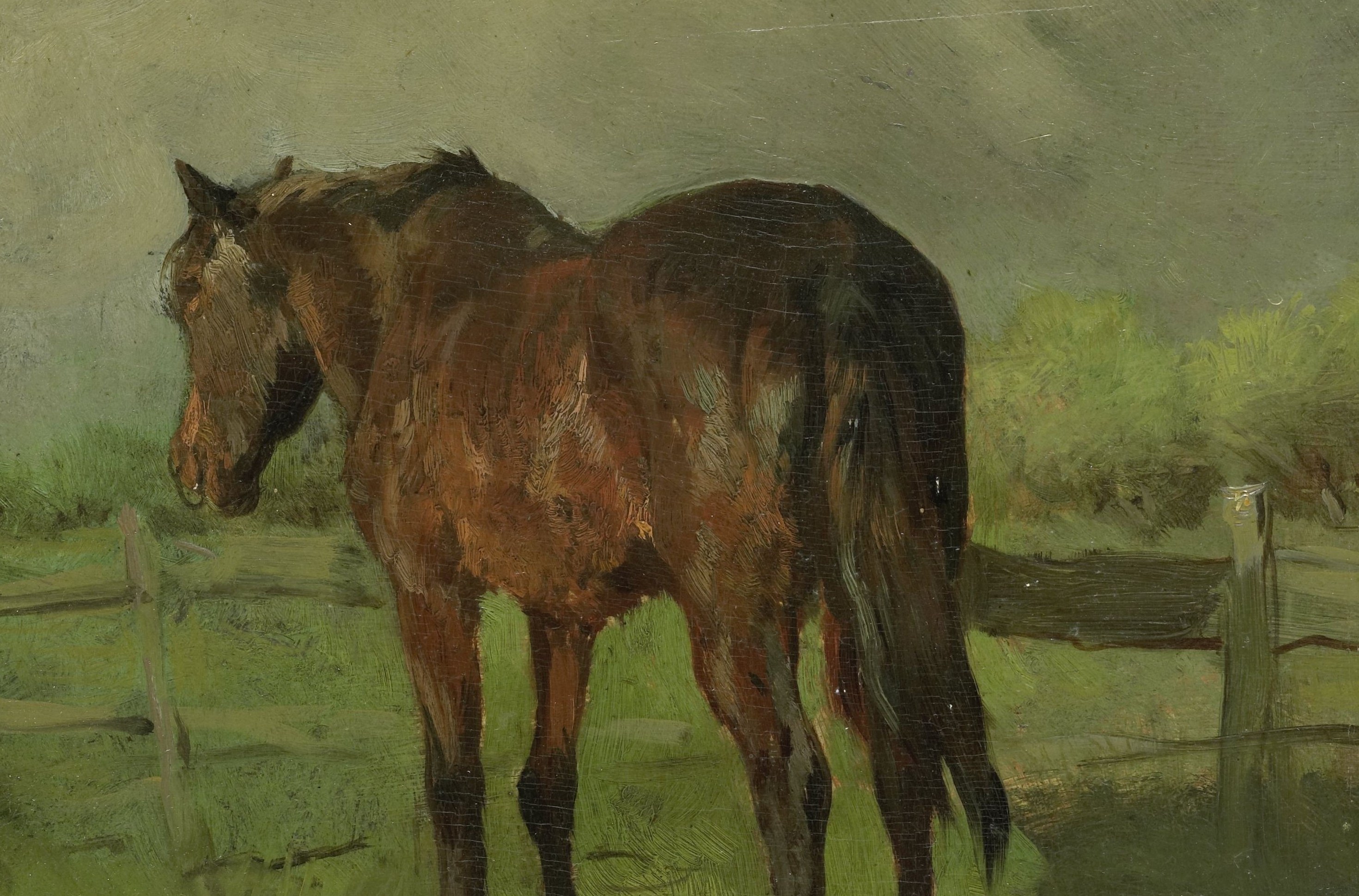
This is Anton Mauve's 'Horse', painted in 1874. Mauve was a leading figure of the Hague School, a group of Dutch realists who preferred grey skies and wet grass to grand historical drama. He was also Vincent van Gogh's cousin-in-law and one of his earliest painting instructors, and you can see the through-line: an economy of brushwork that turns a quiet animal in a field into a complete world.
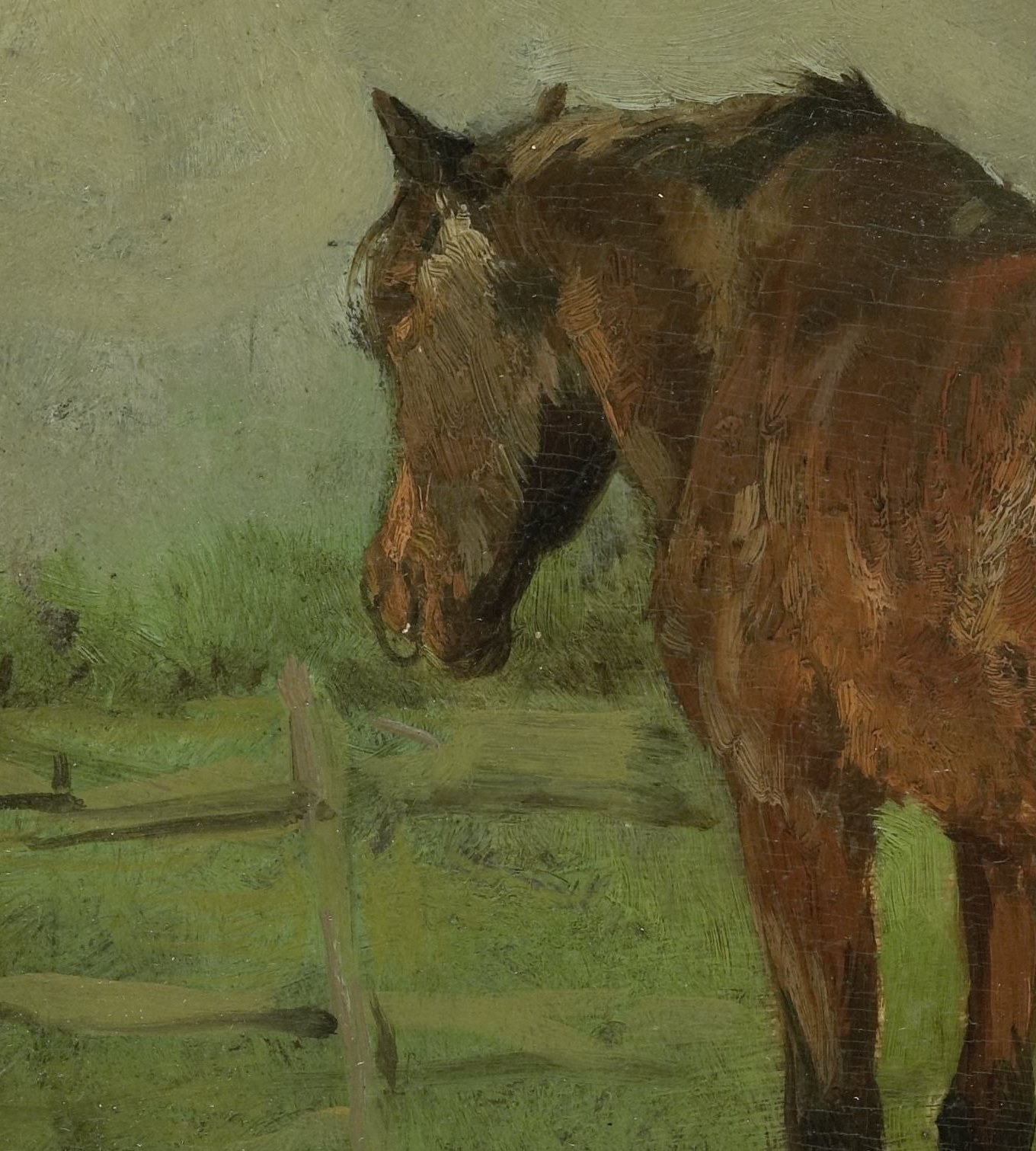
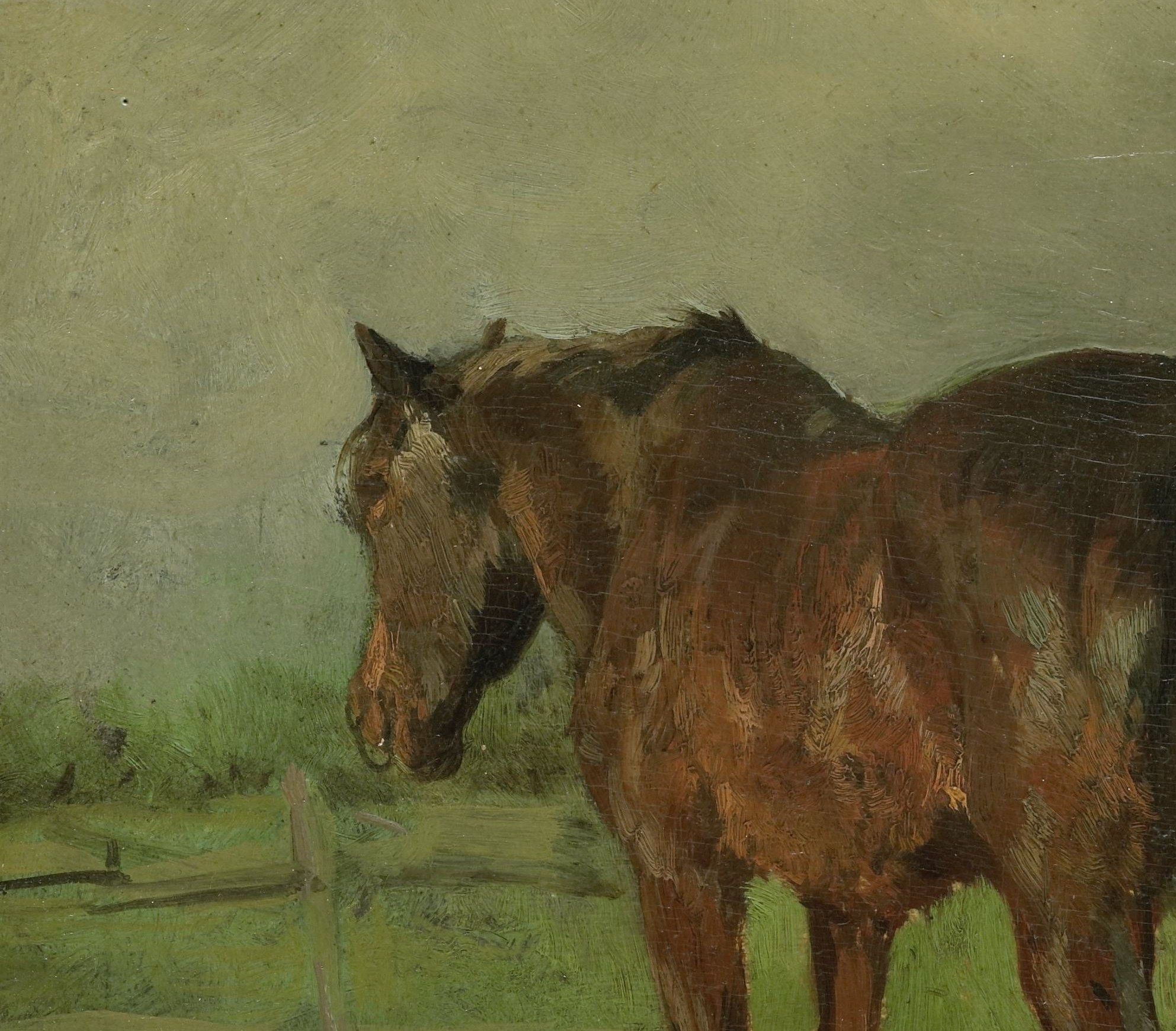
Look first at the horse's flank. What reads as glossy, living hide is a series of single, confident ochre strokes laid down and left alone. Mauve doesn't blend or fuss; he trusts the mark. The legs disappear softly into the foreground grass, a technique Van Gogh would later push much further. Even the hooves are suggested more than described.
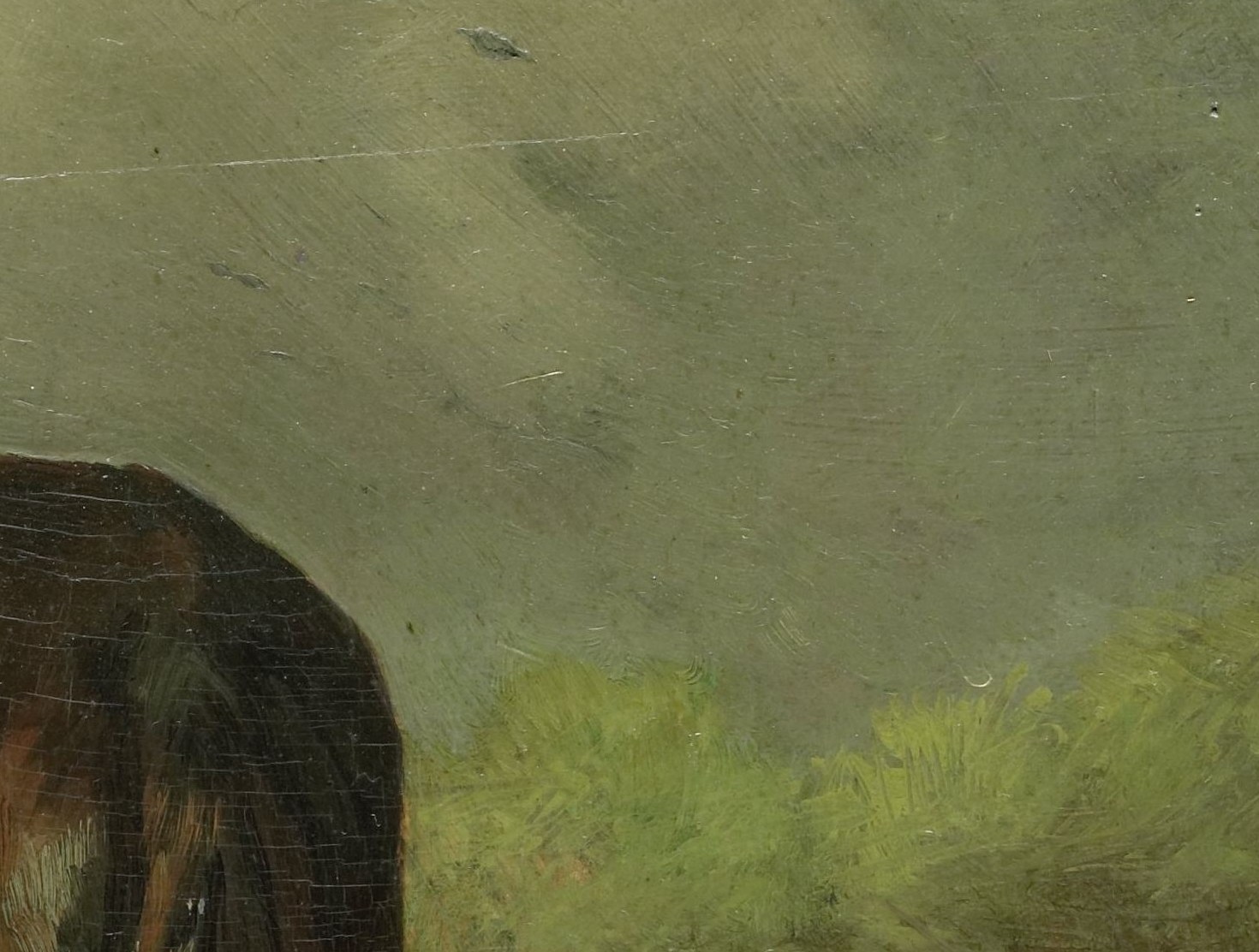
The real virtuoso move is the sky and the background foliage. Mauve thinned his paint until it was barely more than a stain, building an overcast, humid atmosphere that sits behind the horse like a held breath. The horse is solid; the air is damp. That contrast, achieved with so little material, is the whole trick.
What other painter makes a single unposed animal feel like the weather itself?
Details
Transcript
A brown horse in a field. Nothing else. The painter was Anton Mauve, a Dutch realist. He was Vincent van Gogh's cousin-in-law and first teacher. Now look at the flank. That is not a photograph. Every hair is a single, loose stroke of warm ochre. He builds the muscle without overworking a single inch of canvas. And the background? Just a grey wash of humid air. Paint thinned to a veil, making the air feel damp and heavy.