Morning, Interior by Maximilien Luce
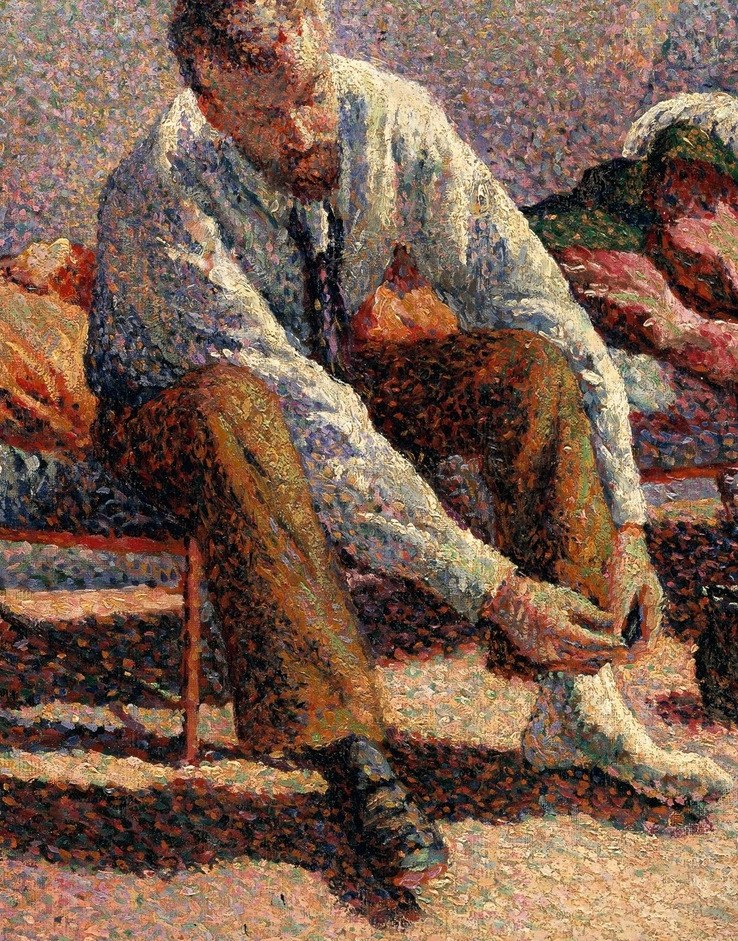
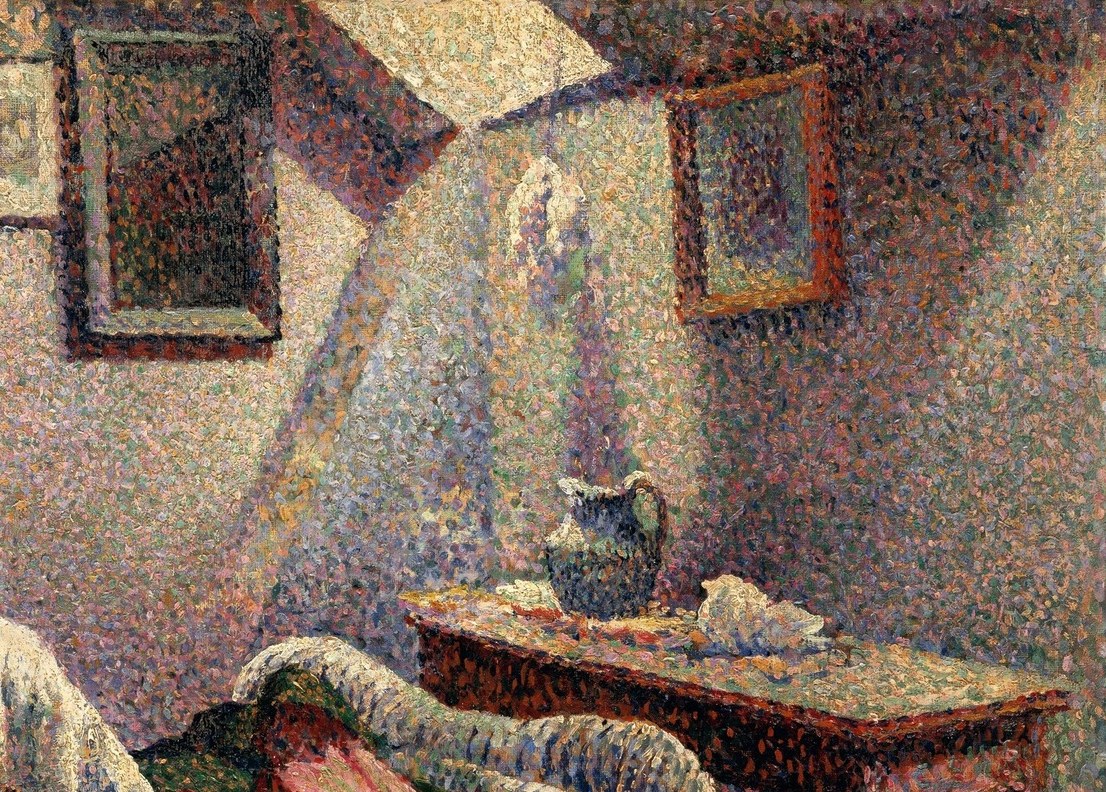
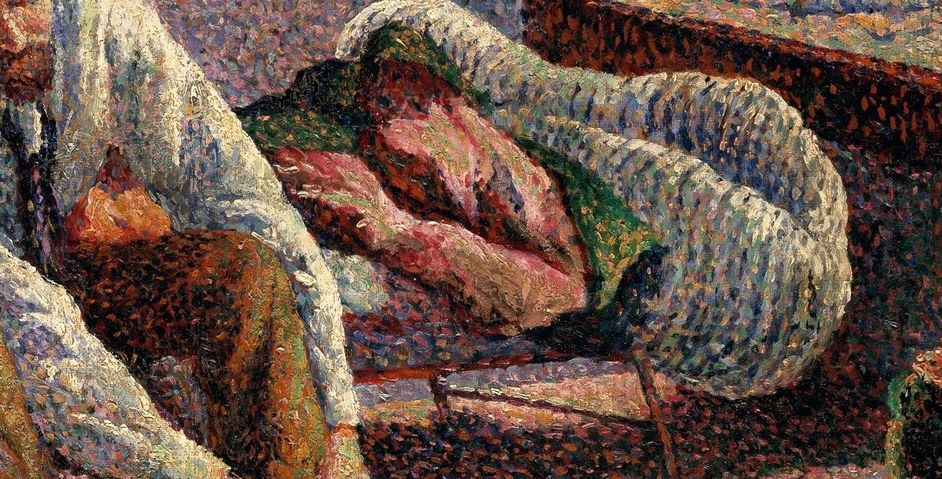
Maximilien Luce's "Morning, Interior" (1896) from The Metropolitan Museum of Art, captures a moment of quiet domesticity, yet holds a surprising detail that hints at a hidden narrative.
The painting, rendered in the distinctive Neo-Impressionist style, uses countless tiny dots of oil paint to create its luminous effect. Notice the man in the foreground, absorbed in tying his shoe, and the serene light filtering into the room. This meticulous technique creates a vibrant, almost hazy quality, characteristic of Luce's work.
Luce, a French artist, began his career as a wood-engraver before becoming a prominent Neo-Impressionist and Pointillist painter. He was also known for his anarchist activism, a detail that adds another layer of intrigue to his often unassuming subjects. The subtle inclusion of everyday objects and unexpected items, like the whip, invites viewers to ponder the untold stories within his art.
What might this man's story be, given this intriguing detail?
Details
Transcript
This Neo-Impressionist painter captures a quiet morning. A man calmly ties his shoe to begin the day. This style uses tiny dots of paint to build the image. But look closely at the floor, near his foot. A surprising detail awaits closer inspection. A whip, left casually, hints at another life.