Mary Magdalene in the Desert by Pierre Puvis de Chavannes
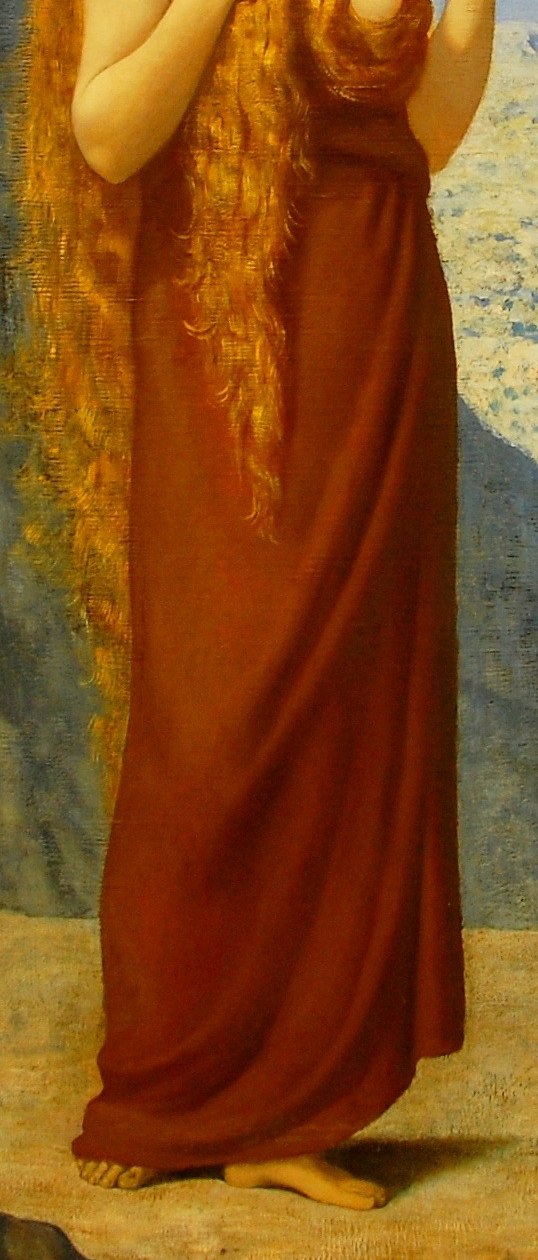
Pierre Puvis de Chavannes's *Mary Magdalene in the Desert*, 1870, held by the Städel Museum, captures a profound moment of spiritual reckoning. The painting presents Mary Magdalene in a desolate desert, her figure embodying penitence and deep introspection.
Look at her contemplative face, her gaze turned inward, suggesting a focus beyond the earthly realm. The faint halo above her head signifies her saintly status, while her hands, clasped over a human skull, are a classic memento mori, symbolizing mortality and the transient nature of life.
Created in 1870, a time of significant change in France, this work by Puvis de Chavannes reflects the Symbolist movement's interest in spiritual and allegorical subjects. He was a leading muralist, known for his restrained compositions and symbolic figures, influencing many artists of his time.
The vast, arid landscape and muted tones create an atmosphere of solitude and intense spiritual trial, inviting viewers to ponder themes of faith and inner revelation.
Details
Transcript
She is alone with her thoughts. Her gaze turns inward, toward spiritual truth. A faint halo marks her saintly status. The artist chose muted tones for quiet reflection. Under her hands rests a symbol of mortality. This scene was painted in 1870. Her clasped hands show piety and self-control. Puvis de Chavannes painted for the new French Republic.