Christ Carrying the Cross, with the Crucifixion; The Resurrection, with the Pilgrims of Emmaus by Gerard David
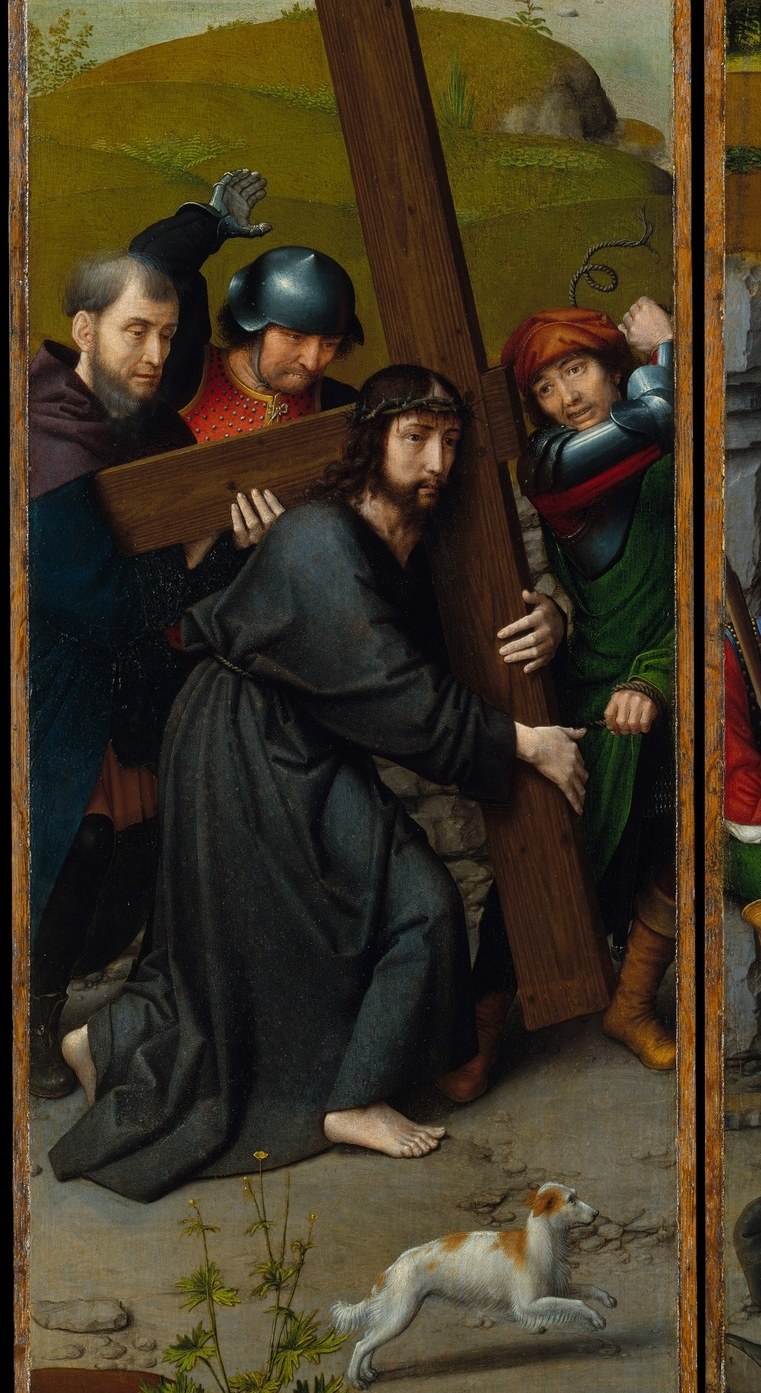
This is Gerard David's 'Christ Carrying the Cross, with the Crucifixion; The Resurrection, with the Pilgrims of Emmaus', painted around 1510 and now in a private collection after a spectacular auction moment.
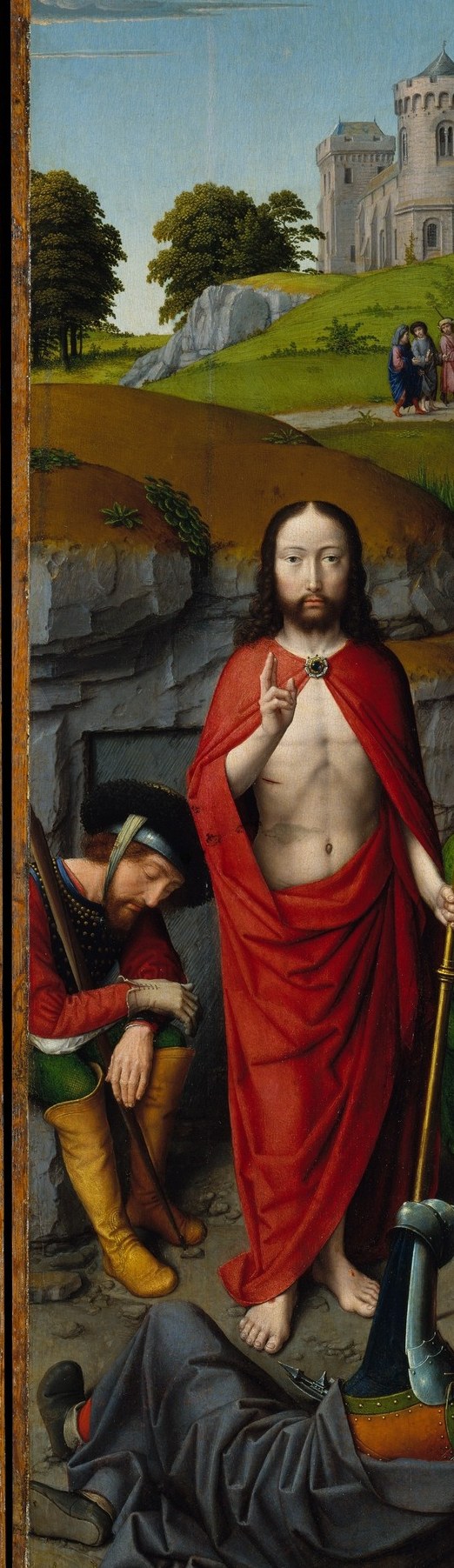
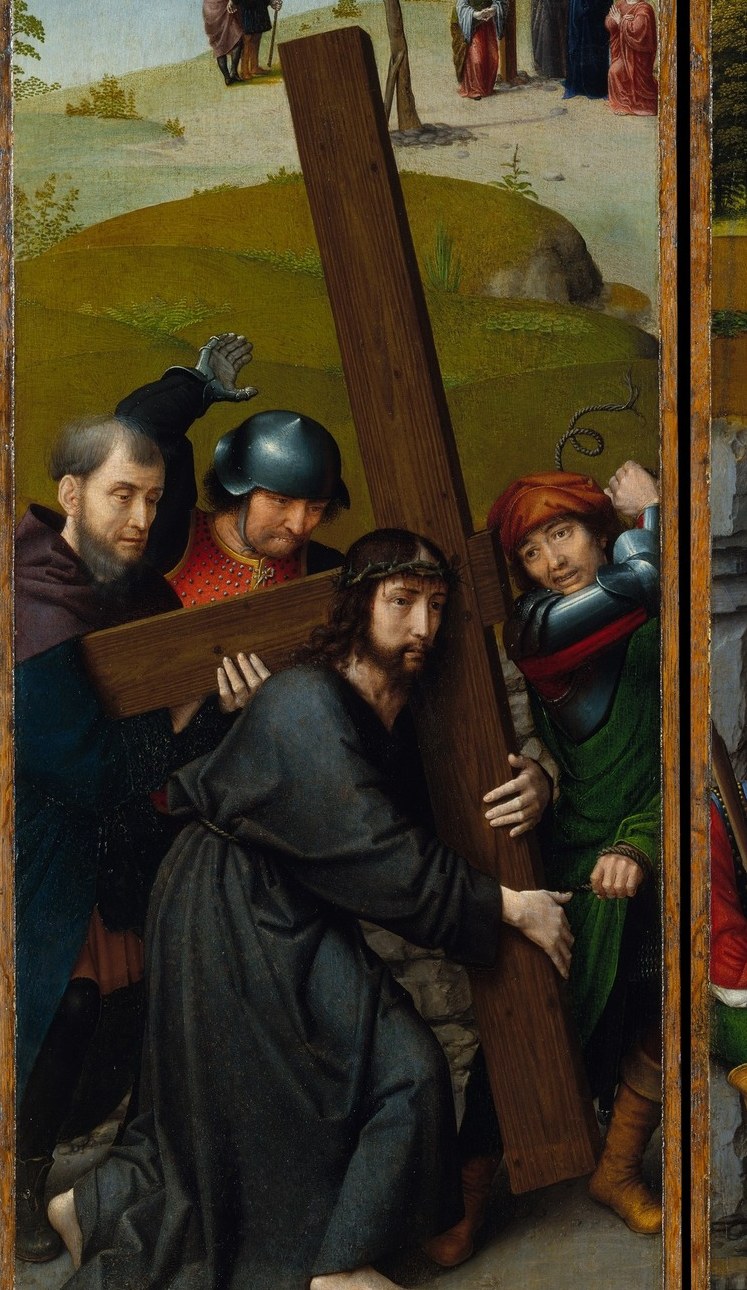
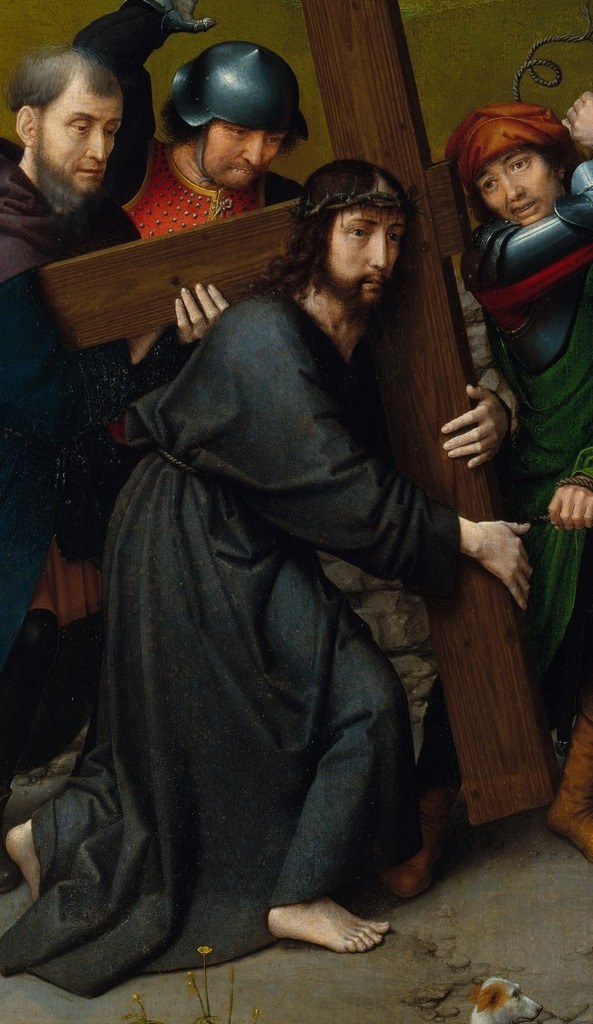
Painted on a single oak panel, the work was at some point sawed in two and sold as separate pictures. The left half shows Christ bent double under the diagonal weight of the cross, a crowd of soldiers and onlookers pressing in around him. The right half presents the Risen Christ, serene and upright, appearing to two kneeling pilgrims. Even the smallest details carry argument: Christ's chest wounds are still visible, proof of bodily resurrection, while a white dog in the foreground grounds the sacred scene in a startlingly domestic Flemish present.
Gerard David ran successful workshops in Bruges and Antwerp and was largely forgotten after his death in 1523, his reputation sinking until nineteenth-century scholars pulled him back into the light. This diptych, divided for generations, was reunited and offered at auction in 2016 with an estimate below one million dollars. Bidding drove the final price past six million, a figure that reflects not just the painting's quality but the romance of two halves made whole again.
A painting cut apart, scattered, and reassembled: the price is only the last chapter of a genuinely unlikely survival story.
#arthistory #gerarddavid #earlynetherlandish
Details
Transcript
It's actually two paintings, cut apart centuries ago. The left half: Christ buckling under the cross. The right: risen and luminous, wounds still visible. For generations they lived apart in different collections. Reunited, they hit the block in 2016. Estimate: under $1 million. The hammer: $6.2 million.