The Beheading of Saint John the Baptist by http://www.wikidata.org/.well-known/genid/2a6384d265a81a24769ce9d63a9daa31
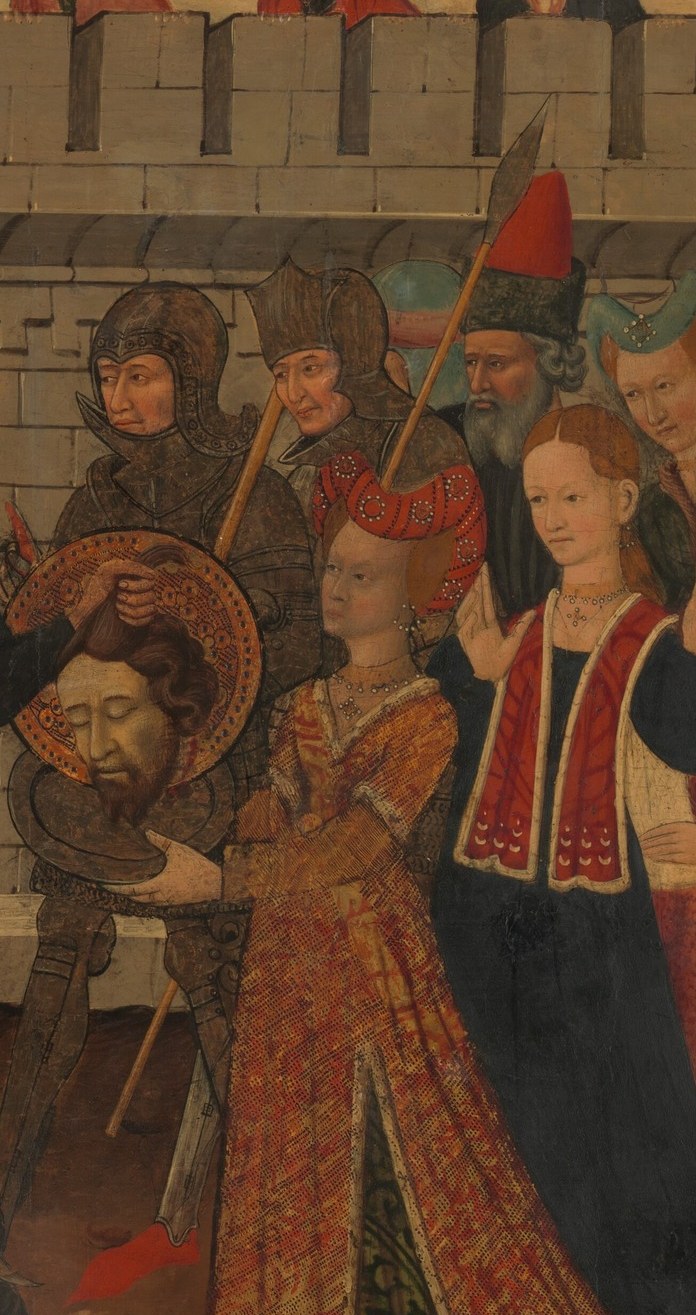
This is Bernardino Luini's The Beheading of Saint John the Baptist, painted around 1500. The subject is one of the most brutal in scripture: the prophet John, executed at the request of Salome after her dance pleased King Herod. But Luini does something genuinely unsettling here. He stages the killing as a public ceremony.
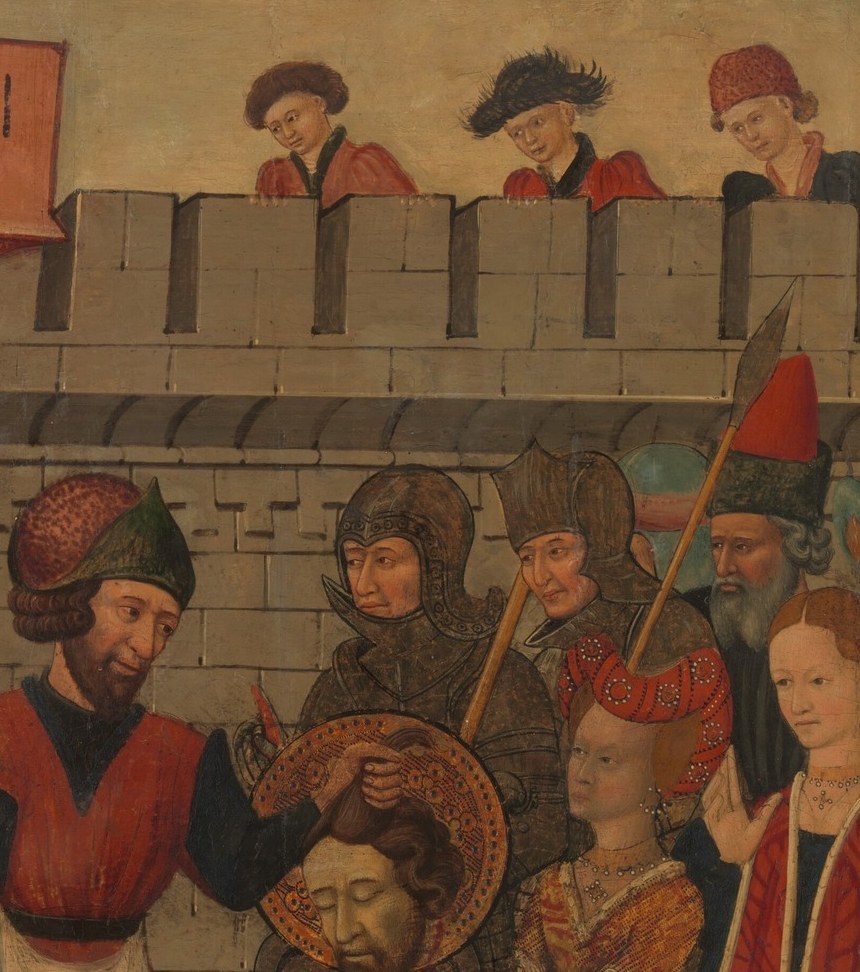
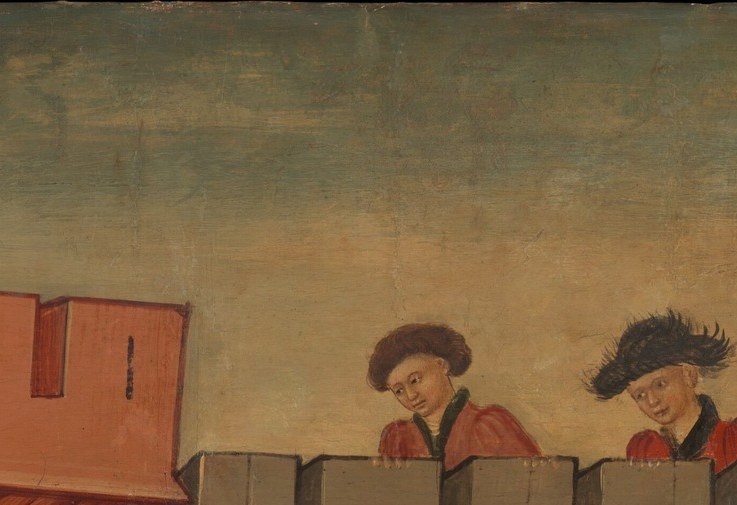
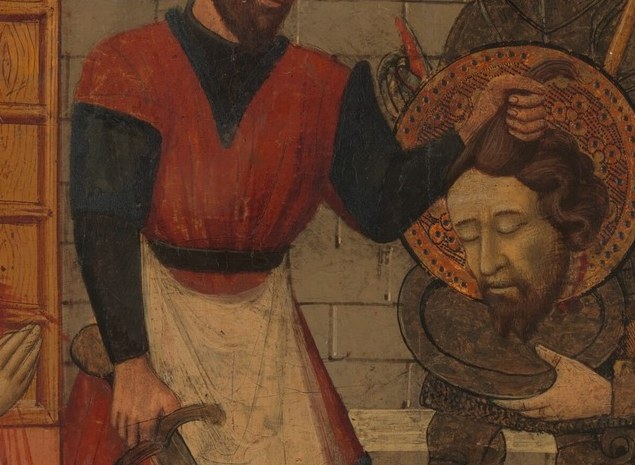
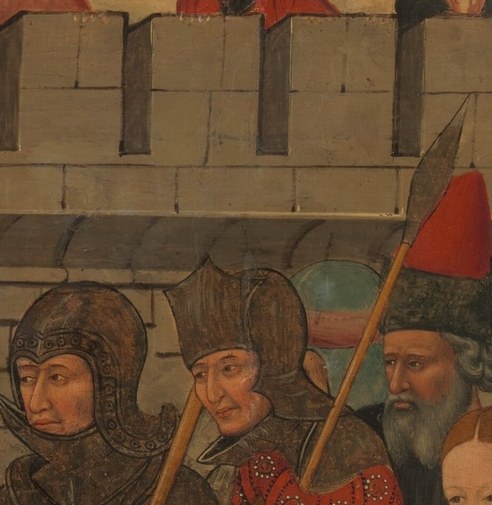
Look at the hands. The armored executioner presents the severed head not as a trophy but as an item of transfer, a duty completed. Salome accepts it with an expression that reads less as triumph than as formal acknowledgment. Around them, soldiers hold spears upright like parade arms, court attendants watch with reserve, and three figures observe from the battlement as if attending a civic event. The red brick arch frames the threshold between the palace interior and the public square, making the execution a piece of architecture.
The painting unsettled early viewers precisely because of this restraint. They expected a moral: a villainous Salome, a groveling executioner, divine lightning about to strike. Luini withholds all of that. Every face is composed, even the spectators who should be recoiling. The artist refuses to flatter the viewer with easy outrage, and that refusal read as scandal, as if the painting itself were complicit in the violence it depicts.
What do you think Luini wanted us to feel? Is the stillness a judgment on the crowd, or something harder to name?
Details
Transcript
It looks like a state ceremony, not a murder. Soldiers, banners, officials. Everyone is watching. Even the audience above the gate is detached. But this is the moment a prophet becomes a martyr. Salome receives the head with ceremonial composure. The painter gives her no triumph, no revulsion. That refusal to judge scandalized its first viewers. They wanted a monster. He gave them a transaction.