Syndics of the Drapers' Guild by Rembrandt
View the artwork: Syndics of the Drapers' Guild →
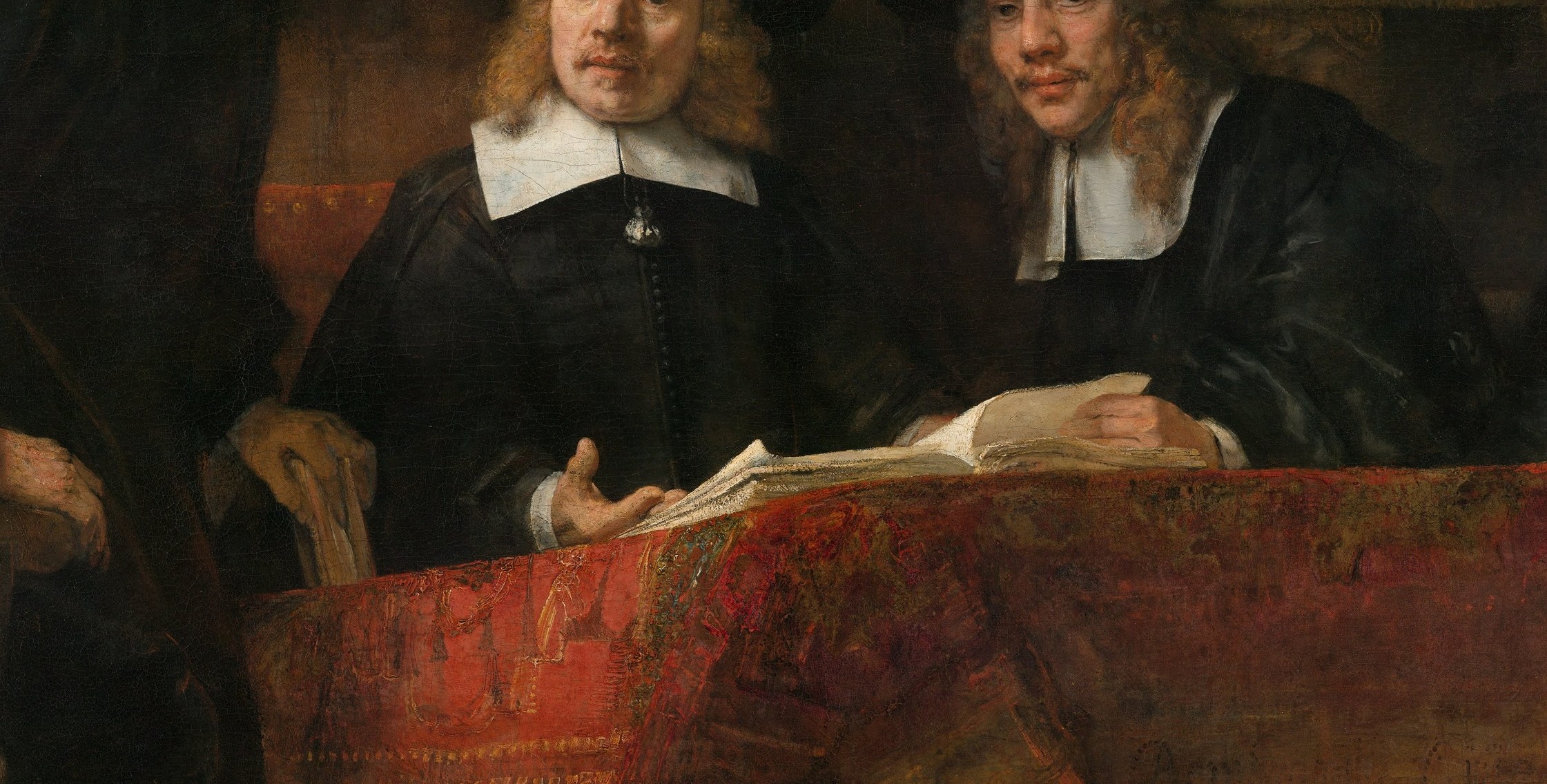
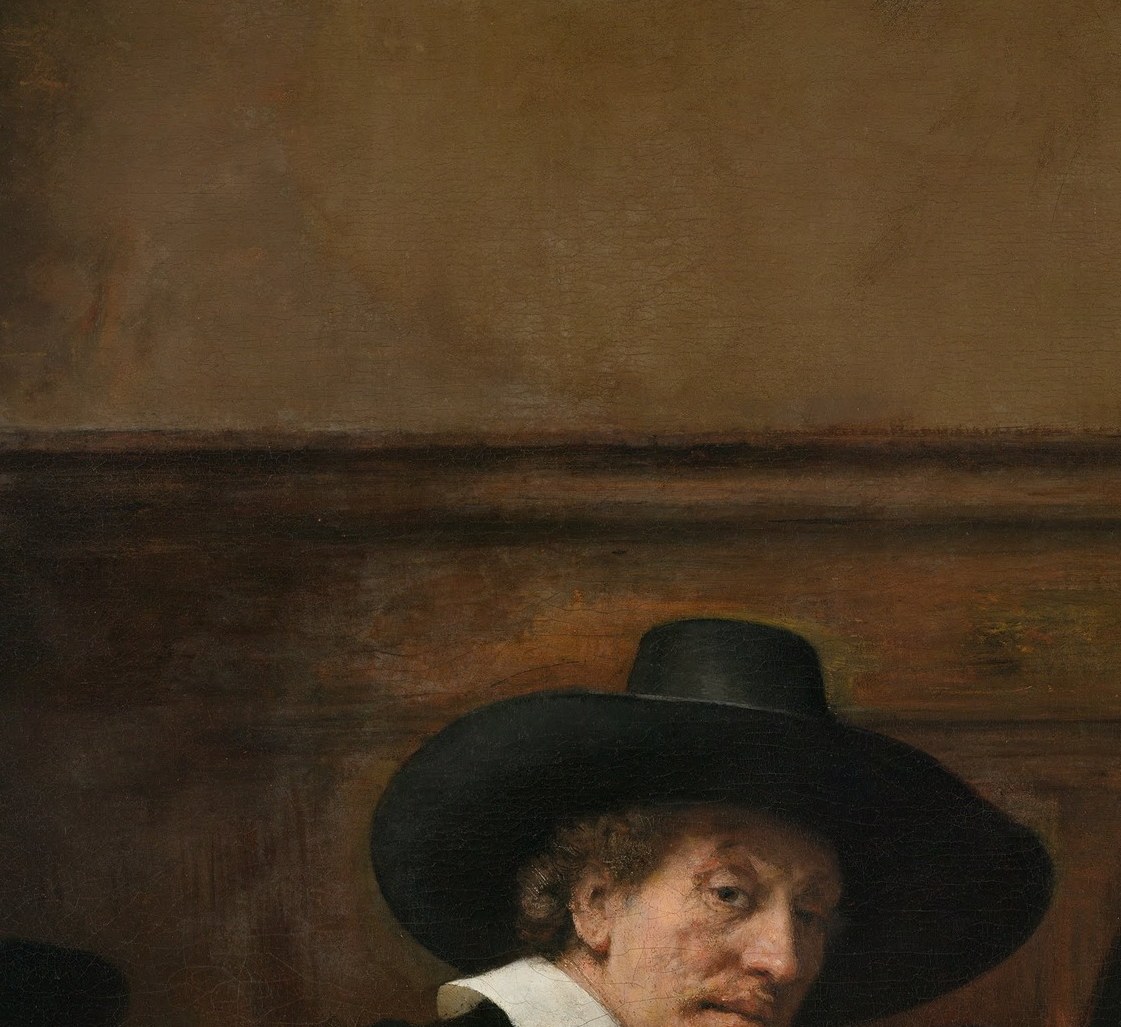
Rembrandt's Syndics of the Drapers' Guild (1662, Rijksmuseum) is often called his last great group portrait, and its power lies in a single, radical choice. He painted five civic officials as if you just opened the door and interrupted their work. They look up. Everyone reacts.
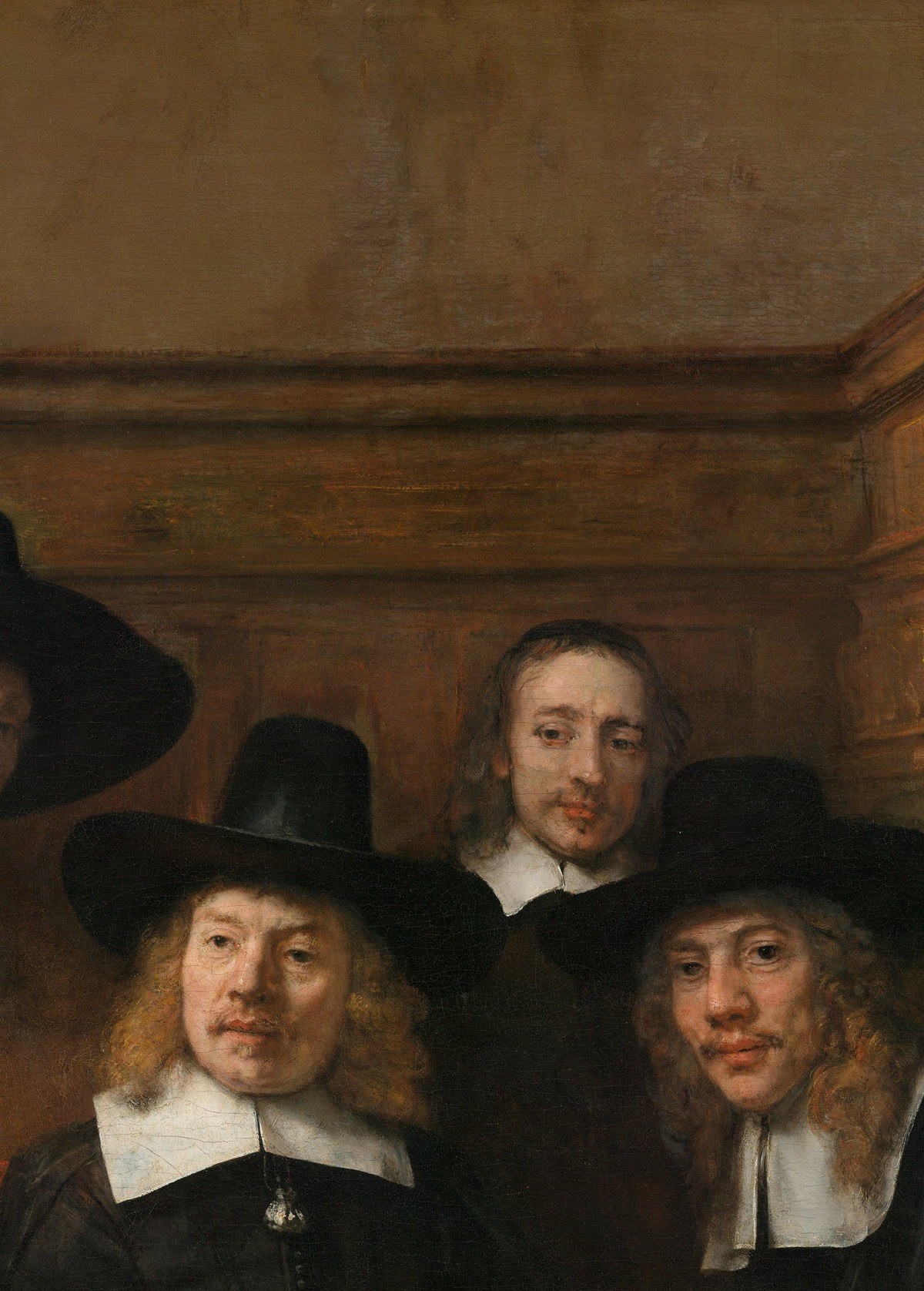
The first thing to notice is the sixth man. Easy to miss in the back, he's the only figure without a hat, the servant. In 17th-century Amsterdam, millstone collars and wide-brimmed hats were the visual grammar of authority. Rembrandt gives the servant no hat, yet bathes him in the same direct light as the syndics. Find him standing behind the central figure.
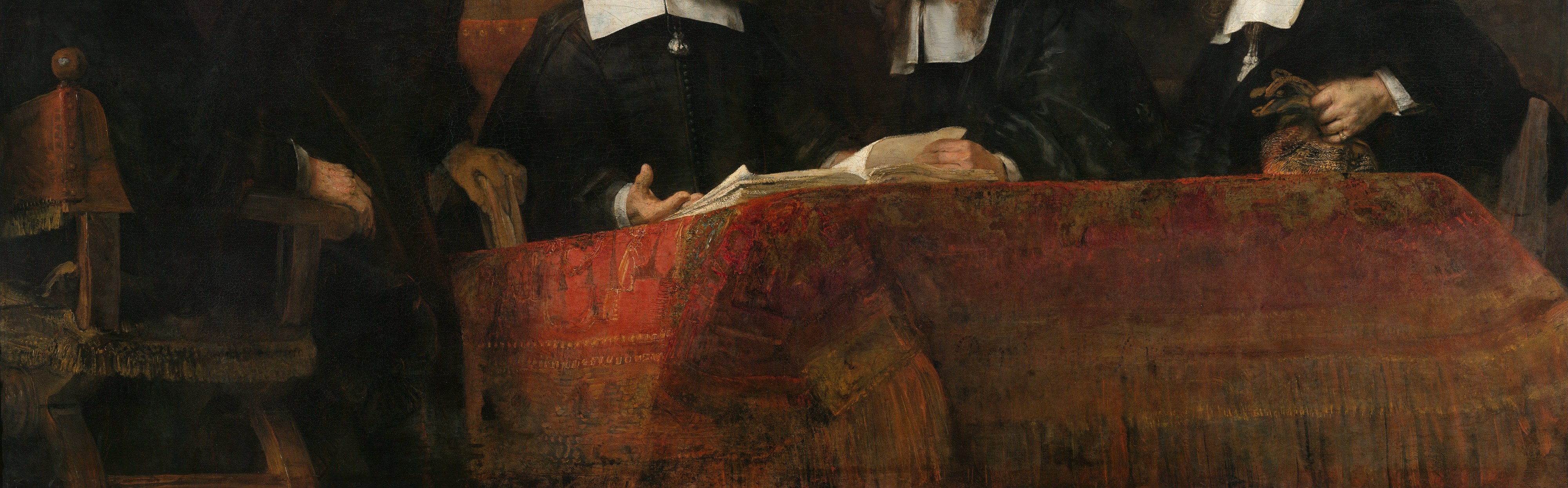
These five wardens inspected cloth for the guild thrice weekly, an unpaid position they held from Good Friday 1661 to 1662. The ledger on the table held their quality grades, recorded with lead seals pressed into the finished fabric. The men themselves were drawn from rival Christian denominations, Catholic, Mennonite, Remonstrant, and Reformed, sitting together in a single civic body.
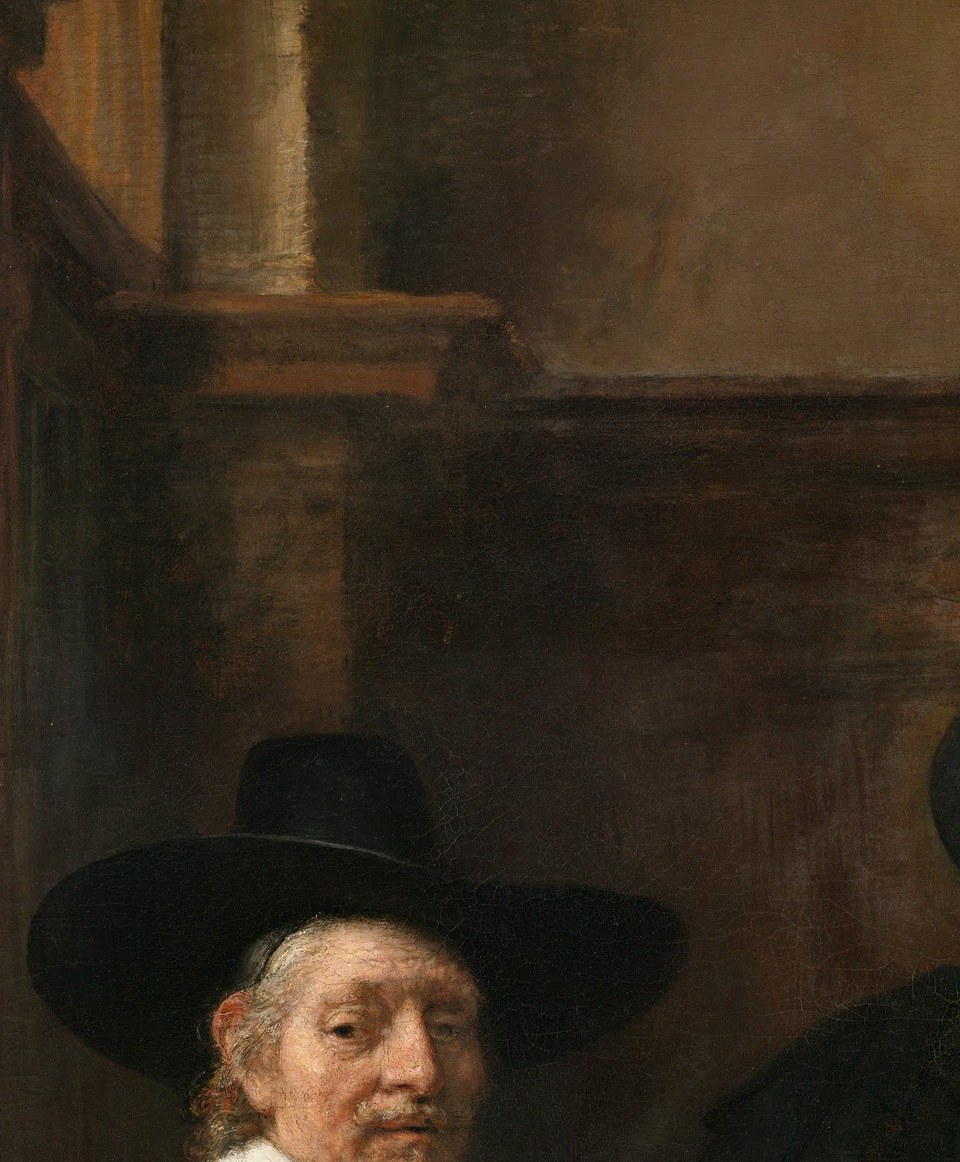
The painting originally hung high above a mantelpiece in the Staalhof guildhall. Rembrandt designed the upward angle so the syndics would look down at the viewer from their lofty station. The illusion worked so perfectly that for centuries people mistook the gloves in the rightmost syndic's hand for a bag of metal stamps. A restoration in 1991 finally corrected the record.
What do you think an interrupted meeting like this would sound like?
#arthistory #rembrandt #dutchgoldenage
Details
Transcript
You walk in. They all look up. Five guild inspectors, mid-meeting. The ledger open. Now count the men. Slowly. There are six faces in this painting. No hat. A servant. Rembrandt painted him into equal light. This room held five faiths. Catholic. Reformed. Mennonite. Remonstrant. What united them was cloth. And this ledger. He painted honesty as a moment. Not a pose.