Artwork
Syndics of the Drapers' Guild
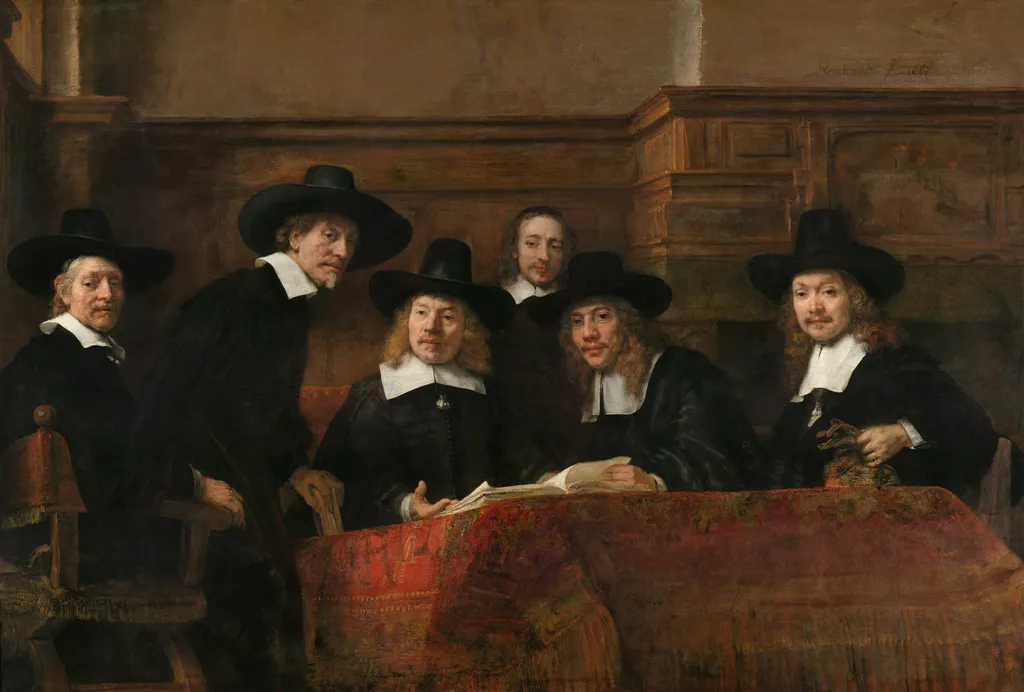
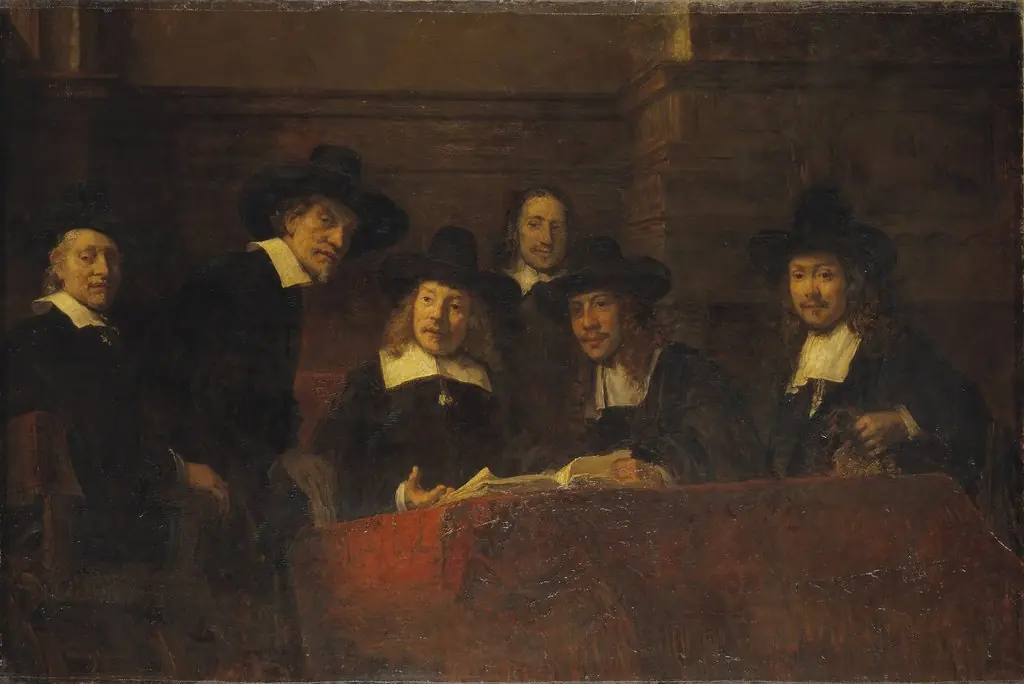
Syndics of the Drapers' Guild is an oil painting by the Dutch Golden Age artist Rembrandt van Rijn. It dates from 1662 and is held in the collection of the Rijksmuseum.
About this work
In 1662, six cloth inspectors of Amsterdam's drapers' guild paused mid-meeting to look up, as if interrupted by a visitor. Rembrandt caught the moment in oil, their eyes lifting from the carpet-draped table and the open sample book. The guildhall, where the work hung high above a mantelpiece, dictated its upward angle, pushing the syndics forward into the viewer's space.
Subject & Meaning
The group portrait, commissioned for their guildhall, serves both as a record and as an emblem of civic duty and the integrity of Amsterdam's cloth trade.
The painting depicts five wardens (staalmeesters) of the Amsterdam cloth guild along with their servant, shown as they inspect samples of fabric against a swatch book. Their task was to apply lead seals to cloth according to quality grades, a process recorded in open account books on the table. The figures include Catholics, a Mennonite, a Remonstrant, and a Reformed Protestant, reflecting the guild's diversity.
On the rear wall, a small painting of a lighthouse symbolically alludes to exemplary conduct and moral guidance. The low vantage point and upward perspective magnify the wardens' stature, emphasizing the seriousness of their unpaid, honorary role. The group portrait, commissioned for their guildhall, serves both as a record and as an emblem of civic duty and the integrity of Amsterdam's cloth trade.
Technique & Style
Executed in oil on canvas, the work measures 191.5 x 279 cm. Rembrandt employed a low vantage point so that the viewer looks up at the table, magnifying the figures’ stature and matching the original high placement above a mantelpiece. The composition presents the five staalmeesters almost in a horizontal line, their faces slightly oscillating, creating a rhythmic balance. The heavy red tablecloth is rendered with impasto blobs, smears, and scraped paint layers, while the background paneling echoes the actual room.
Paint handling is both sober and efficient, with natural poses achieved through adjustments visible in X‑rays and preparatory drawings. A 1991 restoration revealed that the false “1661” signature was painted over retouches, and what was thought to be a bag of stamps is actually a pair of gloves.
History & Provenance
The Syndics of the Drapers' Guild was commissioned by the wardens of the Amsterdam cloth guild and completed in 1662 by Rembrandt. The painting is signed and dated 1662 on the tablecloth, while a false signature reading 'REMBRANDT F. 1661' appears on the wall above the paneling. It originally hung in the guildhall, the Staalhof, until 27 November 1771, when it was transferred to the Konstkamer (art chamber) of Amsterdam's city hall.
On 15 August 1808, the city of Amsterdam loaned it to the Rijksmuseum, then housed at the Trippenhuis; it moved to the current Rijksmuseum building in 1885. The work remains the property of the municipality of Amsterdam.
The painting is held at the Rijksmuseum in Amsterdam, where it has been since 1885. It is owned by the municipality of Amsterdam and has been on permanent loan to the museum since 15 August 1808. Previously, the work hung in the Staalhof, the guildhall of the clothmakers, until 1771.
On 27 November 1771, it was relocated to the Konstkamer (art chamber) in Amsterdam's city hall on Dam Square. In 1808, it was moved to the Trippenhuis before its final transfer to the Rijksmuseum. No inventory or accession number is recorded in the sources.
Context
Long regarded as Rembrandt's final masterwork in collective portraiture, Syndics of the Drapers' Guild (1662) exemplifies the artist's mature synthesis of psychological depth and compositional innovation during the Dutch Golden Age. Scholars emphasize how Rembrandt tailored the low viewpoint and lighting to the painting's intended high placement above a fireplace in the Staalhof, enhancing the sitters' authority. The work's enduring cultural resonance extends beyond art history into popular media, appearing on Dutch Masters cigar packaging and in literary works by Zadie Smith and Jeffrey Archer.
Its status as a pinnacle of group portraiture rests on the harmonious arrangement of five inspectors and their servant, a composition that balances rhythmic variety with solemn dignity.
Legacy
Widely regarded as Rembrandt's last great collective portrait, the painting has exerted a notable cultural influence. Its composition appears on the packaging of Dutch Masters cigars and features in the 1960 film The Time Machine. The work is also referenced in Jeffrey Archer's novel Nothing Ventured and plays a central role in Zadie Smith's On Beauty, where the protagonist is a Rembrandt scholar.
Additionally, the image has been used on the cover of the business history book The Company: A Short History of a Revolutionary Idea.
Overview
Rembrandt's 1662 oil painting, Syndics of the Drapers' Guild, captures a pivotal moment in the artist's career. This large-scale group portrait depicts five officials, known as "staalmeesters," from Amsterdam's cloth guild, along with their attendant. Housed in the Rijksmuseum, the work is often recognized as one of Rembrandt's final significant collective commissions, showcasing his mature approach to portraiture and civic representation.
Own this work as a print
Artist & collection

Artist
Rembrandt Harmenszoon van Rijn, known mononymously as Rembrandt, was a Dutch Golden Age painter, printmaker, and draughtsman.

 Staalmeesters. After Rembrandt
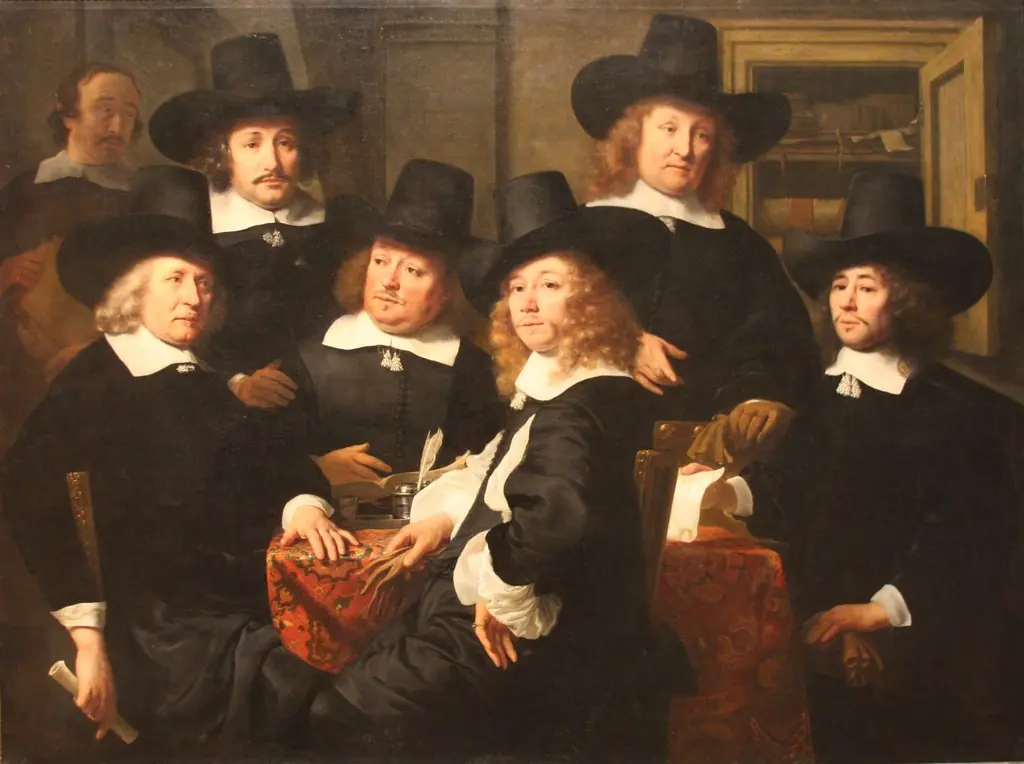 Six regents and the beadle of the Nieuwe Zijds institute for the outdoor relief of the poor
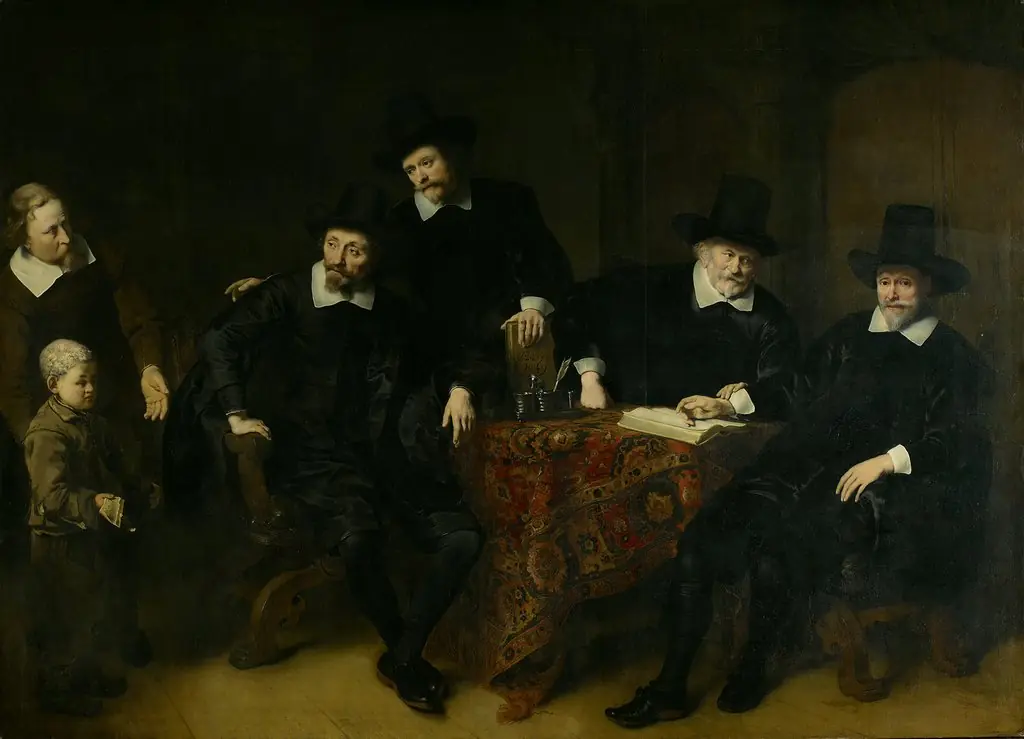 The Regents of the Leper's house in Amsterdam in 1649
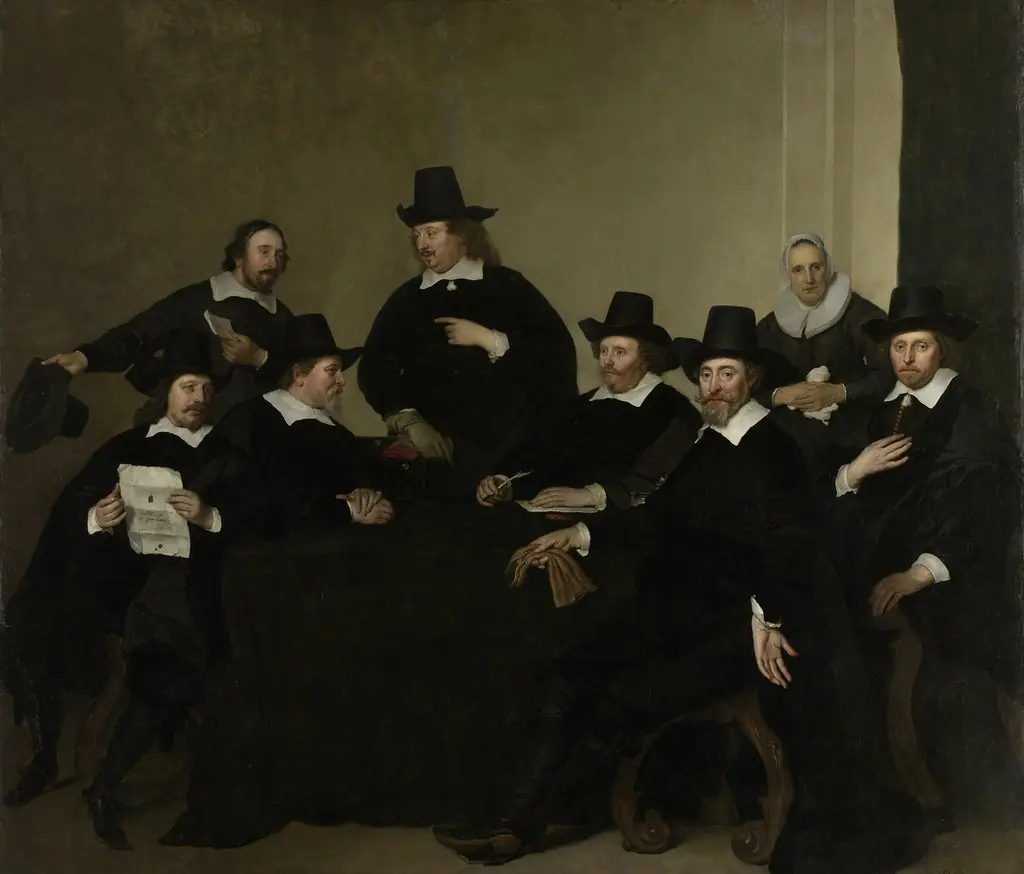 The regents of the Nieuwe Zijds institute for the outdoor relief of the poor, Amsterdam, ca 1650
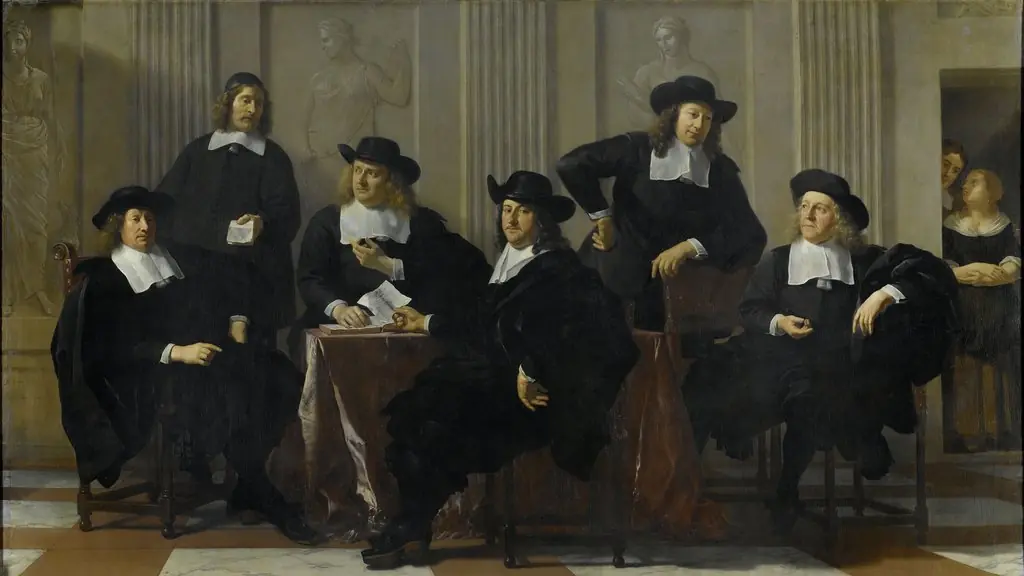 The Regents of the Spinhuis and Nieuwe Werkhuis, Amsterdam
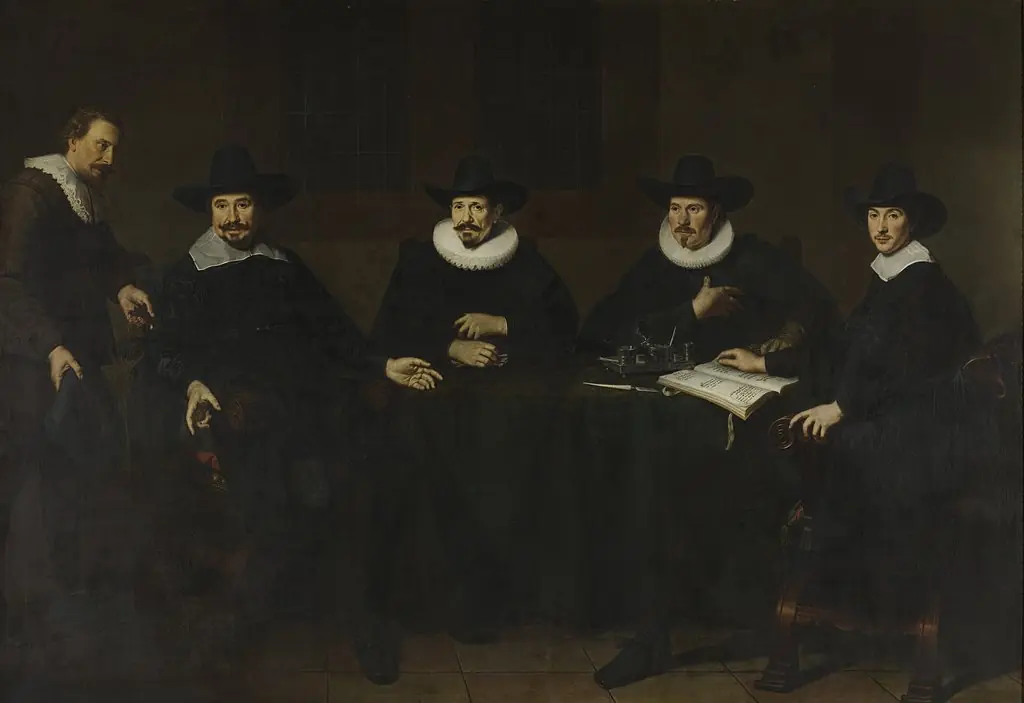 The directors of the serge cloth industry, Amsterdam, 1643
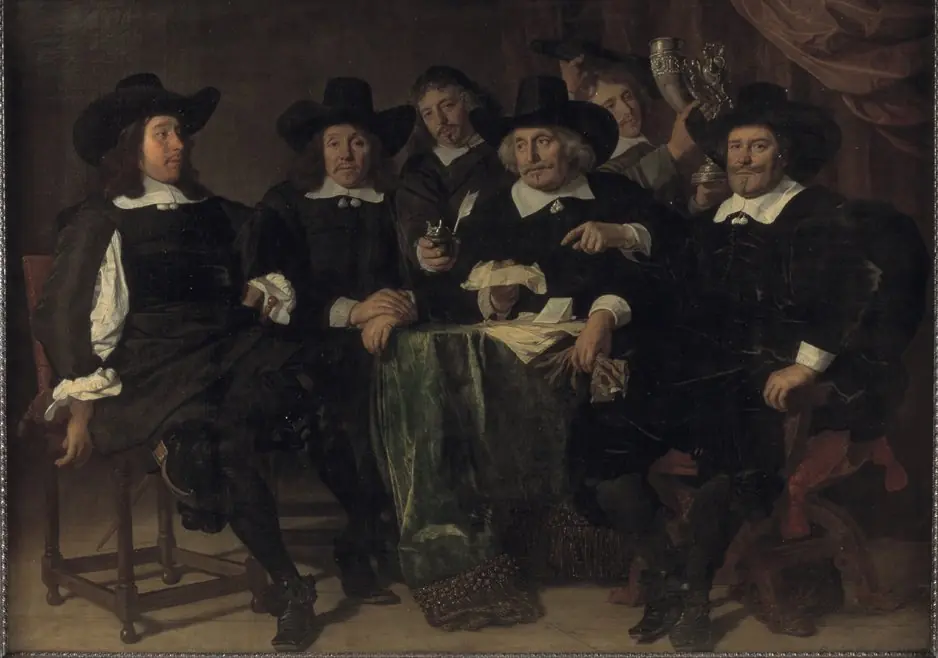 The directors of the Amsterdam civic guard of St. George in 1656
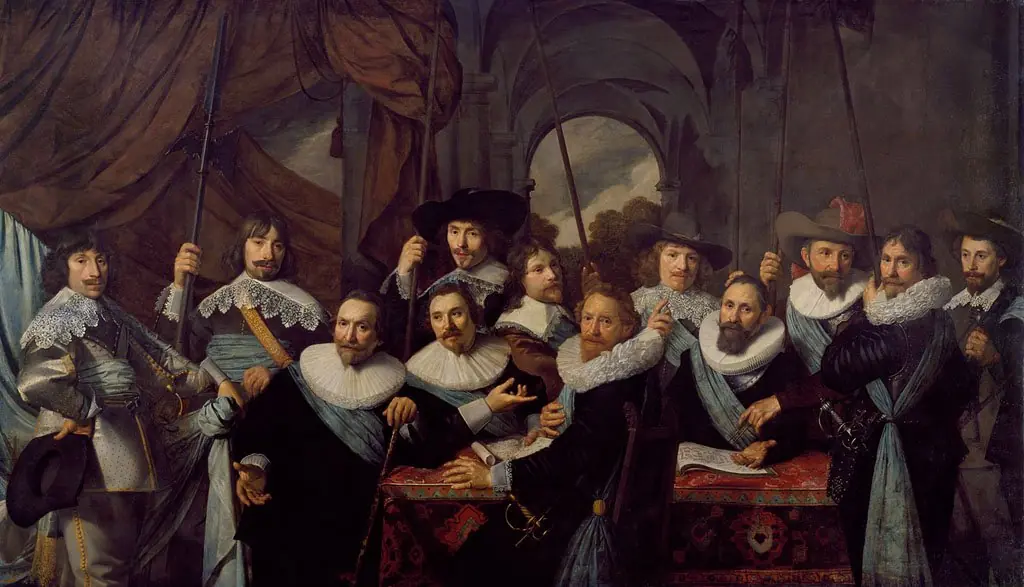 Members of the civic guard company of Captain Dirck Tholinx and Lieutenant Pieter Adriaenszn Raep
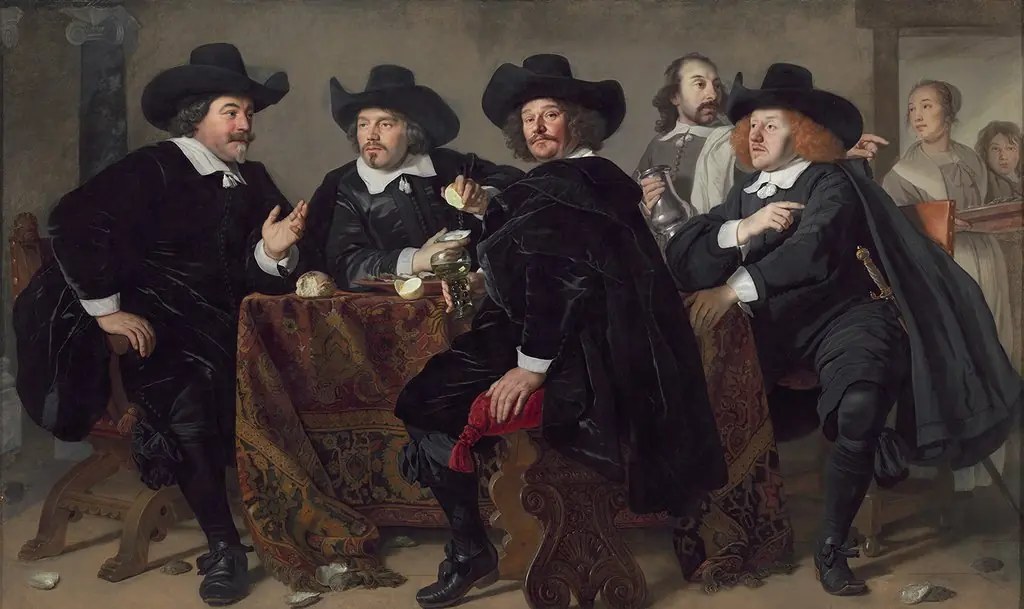 Four directors of the arquebusier's guild, Amsterdam, 1655
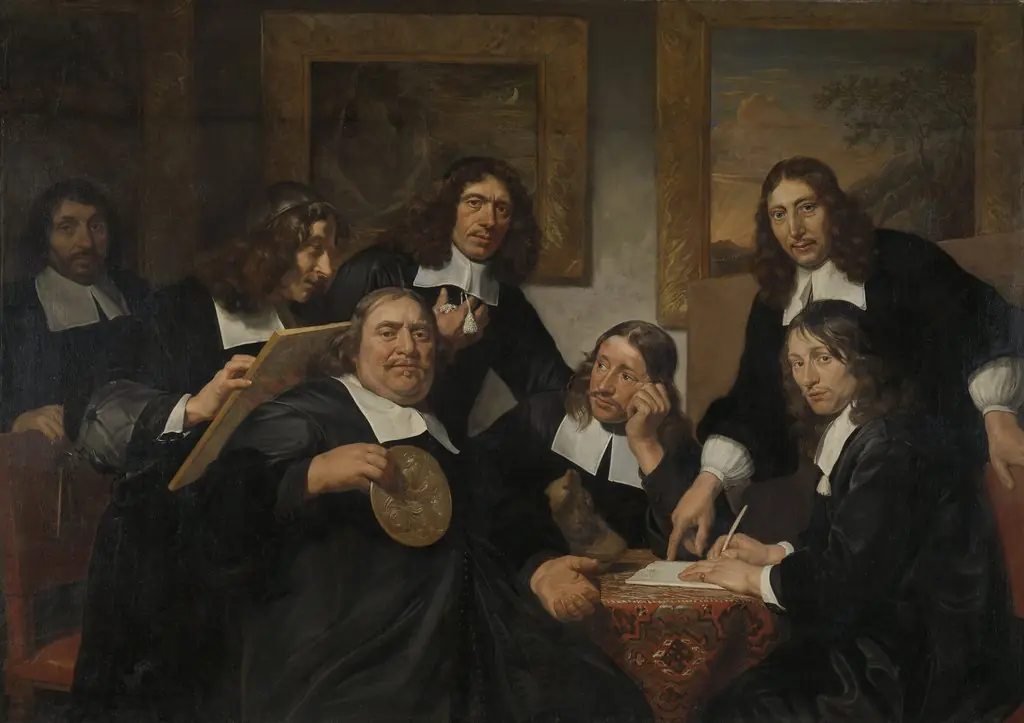 The governors of the guild of St. Luke, Haarlem, 1675