Weaning the Calves by Rosa Bonheur
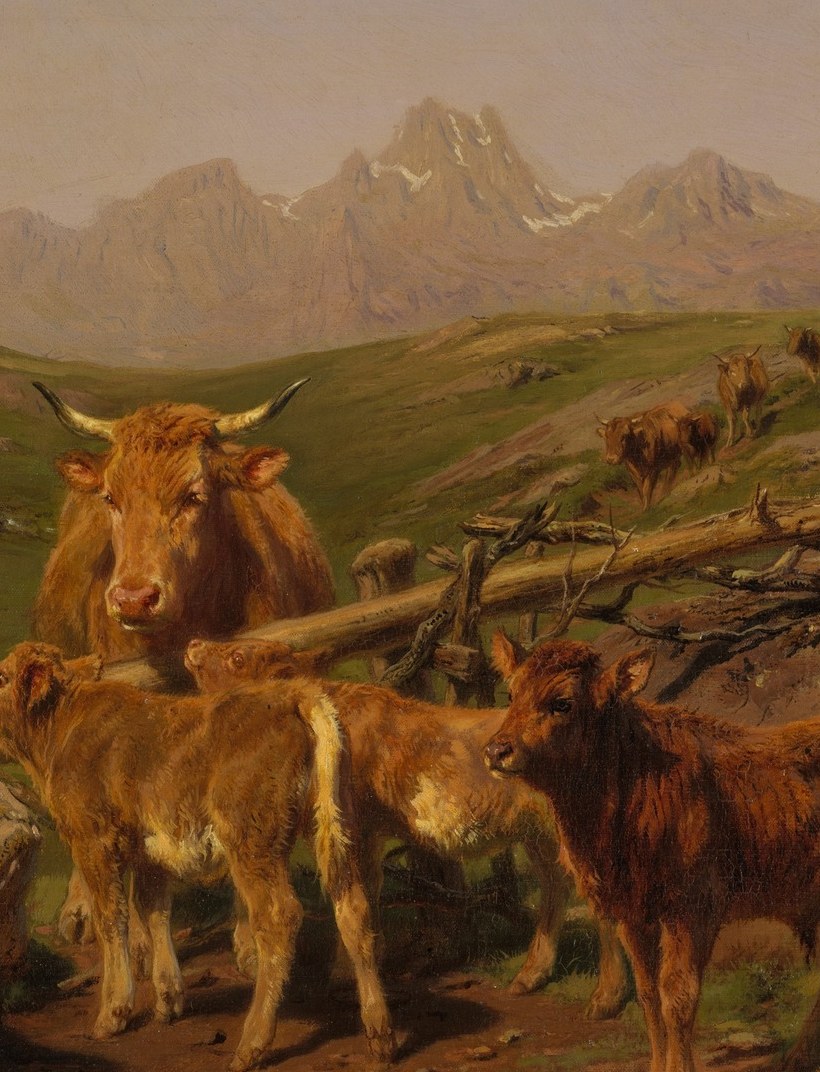
Rosa Bonheur was the most famous female artist of the nineteenth century, a celebrity across Europe and America for her monumental paintings of animals. "Weaning the Calves" (1879) is smaller than her barn-sized Salon hits, but it is pure Bonheur: a direct, unsentimental look at farm animals living their lives. It is now at the Metropolitan Museum of Art.
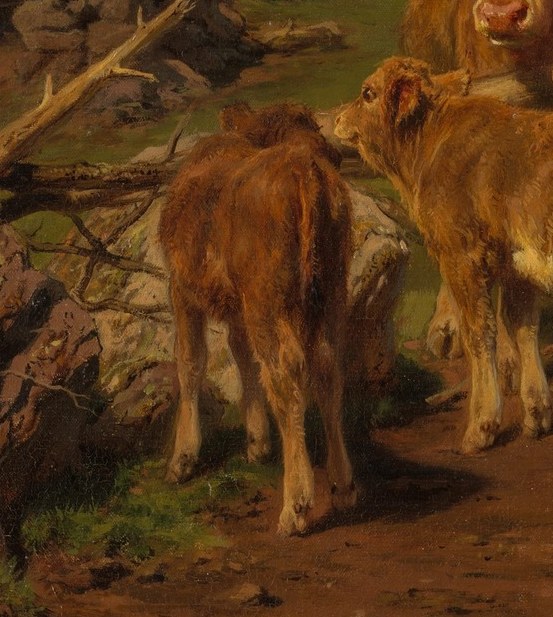
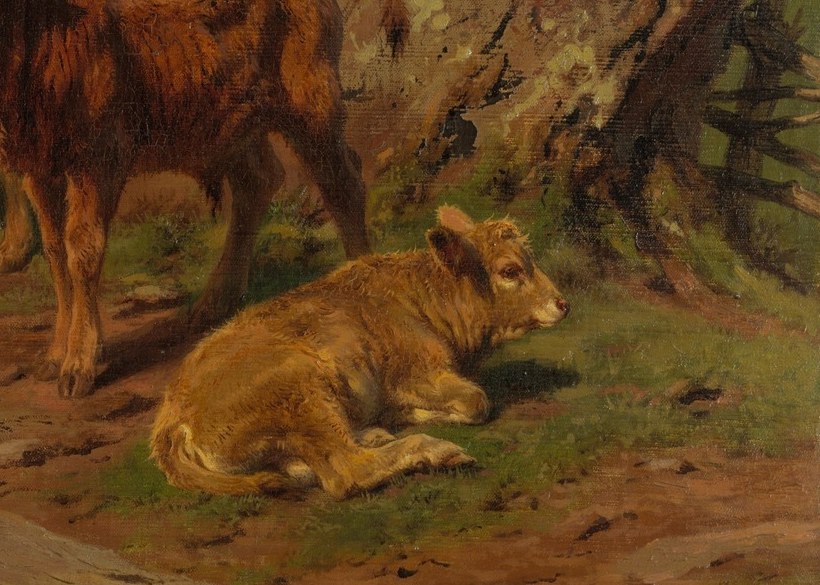
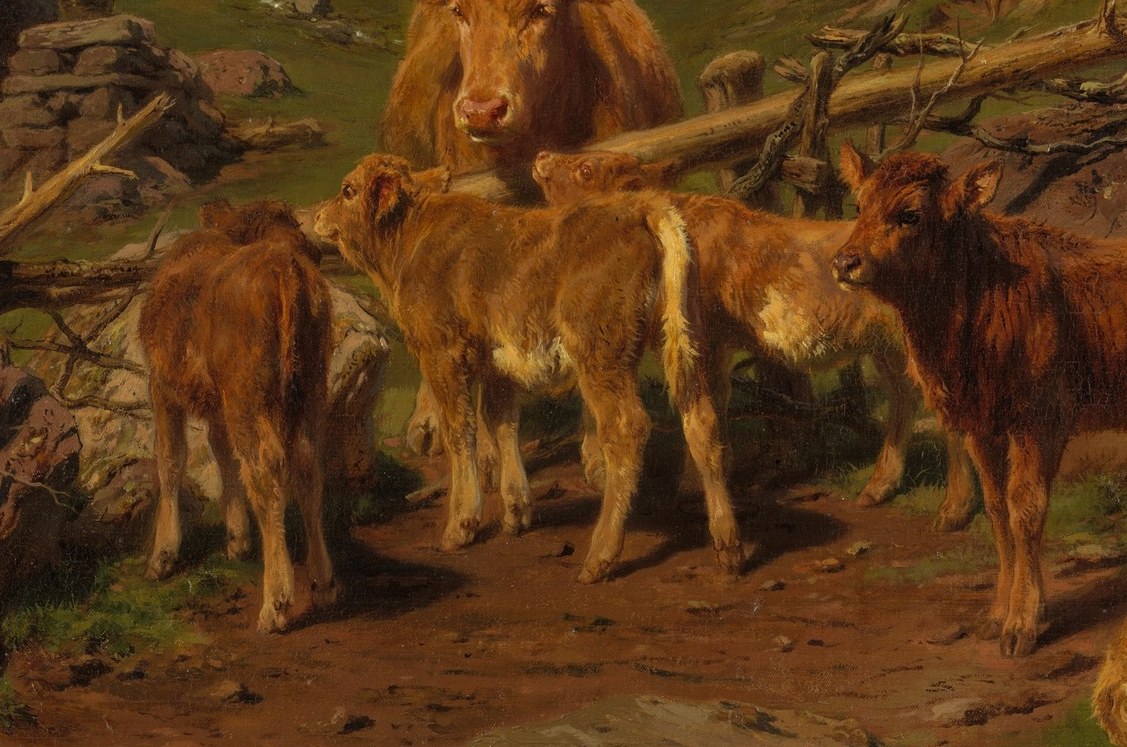
Look first at the mother cow, standing upright at the center. Her horned head turns slightly left, and her eye shows a gentle alertness. Bonheur's anatomical knowledge is exact: every curve of horn and muscle is right. To her right, a cluster of calves still press close, but the title tells the story: they are being weaned. The solitary calf lying apart in the foreground has already accepted the separation.
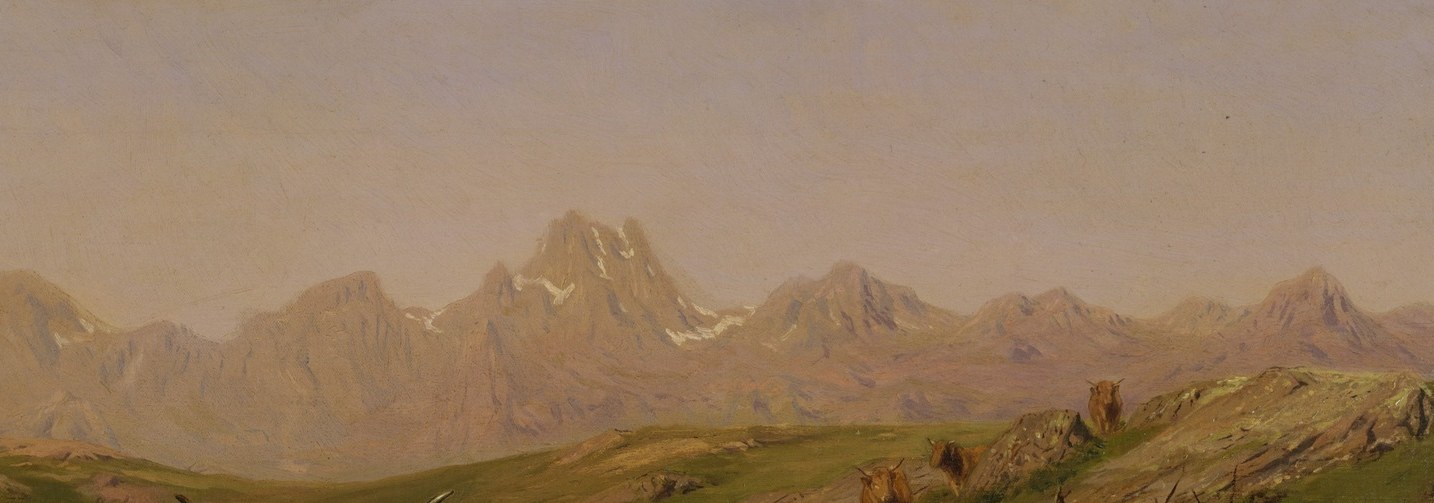
Bonheur paid local farmers thirty-five francs a head to bring live cows into her studio. She made endless sketches from them, then composed the calm, atmospheric landscape you see here, with its distant mountains and second, ghosted herd on the horizon. She never sold this painting; it hung in her home at By, near the Pyrenees, until her death.
Her realism was hard-won. Because she worked in abattoirs and cattle markets, Bonheur obtained official police permission to wear trousers and a smock, a legal necessity at the time for a woman dressed in men's work clothes.
Details
Transcript
She was the most famous woman painter alive. But Rosa Bonheur needed police permission just to wear trousers. Look at the mother cow's face. Bonheur knew exactly how a horn hooks and how an eye sits in the skull. This calf, separated from the mother, is learning to stand on its own. Bonheur paid 35 francs for each cow model, brought live into her studio. She never sold the painting. It hung in her home until she died.