Faust und Mephisto in der Studierstube by Ludwig Ferdinand Schnorr von Carolsfeld
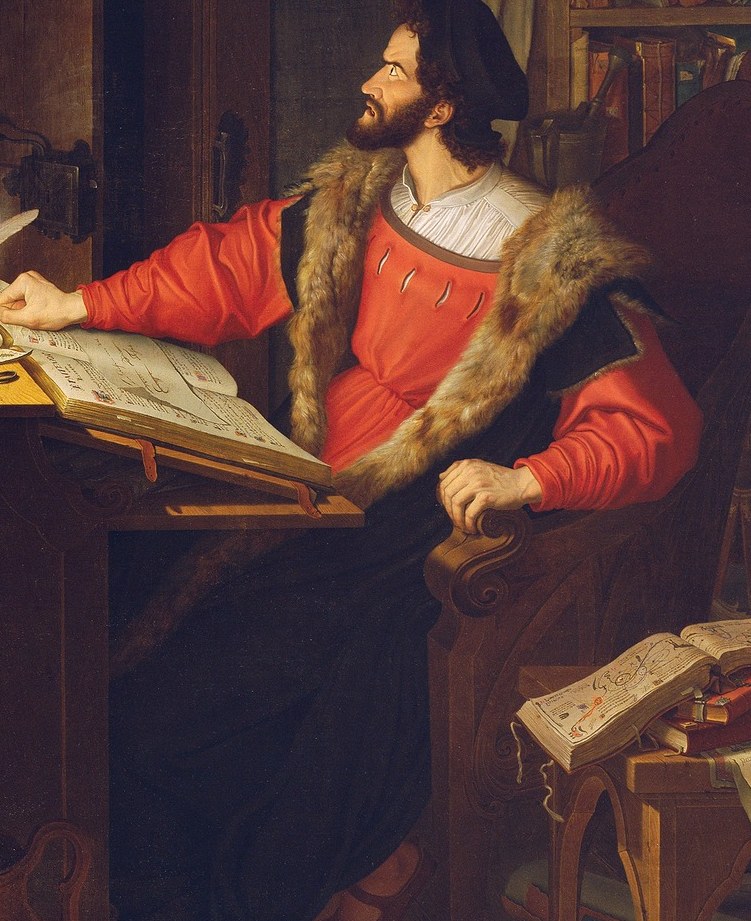
Ludwig Ferdinand Schnorr von Carolsfeld's 1818 painting, *Faust und Mephisto in der Studierstube*, captures the dramatic tension of Goethe's famous tale at the Kunsthistorisches Museum.
Look closely at the figures: Faust, the scholar, deep in contemplation, and Mephistopheles, the demon, with his subtle, controlling gesture. The artist uses rich details and a dramatic interplay of light and shadow to bring their story to life.
Schnorr von Carolsfeld, a German Romantic painter, masterfully employs symbolism. From the books on the shelf signifying vast, perhaps overwhelming, knowledge, to the skull and flickering candle, every element underscores the Faustian bargain and its ultimate consequences.
This painting is a superb example of early 19th-century German Romanticism, inviting viewers to ponder the eternal themes of ambition, temptation, and the human soul. What do you see in their expressions?
Details
Transcript
This painting from 1818 shows a man of science, deep in thought. He is Faust, a scholar who sells his soul for knowledge and power. This is Mephisto, the demon who makes Faust's dark bargain. Mephisto's red robe and fur trim symbolize his demonic opulence. He holds an open book, a gesture that suggests control over Faust's fate. The flickering candle and skull are classic reminders of mortality. These elements create a somber atmosphere, a perfect Romantic narrative.