Archduke Leopold Wilhelm in his Gallery in Brussels by David Teniers the Younger
This is not a photograph of a gallery. It is a painting of a gallery, by David Teniers the Younger, completed in 1653. Now held in a private collection, it was once seized from the Rothschild family during World War II, held at the Kunsthistorisches Museum for fifty years, and finally restituted in 1999.
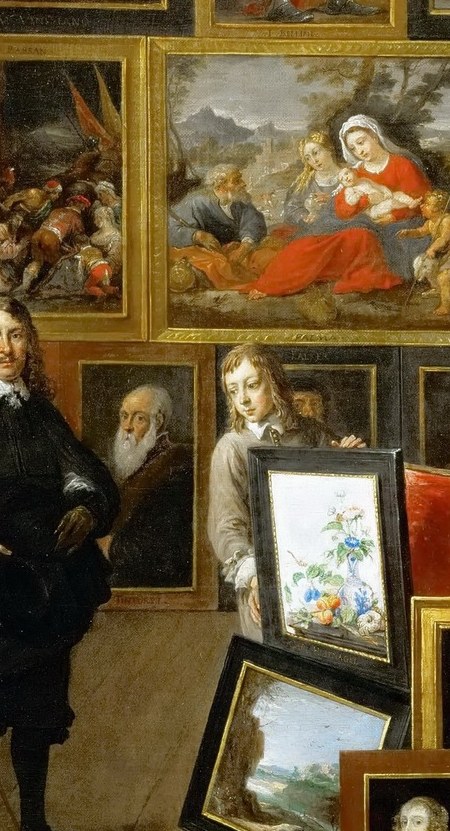
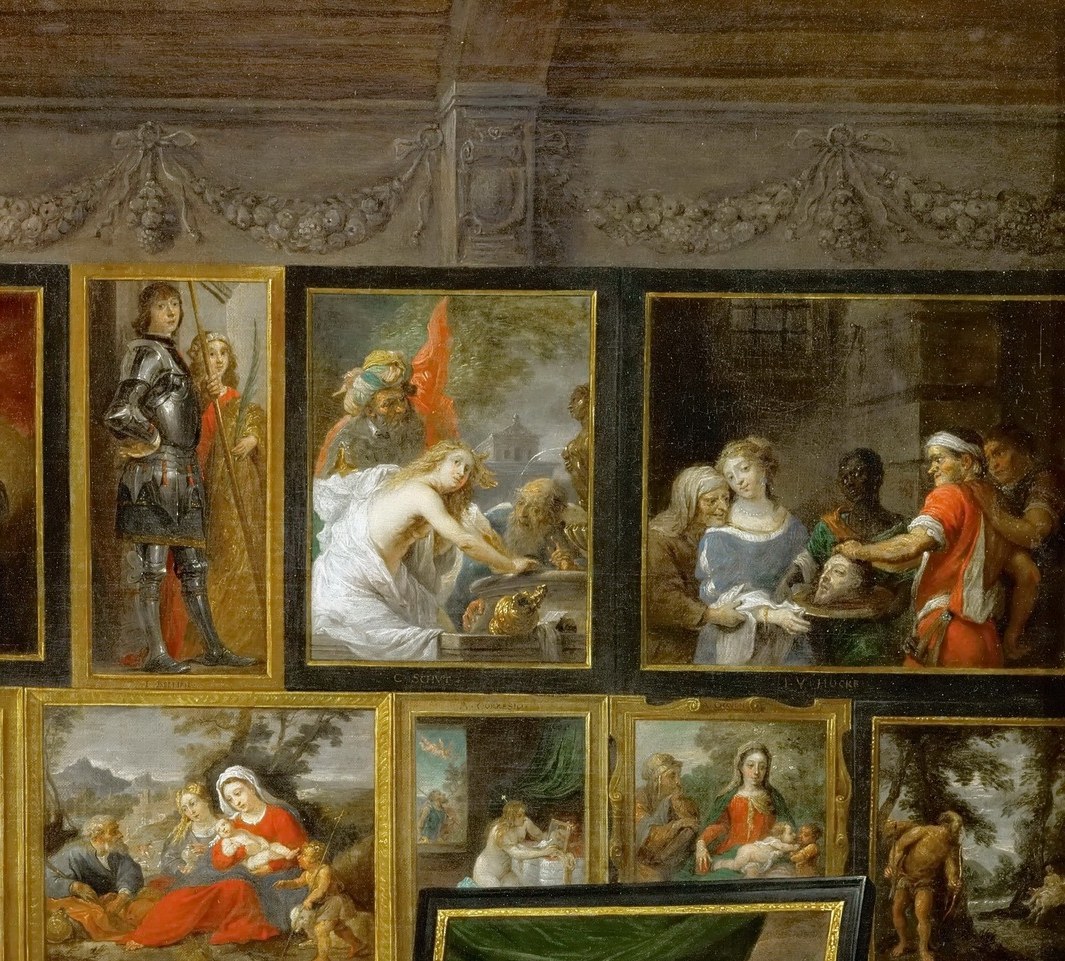
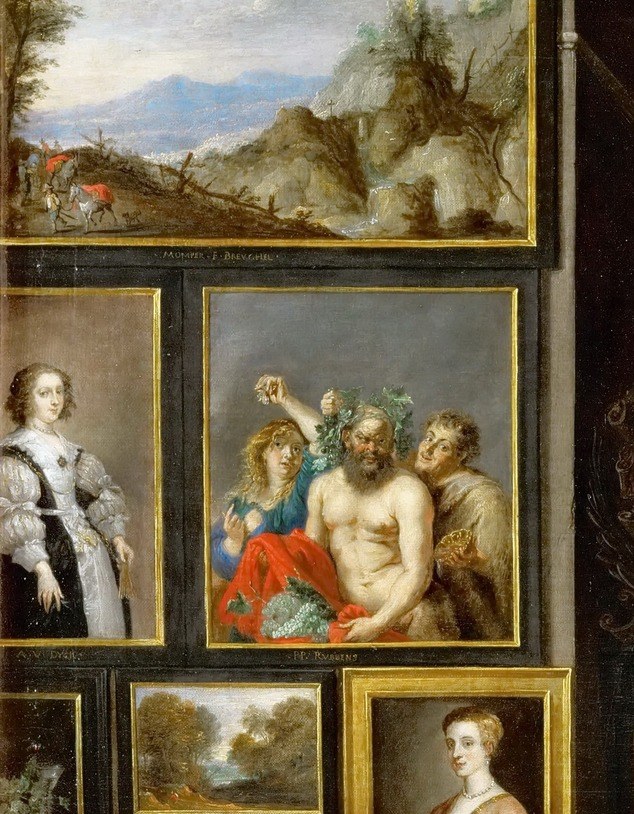
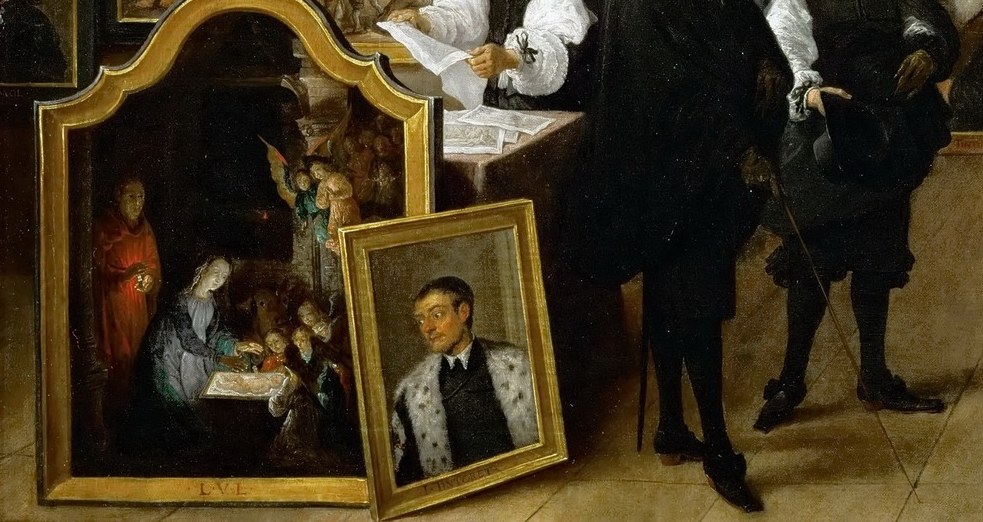
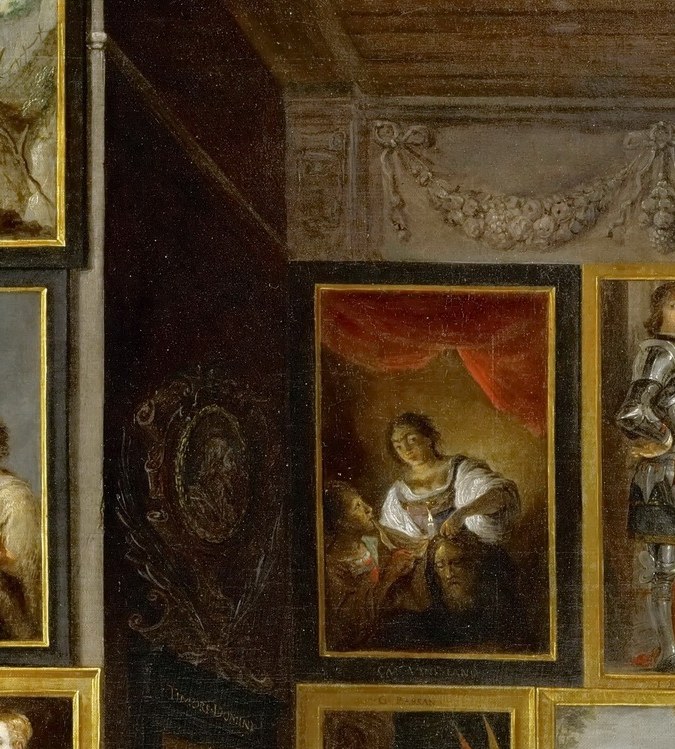
The tricks are the miniatures. Look at the upper walls: every frame holds a recognizable copy of a real masterpiece. Teniers reproduced over fifty Italian paintings by Titian, Veronese, and Raphael, each no larger than a playing card, with enough fidelity that curators today can identify the specific originals, some of which no longer exist.
Archduke Leopold Wilhelm, governor of the Spanish Netherlands, assembled one of the great picture collections of the 17th century and commissioned Teniers to document it. The artist included himself beside the Archduke, a quiet claim of authorship over this extraordinary act of inventory. These painted inventories circulated among European courts, effectively functioning as the world's first illustrated collection catalogues, and later as source material for engraved reproductions.
So the next time you see an old master catalogue, remember: it might trace back to a single painted room.
Details
Transcript
This looks like a room full of paintings. It is actually one single painting. Just one canvas. David Teniers the Younger painted this for an Archduke. Every artwork in here really existed in one man's collection. That Titian above the door is a copy, but painted no bigger than your hand. Experts have identified over fifty Italian masterpieces inside this one picture. So precise that art historians use this image to trace works now lost.