Study for "The Dancing Lesson": The Banjo Player by Eakins, Thomas
This is a study by the great American realist Thomas Eakins, painted around 1877. It shows a solitary figure absorbed in playing the banjo. The work is a preparatory oil sketch for a larger genre scene, but it stands alone as a portrait of deep, quiet concentration.
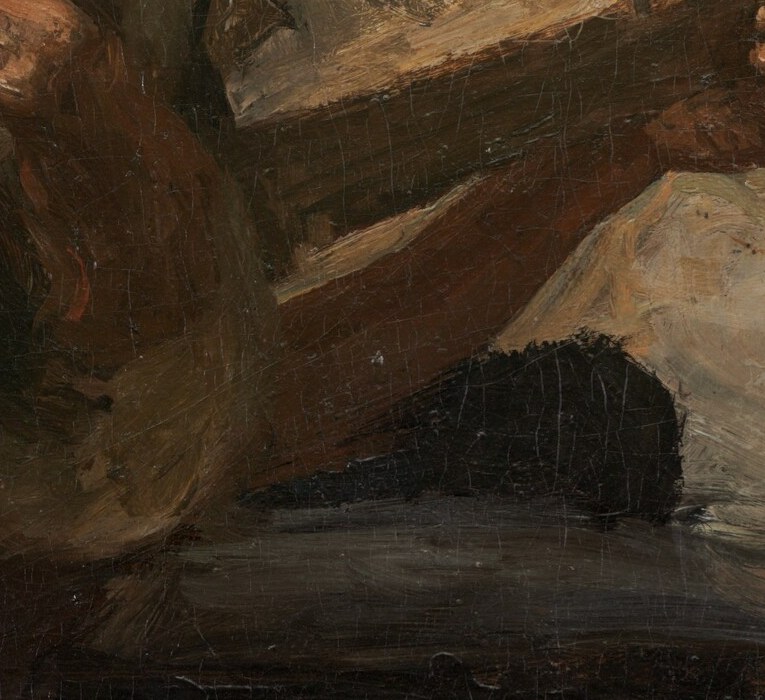
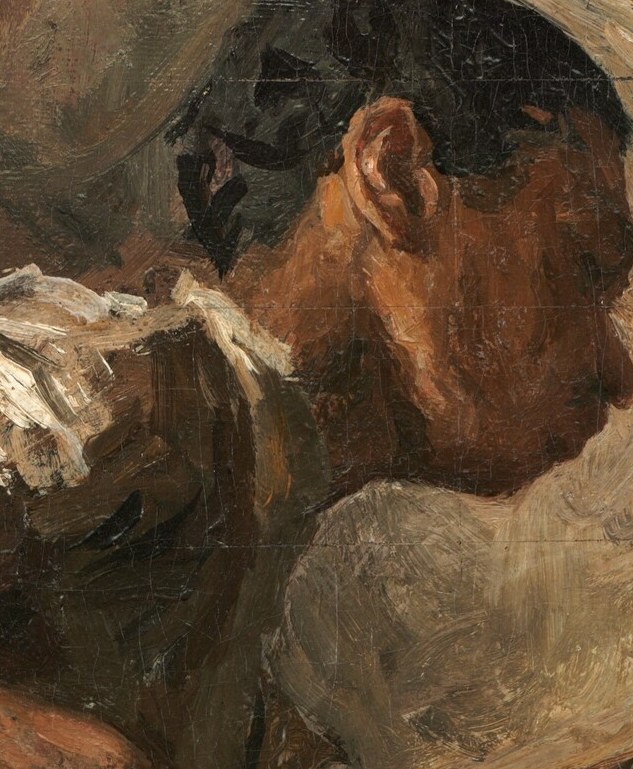
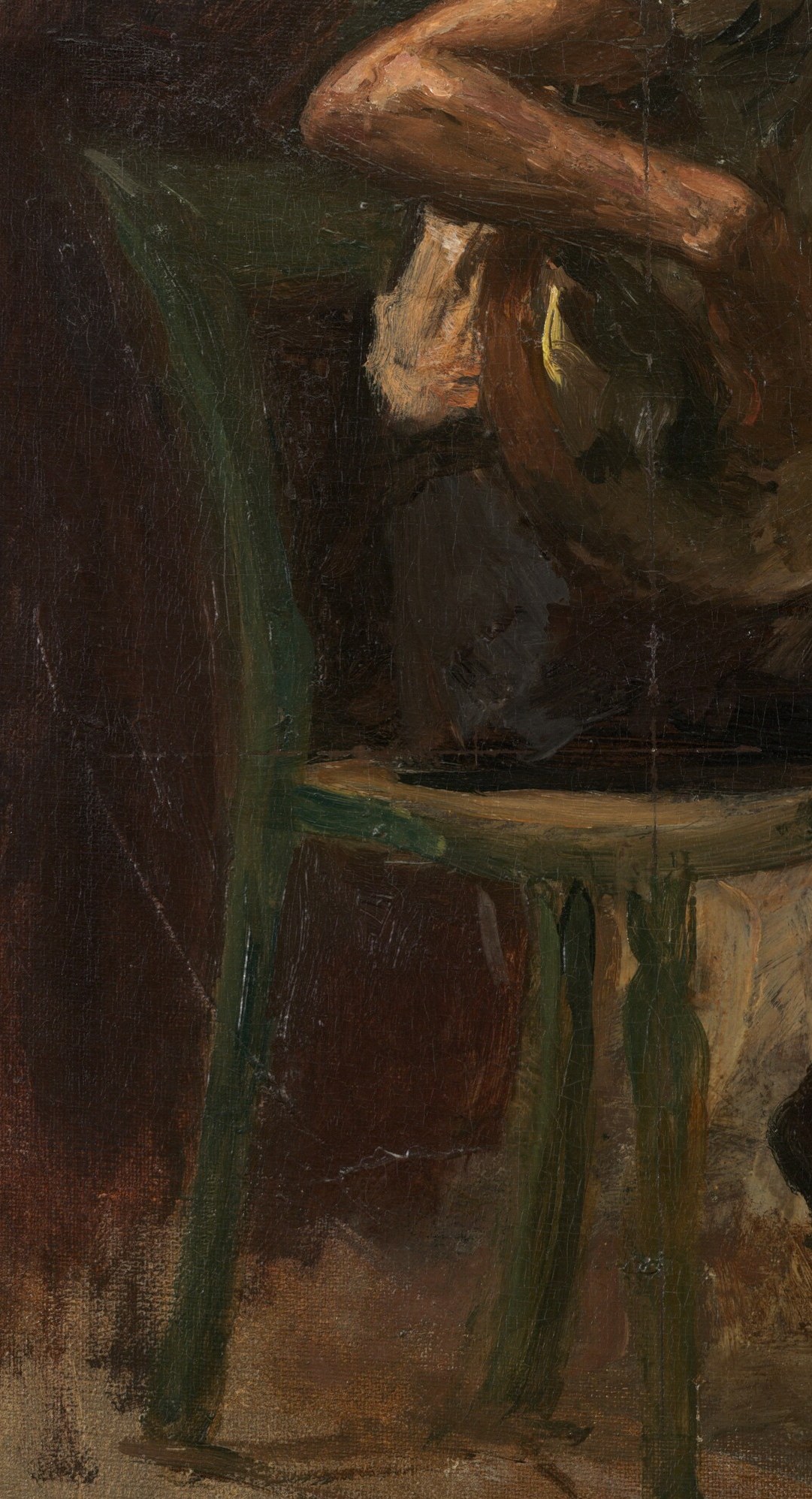
Look at the way the light falls on the player's face and arm. Eakins was a master of anatomy and chiaroscuro, and here he uses strong shadow to carve out the man's focused expression. The rough, impasto strokes on the background wall make the figure feel even more present. His hands are active on the instrument, but the real story is in his eyes, he is somewhere else entirely, inside the music.
Eakins painted this in Philadelphia at a time when Black subjects were rarely given this kind of individual, dignified treatment in American fine art. The final painting, The Dancing Lesson, placed this banjo player in a crowded interior with other figures. But in this study, he is alone. Eakins needed to understand exactly how the right hand plucked and the left hand fretted before he could build the larger work. The result is a moment of pure absorption, painted with total respect.
The man remains anonymous. We know nothing about his life. But for as long as this small canvas lasts, the music hasn't stopped, and no one in the room has moved.
Details
Transcript
Philadelphia, 1877. A man sits down to play. His whole world is this instrument. Look at his face. Total concentration. Nothing else exists. Eakins painted him as a study for a larger scene. But here, this moment is the whole story.