The Old Musician by Manet, Edouard

Édouard Manet's 'The Old Musician' (1862) centers on a real person, a local man named Jean Lagrène who lived in the Petite Pologne district of Paris, a shantytown being bulldozed by Baron Haussmann's sweeping modernization of the city.

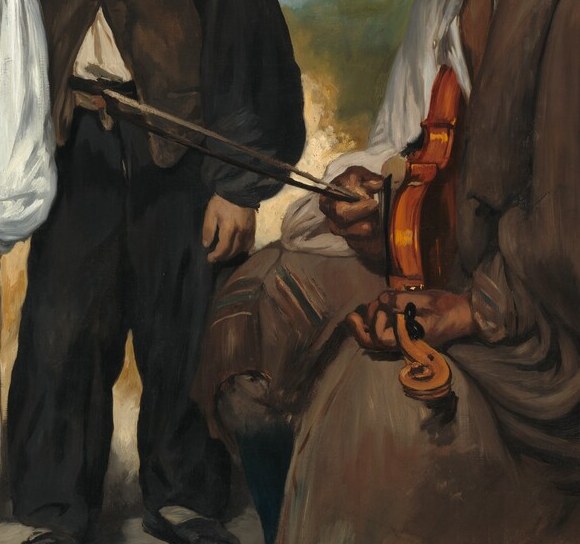
The painting is full of displaced people, but look at Lagrène's hands. Manet deliberately left them rough and unfinished, a bravura rejection of the smooth academic finish expected in the 1860s. That painterly directness was an insistence on reality, not idealization, and critics attacked it fiercely.

Manet painted this from life near his studio, in a neighborhood he described as a 'picturesque slum.' The faint buildings visible on the upper right margin place the scene exactly at the edge of Paris, on ground that was being erased to build the grand boulevards we know today.

The figures are physically close but psychologically isolated, each lost in their own world. The old musician himself, though, remains the emotional anchor, a moment of quiet dignity preserved in oil, long after the neighborhood he lived in was wiped from the map.

#arthistory #edouardmanet #realism

Details
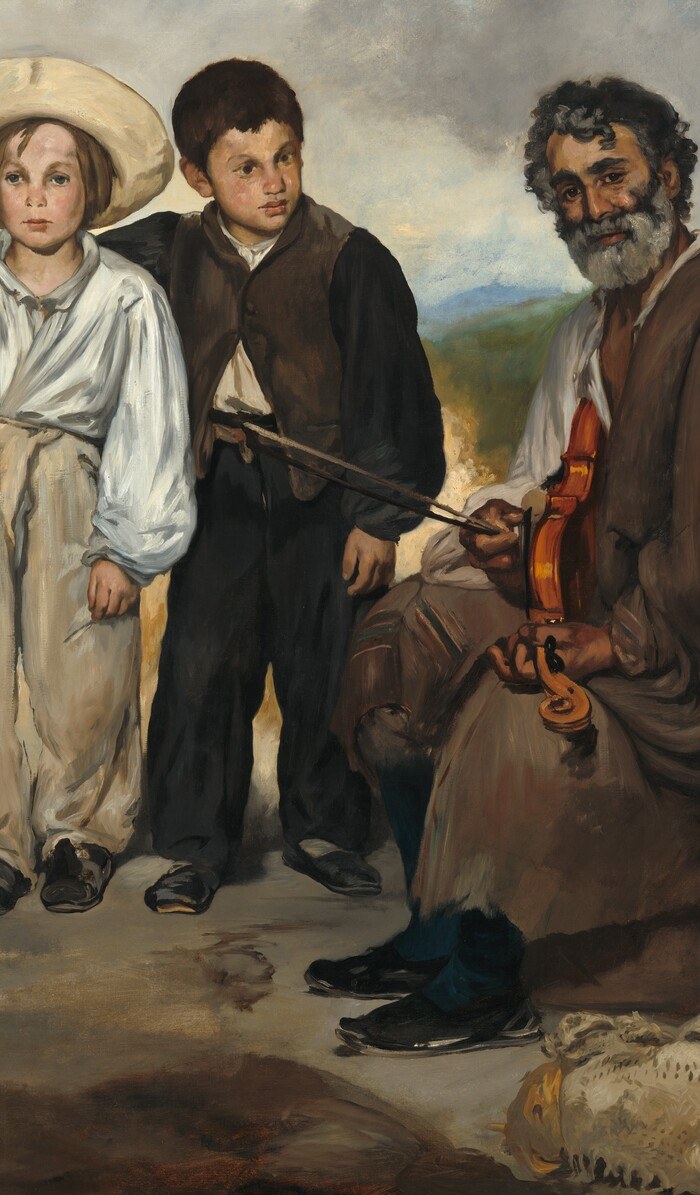
Compositional and emotional anchor of the entire painting; his resigned stillness and direct but ambiguous forward gaze give the work its haunting gravity , dignity in destitution
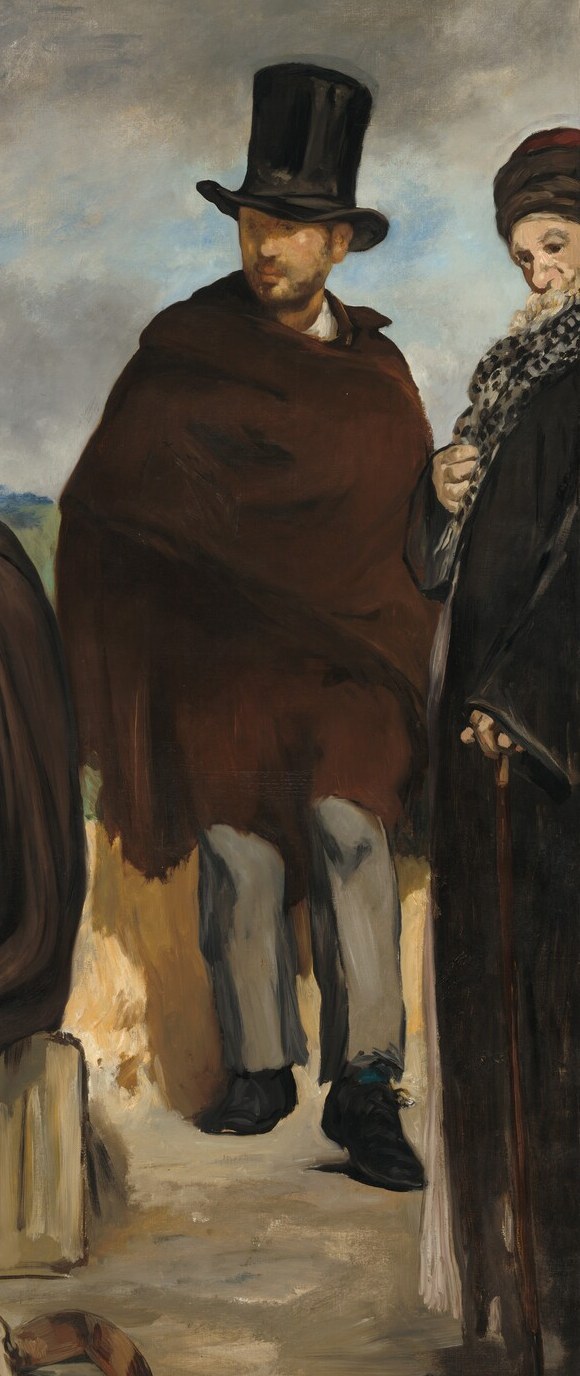
His formal bourgeois attire is a sharp visual and social contrast to the surrounding poverty; possibly a reference to Manet's earlier Absinthe Drinker or the Harlequin archetype , an interloper from another world
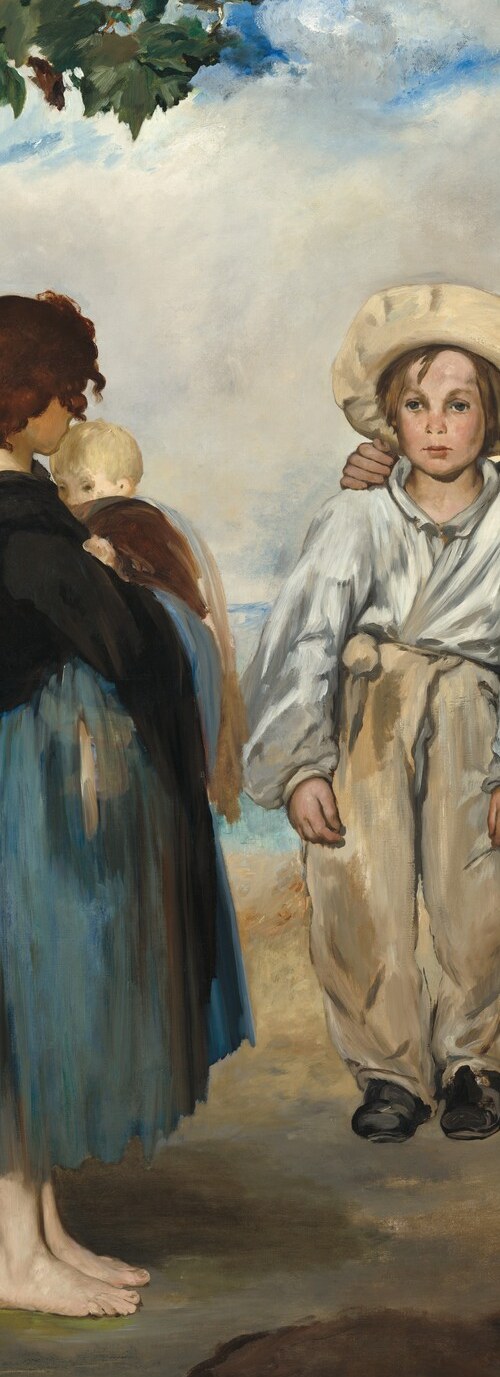
His white clothes pull the eye leftward; the blank detached gaze is classic Manet , figures occupy the same space but make no emotional contact, embodying urban alienation
Manet paints his expression as worn resignation rather than performance , the hat brim shadows his eyes, making eye contact with the viewer uncertain and psychologically charged
Not being played , held as emblem of identity rather than active music; the instrument becomes a symbol of livelihood at rest, or perhaps exhausted
Transcript

Paris, 1862. A shantytown called Petite Pologne. Manet lived nearby. He called it a picturesque slum. At the center sits a real man, a local musician. Look at his hands. The critics hated this. Manet refused to finish them smoothly. The rough strokes say: this is real, not a dream. Haussmann was bulldozing exactly this kind of place. Manet gave this man and his world a permanent place.