Vaprio d'Adda by Bernardo Bellotto
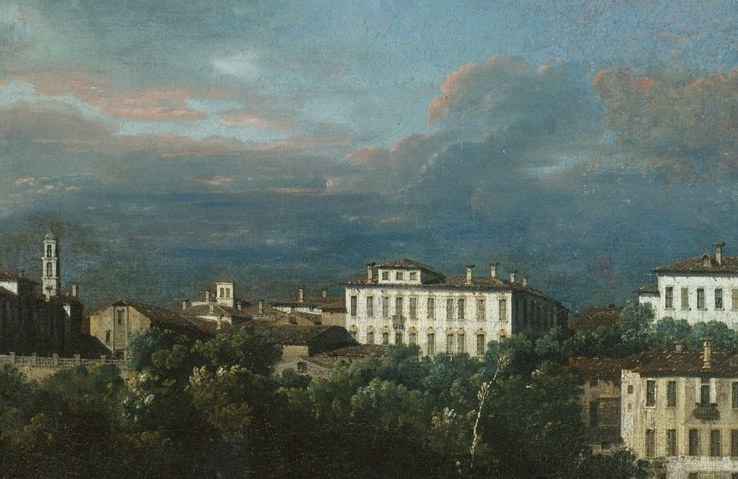
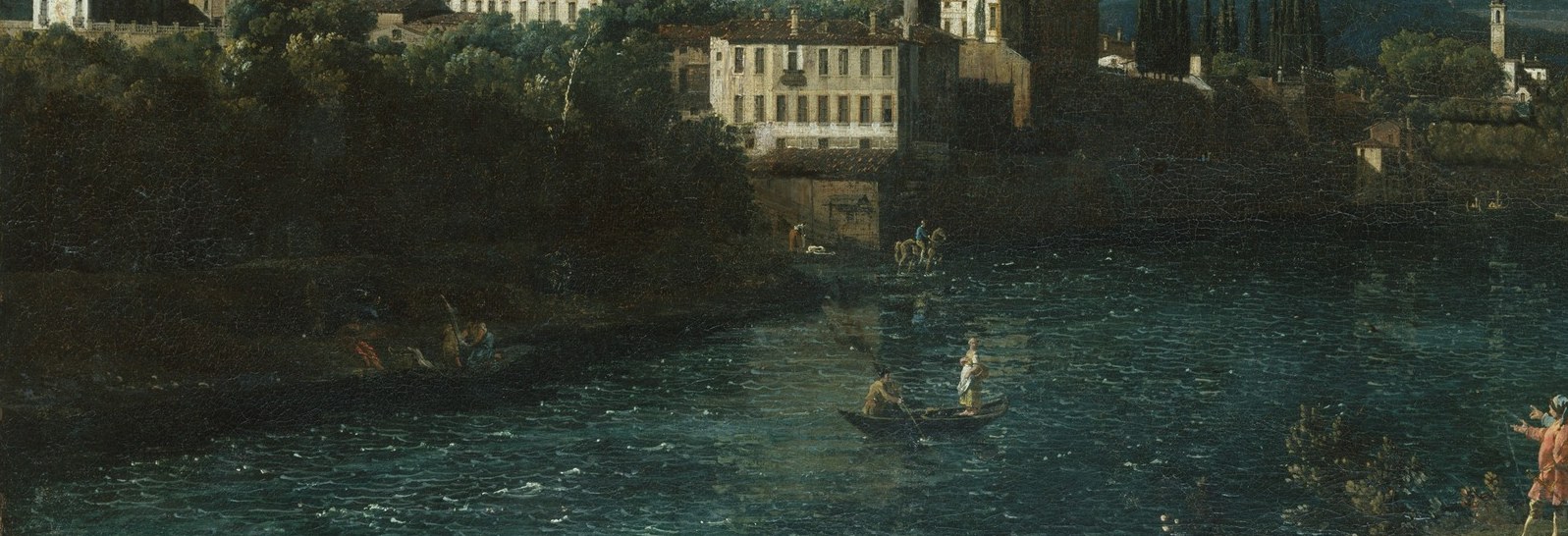
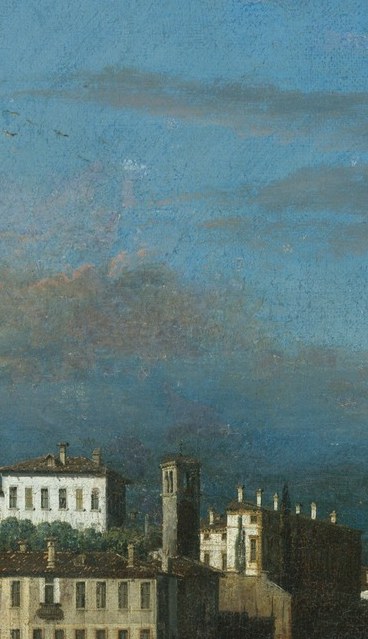
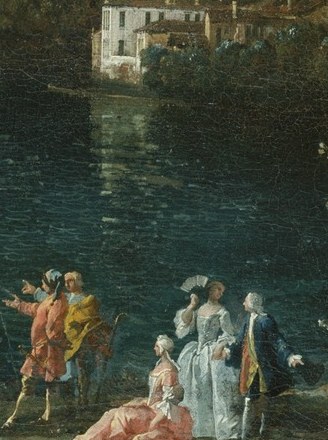
Bernardo Bellotto's "Vaprio d'Adda" (1744) is a view so calm it almost hides its own commercial skeleton. Painted when the artist was just 23, it shows a quiet Lombard town beside a glassy river, the kind of scene wealthy young Englishmen on the Grand Tour wanted to bring home. These were not souvenirs of sentiment. They were proof of arrival.
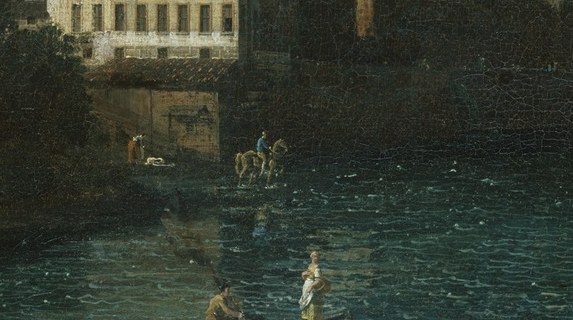
Look at the river itself: Bellotto was charging real money for that water. The white facades of the town shimmer in distorted reflection on the surface, a virtuoso passage he learned from his uncle, Canaletto. That single figure in red among the foreground group? A vivid chromatic anchor, the kind of detail a patron expected when paying premium prices. The skeletal tree on the right is a classical framing trick, a repoussoir, but it also reminds you someone composed this, carefully, for sale.
Bellotto spent his early career signing his work as "Canaletto," trading on the name of his far more famous uncle. It was not quite fraud; he was Canaletto's nephew and pupil, and the family brand was the business. The confusion persisted for centuries and still trips up auction houses today. After Italy, he took his precision to Dresden, Vienna, and Warsaw, always finding patrons who wanted their cities rendered with the same meticulous, sunlight-and-shadow clarity.
In December 2022, this painting appeared at Christie's in London with a high estimate of £300,000. It came from a private collection, fresh to the market. The bidding stalled, and the work went unsold. For a painting that once existed to be bought by wealthy travelers, silence in the salesroom is a strange kind of afterlife. What do you think a meticulous, sunlit town is worth when nobody is bidding?
Details
Transcript
This looks like the Italian countryside, left alone by time. But in the 1740s, vedute painters were selling the Grand Tour by the square foot. Bellotto signed himself Canaletto, so wealthy tourists paid his uncle's prices. He charged by the detail: every shutter, every reflection, cost more. In 2022, this painting came to auction in London with a high estimate of £300,000. The bidding stopped. No sale. The house lost money on marketing. A town built to be bought, and this time, nobody did.