Holy Family by Benvenuto Tisi
Benvenuto Tisi, also known as Il Garofalo, created this beautiful devotional scene, "Holy Family," in 1535. Now part of the Rijksmuseum's collection, this painting exemplifies the artist's engagement with religious subjects during the Italian Renaissance.
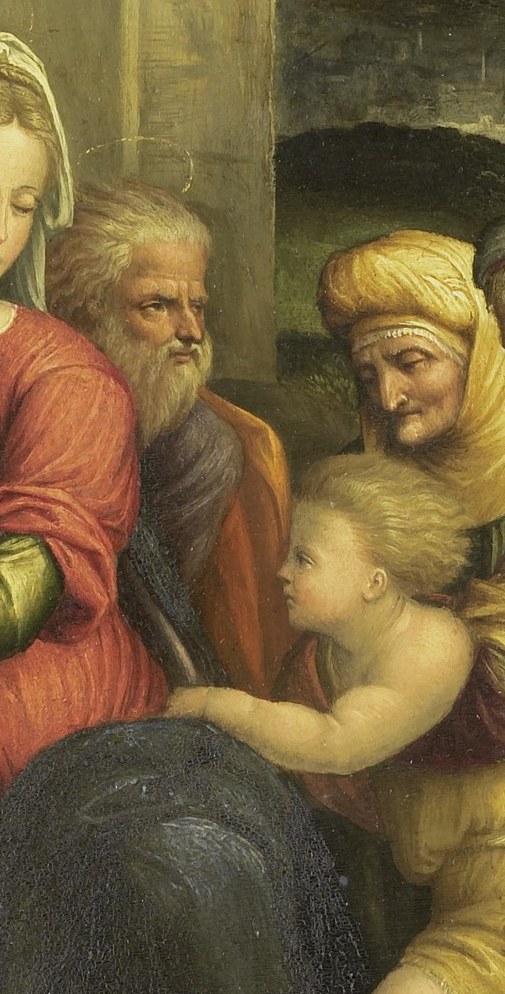
At first glance, we see Mary, Joseph, and the Christ Child. But look closer, and you'll find two additional elderly figures who add significant meaning to the composition. On the left, the aged profile of Saint Jerome, and on the right, the veiled head of Saint Anne, Mary's mother.
Tisi masterfully integrates these figures, enhancing the sense of intergenerational sanctity. His use of chiaroscuro gives the figures a three-dimensional presence, while the softened landscape creates an atmosphere of calm intimacy. The painting entered the Rijksmuseum in the early twentieth century, reflecting its journey from regional patrons to a national museum.
This work reflects a period when Italian artists integrated northern European influences, humanizing sacred narratives. What other subtle details do you notice?
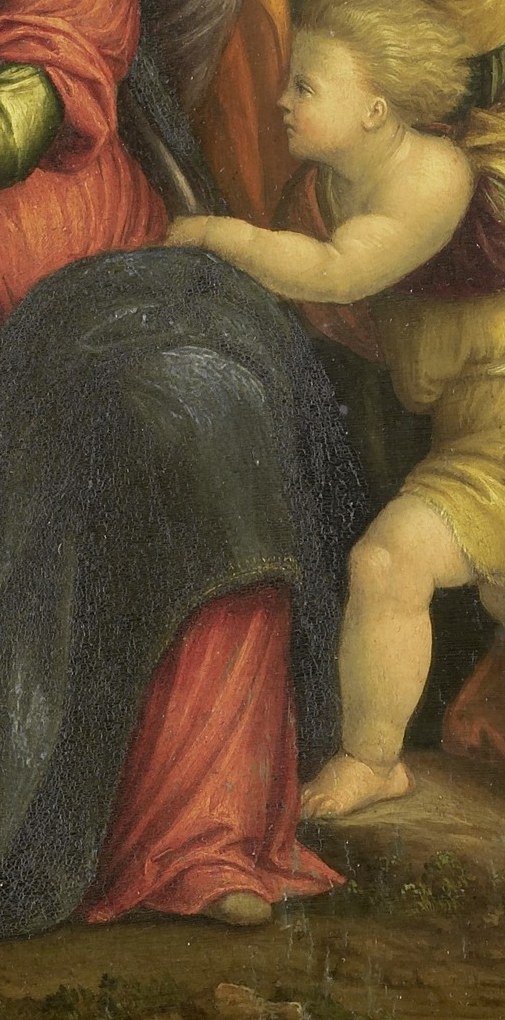
Details
Transcript
This Holy Family holds a secret, hiding in plain sight. Mary cradles the Christ Child, Joseph stands behind them. But who are these two older figures, flanking the family? On the left is Saint Jerome, identified by his aged profile. And on the right, the veiled head of Saint Anne. Their presence adds layers of intergenerational sanctity.