Madonna Bardi by Sandro Botticelli
Sandro Botticelli's "Madonna Bardi," painted around 1485, is more than just a beautiful image; it's a visual sermon packed with theological meaning. This tempera-on-panel painting is housed in the Gemäldegalerie in Berlin.
Look closely at the various elements. The bowl of fruit on the ledge, for instance, isn't just a still-life detail; it carries the heavy symbolism of the Fall of Man and the promise of divine redemption. Similarly, the small crucifix at the feet of the figures clearly foreshadows the Passion of Christ, a central tenet of Christian belief.
The painting was commissioned by Agnolo Bardi, a powerful Florentine banker, for his family chapel in the Santo Spirito Basilica. Such commissions were common during the Renaissance, allowing wealthy patrons to demonstrate their piety and adorn sacred spaces with works that communicated complex religious narratives.
Botticelli's skill lies in weaving these symbols seamlessly into a composition that is both aesthetically pleasing and deeply didactic. What other hidden meanings do you see?
Details
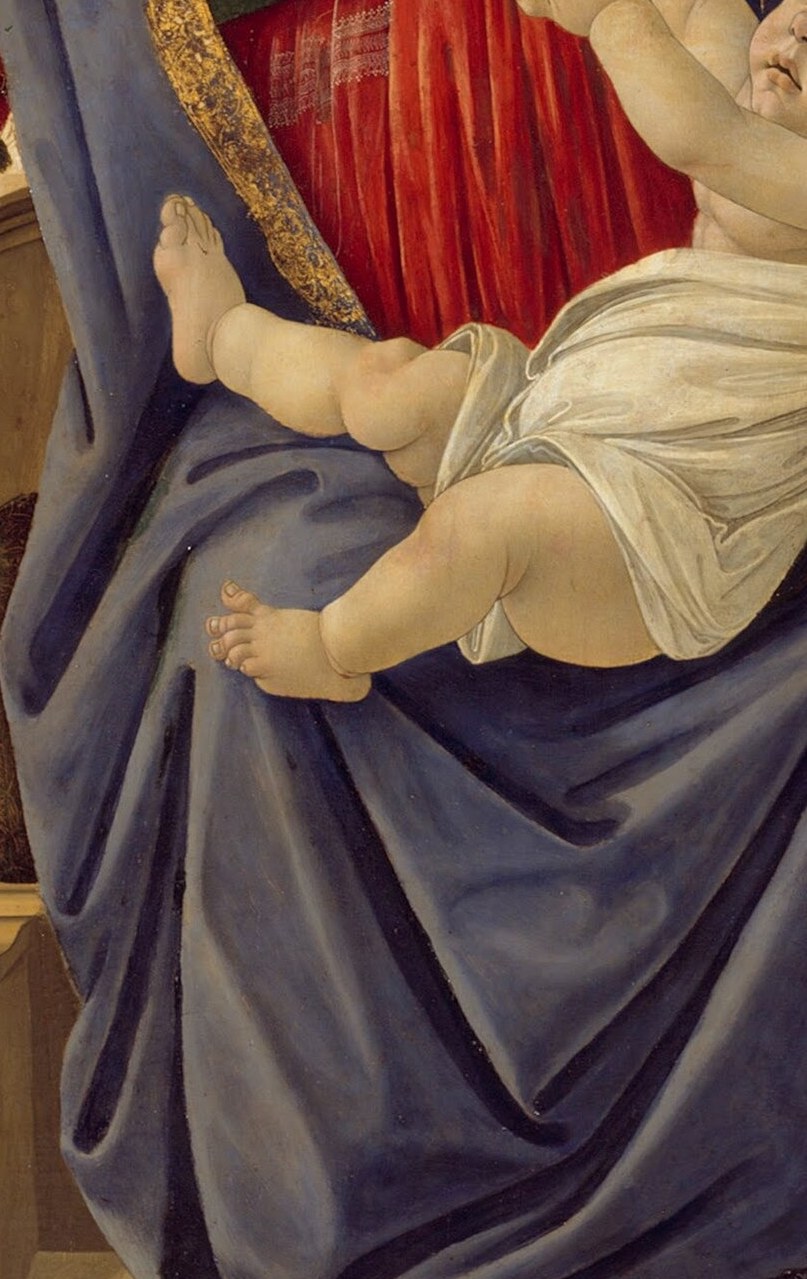
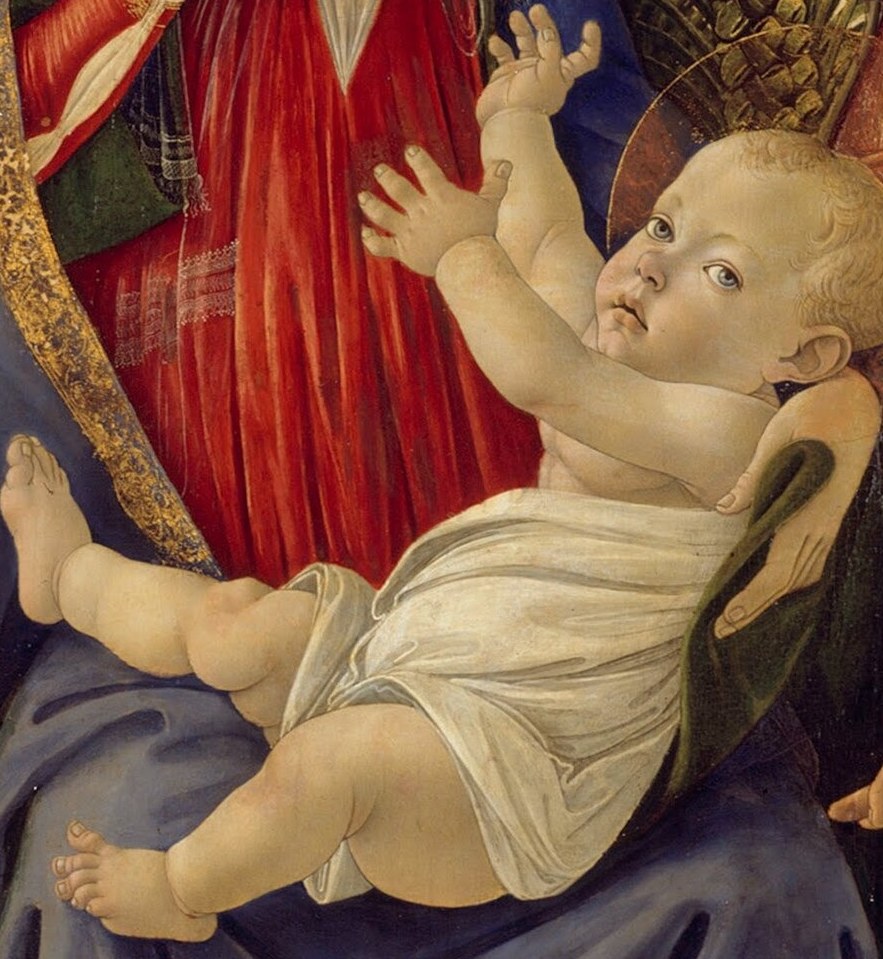
Transcript
This Botticelli painting, titled the Madonna Bardi, was commissioned in 1485. A wealthy Florentine banker, Agnolo Bardi, commissioned it for his family chapel. On the ledge, this bowl of fruit is no mere decoration. It symbolizes the Fall of Man, and the promise of redemption. At their feet, this small crucifix foreshadows Christ's ultimate sacrifice. The baby Jesus reaches out, acknowledging his future path. This painting is a visual sermon, teaching about faith and salvation.